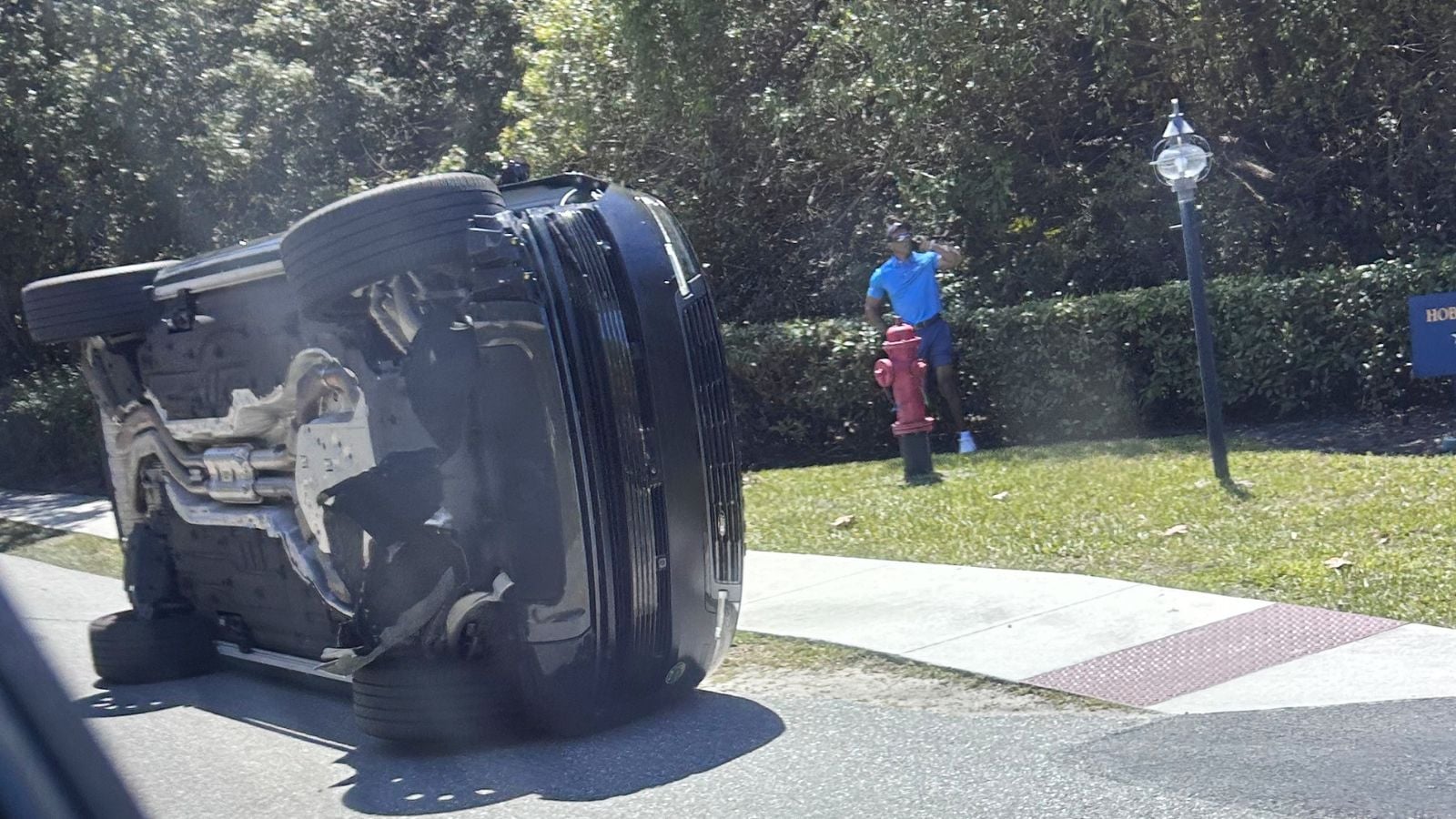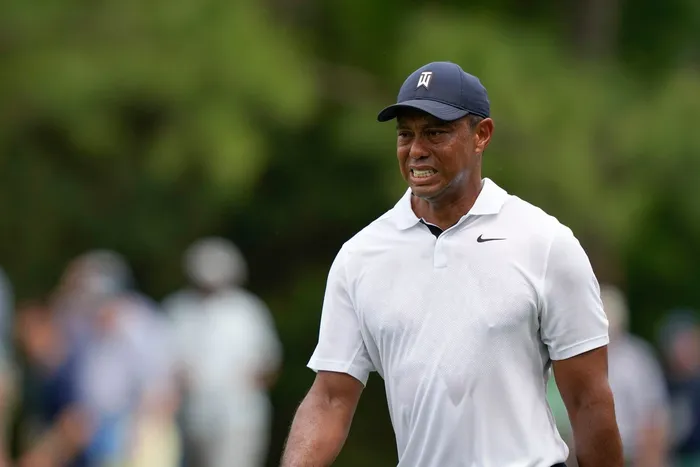
The myth of the invincible Tiger Woods hit a Martin County ditch on Friday afternoon, ending in a familiar wreckage of steel and questions. Shortly before 2 p.m., a Range Rover driven by the 50-year-old icon clipped a pressure-cleaning trailer on South Beach Road and rolled onto its side. Woods crawled out of the passenger door, physically intact but legally compromised. He was arrested on suspicion of DUI after deputies noted a "lethargic" demeanor and clear signs of impairment. While he blew a 0.000 on the breathalyzer, his refusal to submit to a urine test has left a void that the public, and the law, will inevitably fill with skepticism.
This is not a story about a car crash. It is a story about the impossible cost of a body that refuses to retire and a mind that refuses to let go. You might also find this connected coverage insightful: Shadows on the Pitch.
To understand Friday’s rollover, you have to look past the mangled Range Rover and into the surgical history of a man who has undergone seven back procedures and five knee surgeries. The most recent—a lumbar disc replacement in October 2025—was supposed to be the final fix. It was the procedure that would allow him to walk the fairways of Augusta one more time. Instead, it may have simply extended the cycle of pain management that has shadowed his career since 2013.
The Chemical Shadow
The Martin County Sheriff’s Office was blunt: alcohol was not the culprit. Sheriff John Budensiek noted that Woods was cooperative but "not trying to incriminate himself." This dance with the legal system is one Woods has performed before. In 2017, he was found asleep at the wheel of his Mercedes, his system a cocktail of Vicodin, Dilaudid, Xanax, Ambien, and THC. Back then, he blamed an "unexpected reaction" to prescription painkillers. As discussed in detailed reports by ESPN, the effects are significant.
The pattern is hard to ignore. Every time Woods undergoes a major surgery, a vehicular incident seems to follow within the recovery window.
- 2009: The Cadillac Escalade vs. the fire hydrant, occurring amid a personal collapse and rumors of heavy Ambien use.
- 2017: The sleeping-at-the-wheel arrest following his fourth back surgery.
- 2021: The high-speed rollover in Los Angeles that shattered his right leg, an accident for which no charges were filed despite speeds near 87 mph.
- 2026: Friday’s rollover, months after his seventh back surgery and a year after a ruptured Achilles.
We treat these as isolated traffic accidents. They are more likely symptoms of a man caught in a feedback loop of trauma and relief. When a body is as broken as Tiger’s, "recovery" is a relative term. The pain doesn't go away; it is merely managed.
The Masters and the Mirage
The timing of this arrest is particularly hollow. Woods was just days away from a "soft deadline" to decide if he would captain the 2027 U.S. Ryder Cup team. He was also preparing for the Masters, an event where his presence is treated more like a religious apparition than a sporting entry.
But look at the data from the 11 tournaments he has played since his 2021 crash. He hasn't finished within 16 shots of a winner in any event where he actually managed to play all 72 holes. He is 50 years old. In the professional golf world, that is the age where players transition to the Champions Tour, where they can use carts and enjoy a slower pace. Woods has famously resisted this, stating he wouldn't use a cart on the PGA Tour because he "doesn't believe in it."
There is a tragic irony in a man who refuses a golf cart for the sake of "tradition" but repeatedly finds himself unable to keep a 5,000-pound SUV between the lines. The stubbornness that made him the greatest golfer of his generation is now the very thing threatening to destroy his legacy—and his life.
Beyond the Fairway
The "Tiger Effect" is a billion-dollar economy. When he plays, television ratings double. When he enters a room, the atmosphere shifts. This creates a massive incentive structure for everyone around him—sponsors, agents, the PGA Tour—to keep the "comeback" narrative alive.
Nobody wants to tell the King he’s naked, or in this case, that his body is an engine screaming for a rest. The pressure to return for the 2026 Masters, to fulfill his role as the chairman of the Future Competition Committee, and to lead the Ryder Cup team creates an environment where physical pain is an obstacle to be medicated away rather than a signal to stop.
Florida’s implied consent laws mean Woods’ refusal of the urine test will likely result in an automatic one-year driver’s license suspension. But the legal fallout is secondary. The real crisis is the silence surrounding the intersection of professional sports, chronic pain, and prescription dependency.
Woods has spent decades proving he can overcome the impossible. He returned from a fire hydrant. He returned from a spinal fusion. He returned from a near-amputation. But Friday’s wreckage suggests that the most difficult thing for Tiger Woods to overcome isn't a broken leg or a fused spine. It’s the realization that the comeback trail has finally run out of road.
The Range Rover is in a tow yard. Tiger is back in Hobe Sound. And the golf world is once again left waiting for a statement that will likely explain away the "impairment" while ignoring the underlying fire. We have seen this movie before, but the ending is getting darker.