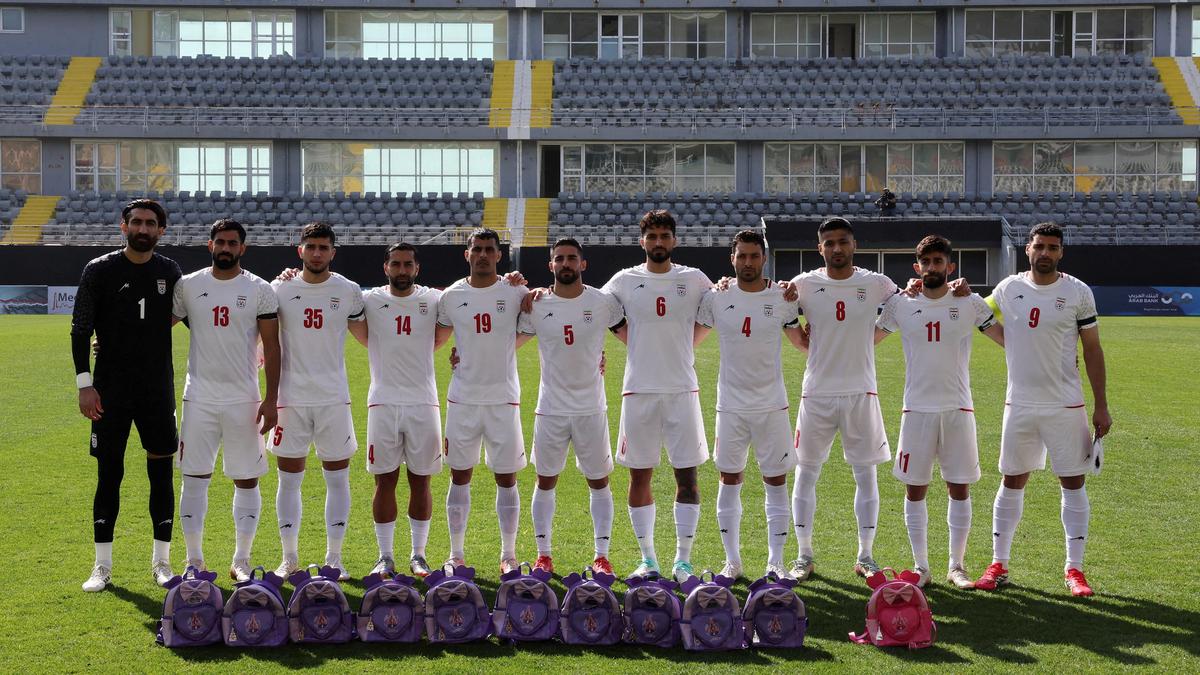
Iranian football players recently walked onto the pitch carrying schoolbags and wearing black armbands. It wasn't just a pre-match ritual. It was a calculated, dangerous, and deeply emotional middle finger to an oppressive system. If you've been following the news out of Tehran and across the country, you know this isn't about sports anymore. It's about life and death.
The imagery of professional athletes—men who often represent the national pride of a state—holding children’s backpacks is haunting. These bags symbolize the "slain girls," the students who should be in classrooms instead of morgues. By wearing black armbands, the players signaled a mourning period that the state refuses to officially recognize. They're using the only platform they have left to tell the truth.
The High Cost of Dissent in Iranian Football
Iranian athletes don't get to "stick to sports." When they speak out, they face real consequences. We aren't talking about a fine or a two-game suspension. We're talking about travel bans, arrests, and the very real threat of never seeing their families again.
Take the case of Voria Ghafouri. He's a legendary figure in Iranian football. He was arrested for "tarnishing the reputation of the national team" after he spoke up for protesters. When you see current players holding schoolbags, they know exactly what happened to Voria. They do it anyway. That’s not just a gesture. It’s bravery that most of us sitting in comfortable chairs will never have to emulate.
The schoolbags specifically reference the young girls killed during the "Woman, Life, Freedom" movement. Names like Mahsa Amini, Nika Shakarami, and Sarina Esmailzadeh aren't just hashtags to these players. They represent a generation of fans who are being systematically silenced. By bringing those bags onto the field, the players are saying these children belonged here, in the stands, alive.
Why the Black Armbands Matter More Than You Think
In many cultures, a black armband is a subtle nod to a passing. In Iran, right now, it’s a political weapon. The government wants the world to believe that everything is back to normal. They want the football matches to look like a standard Tuesday night.
The players refuse to give them that normalcy.
When the cameras pan across the lineup, those black bands scream. They disrupt the state-sponsored broadcast. It forces the commentators—who are often under strict instructions—to either ignore the obvious or risk their jobs by mentioning it. Most of the time, the state TV cuts away to wide shots of the stadium to hide the protest. But the images always leak. Social media ensures that the world sees what the regime tries to blur out.
The Symbolism of the Schoolbag
The choice of the schoolbag is a stroke of genius. It hits a nerve that a simple banner can't touch.
- It represents lost potential.
- It highlights that the victims are children.
- It mocks the "security" the state claims to provide.
The message is clear. If a girl can't go to school without being killed or poisoned, your "national security" is a lie. The players are effectively saying they'd rather be seen as humans first and athletes second. Honestly, it’s a level of integrity that puts western "activism" to shame. We argue about jersey colors; they risk the gallows.
FIFA and the Silence of International Bodies
Where is FIFA in all this? Mostly, they're hiding behind their "no political statements" rule. It’s a cowardly stance. When a state is actively killing the sisters and daughters of its national players, that isn't "politics." It’s a human rights crisis.
FIFA's Statutes, specifically Article 4, claim the organization is "committed to respecting all internationally recognized human rights." Yet, they rarely take a hard line against the Iranian Football Federation. This leaves the players on an island. They have to decide between their careers and their conscience.
I’ve seen plenty of "statements of concern" from international bodies. They don't mean much. What means something is a captain of a top-tier club team refusing to celebrate a goal. What means something is a goalie staring down the VIP box where government officials sit, while he wears a symbol of mourning.
The Psychological War on the Pitch
The pressure on these athletes is immense. Imagine trying to focus on a tactical offside trap while your cousin is being interrogated by the morality police. Or while you know your phone is being tapped by the IRGC.
The players are often divided. Some are terrified. Others are radicalized by the violence they see on the streets. This tension creates a strange energy during the matches. You can feel it through the screen. There’s no joy in the wins. There is only a grim sense of duty.
The "slain girls" the players are honoring weren't just random victims. Many were targeted for simply showing their hair or dancing in public. When the football team stands in solidarity with them, they're bridging a massive gap between the traditional male-dominated world of sports and the feminist-led revolution on the streets. It’s a unification that the regime fears more than anything else.
What You Can Do to Support the Movement
Most people read these stories, feel a brief moment of sadness, and then scroll past. Don't do that. The only reason these players are still alive is because the international spotlight makes it "expensive" for the regime to kill them.
Publicity is their armor.
- Share the images. When you see the photos of the schoolbags and armbands, post them. Use the names of the players. Make them too famous to "disappear."
- Pressure the sponsors. Football is a business. The brands that fund these tournaments need to know that you're watching their silence.
- Support organizations like Center for Human Rights in Iran (CHRI). They do the actual work of documenting these abuses and providing legal support to those detained.
The situation in Iran isn't going away. The league might continue, and the scores will be recorded, but the soul of Iranian football has moved. It’s no longer in the back of the net. It’s in those schoolbags held by men who decided that some things are more important than a game.
Keep your eyes on the next match. Watch the arms of the players. Look for the black. It tells you everything you need to know about the current state of the world.
Stop waiting for a "proper" time to care about this. The players didn't wait. They took the risk. The least we can do is pay attention and ensure their sacrifice isn't forgotten in the next 24-hour news cycle. Follow the social media accounts of exiled Iranian journalists who provide real-time updates that the state media suppresses.