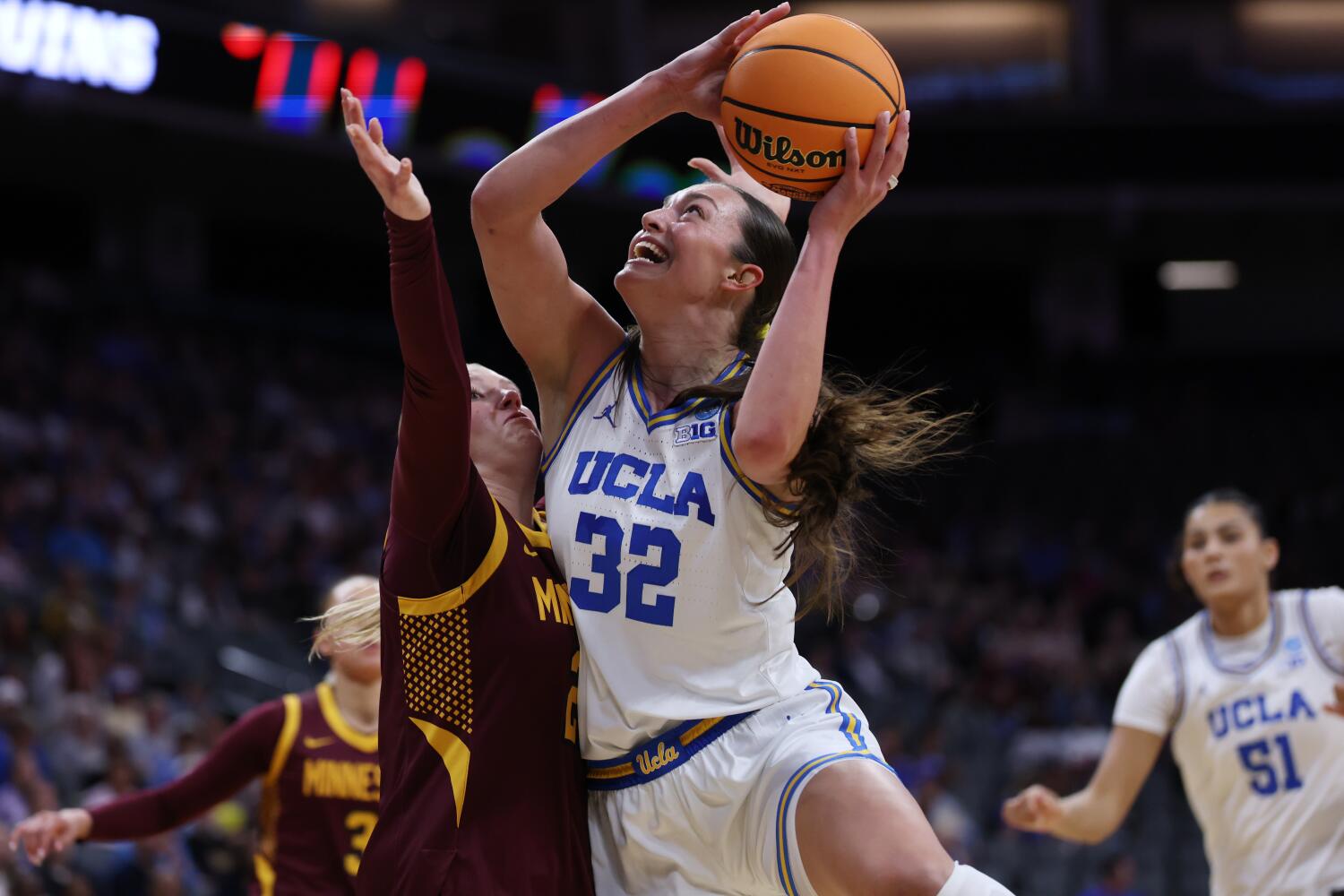
The box score is a liar. If you look at the final tally of UCLA’s victory over Minnesota to punch their ticket to the Elite Eight, you see a second-half surge and a double-digit margin. The mainstream narrative is already being written: a powerhouse program "finding its gear" when the lights got bright.
That narrative is garbage.
UCLA didn’t win this game through tactical superiority or some inherent "championship DNA." They won because Minnesota suffered a systemic collapse that any high-major program should have exploited twenty minutes earlier. We are praising a UCLA team for eventually stumbling into the right answer after staring at the test for three quarters. If they play like this against a South Carolina or an Iowa, they won’t just lose; they’ll be an afterthought by the under-eight timeout of the first half.
The Myth of the Tactical Adjustment
Analysts love to talk about "halftime adjustments." It makes coaches look like chess grandmasters moving pieces in a dark room. In reality, UCLA’s second-half "surge" was less about Cori Close’s whiteboard genius and more about the simple fact that Minnesota ran out of gas and discipline.
Minnesota played a near-perfect defensive shell for twenty-five minutes. They shrunk the floor, dared UCLA to shoot from the perimeter, and neutralized the height advantage by sheer grit and positioning. UCLA’s response? For the better part of two quarters, they settled. They took contested jumpers. They played individualistic, "hero" basketball that would get a high school varsity player benched.
The Bruins didn't "solve" the Gophers. The Gophers stopped hitting the rotations. When a mid-major or a lower-seeded Big Ten team plays a high-pressure defensive scheme, there is a physical tax. Minnesota paid it in the third quarter. UCLA didn’t break the door down; they waited for the lock to rust. Relying on an opponent's fatigue isn't a strategy for the Elite Eight—it’s a recipe for an early flight home.
The Talent Gap is an Excuse for Lazy Coaching
There is a persistent idea in women’s college basketball that "talent eventually wins out." It’s a lazy way of saying we don’t want to analyze the actual mechanics of the game. UCLA has a roster of five-star recruits and future WNBA draft picks. Minnesota does not.
Yet, for thirty minutes, the talent gap was invisible. Why? Because UCLA’s offensive spacing was atrocious.
I’ve watched enough tournament basketball to know when a team is coached into a corner. UCLA spent the first half stagnant. Their stars were standing on the perimeter, watching the ball handler struggle. In the Elite Eight, your "talent" is negated by scouting. Every player on the floor in the next round will be a physical match for UCLA. If the Bruins continue to rely on "being better" rather than "playing better," the talent gap will flip on them instantly.
Why the Second Half Surge is a Red Flag
Winning a game in the second half feels good for the highlights, but it’s a terrifying metric for championship viability.
- Energy Expenditure: UCLA had to burn maximum calories to recover from a sluggish start. In a tournament setting where games are spaced days apart, that cumulative fatigue matters.
- Confidence in Flawed Systems: Because the Bruins won, they are less likely to fix the mechanical issues that caused the first-half drought. They think the "surge" is their identity. It’s not. It’s a recovery from a failure.
- Execution Under Pressure: When Minnesota pulled within a few possessions late, UCLA’s execution was still shaky. They missed free throws. They turned the ball over in the backcourt.
The "surge" wasn't a show of force. It was a frantic escape.
The Gophers Didn't Lose to the Bruins They Lost to the Clock
If you want to understand why Minnesota lost, don't look at the UCLA highlights. Look at the Minnesota shot selection in the final eight minutes. They went away from the interior passing that built their lead. They started hunting three-pointers to "keep up" with a UCLA run that hadn't even fully materialized yet.
Minnesota panicked.
UCLA was the beneficiary of a young team losing its nerve. It takes zero skill to capitalize on an opponent’s unforced errors. It takes immense skill to force those errors. UCLA didn’t force anything. They played a standard man-to-man, stayed relatively solid, and waited. Against a veteran team—a team like UConn or LSU—that passivity gets you buried. Those teams don't panic. They smell blood.
The Elite Eight Reality Check
People are asking if UCLA is "peaking at the right time."
The answer is a resounding no. Peaking is when your offensive sets are crisp, your defensive rotations are intuitive, and you are dictating the tempo of the game from the tip. UCLA is currently reactive. They are reacting to the score, reacting to the opponent's energy, and reacting to their own mistakes.
If you are an investor in this team's success, you should be worried. The "surge" is a mask. It covers up the fact that this team struggles to score in the half-court when their first option is taken away. It hides the reality that their transition defense is vulnerable to teams with true speed.
Stop Celebrating Mediocrity
We have a habit of over-praising "gutsy wins." We call them "character builders."
Let’s be honest: UCLA played a mediocre game against a team they should have dominated. Celebrating a double-digit win over a lesser seed when you trailed for a significant portion of the game is participation-trophy logic.
If UCLA wants to be taken seriously as a title contender, they need to stop being a "second-half team." There is no such thing as a "second-half team" in the Final Four. There are only teams that played for forty minutes and teams that are watching from the stands.
Minnesota gave this game away. UCLA just happened to be standing there to pick it up.
Stop looking at the scoreboard and start looking at the tape. The tape tells a story of a vulnerable giant that survived a scare. Survival is fine for March, but it’s a terrible strategy for April.
Go back and watch the third quarter. Watch the Bruins' feet. Watch their eyes. They weren't hunting a win. They were trying not to lose. There is a massive psychological difference between those two states of mind, and only one of them results in a trophy.
UCLA is moving on, but they aren't moving up. Unless they radically overhaul their offensive entry points and stop relying on a "surge" that might not come next time, their season ends in forty-eight hours.
Don't buy the hype. Watch the flaws. They're everywhere.
Fix the spacing. Stop the hero ball. Or start packing.