The headlines are lying to you. They are peddling a comfortable narrative of "weeks, not months" and "contained operations." They want you to believe that geopolitical kinetic energy functions like a thermostat you can simply dial back once the room gets too warm.
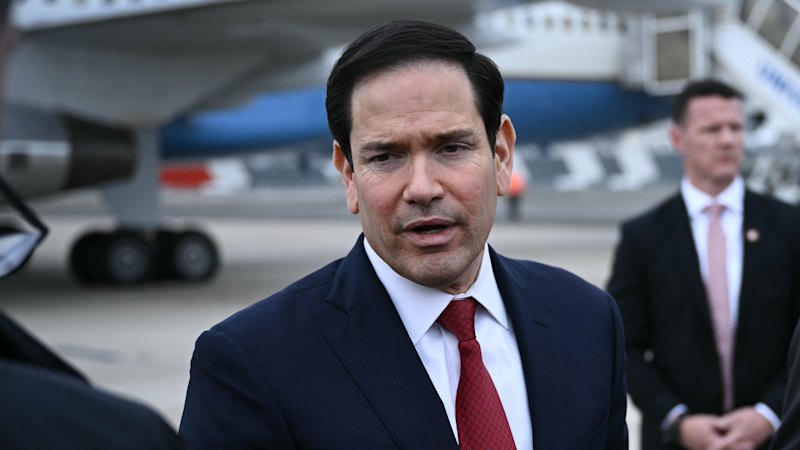
Marco Rubio talks about ending operations in weeks. The G7 issues sternly worded PDF files about civilian safety. Israel targets nuclear facilities with the surgical precision of a PR firm. Everyone is acting as if this is a discrete event with a clear start and stop point.
It isn't.
We have entered the era of the Infinite Kinetic Loop. The idea that the United States can "finish" an operation against a regional power like Iran in a matter of weeks ignores the fundamental shift in how modern warfare is waged. We aren't looking at a traditional war; we are looking at a permanent state of high-friction existence that the current diplomatic framework is utterly unequipped to handle.
The Rubio Fallacy: Time is Not a Resource You Own
When a politician says an operation will last "weeks," they are usually trying to soothe the markets or prevent a domestic political hemorrhage. I have spent two decades watching "short-term interventions" turn into decade-long line items in the federal budget. Time in the Middle East does not belong to the Pentagon; it belongs to the actor willing to absorb the most misery.
Iran does not play by the Gregorian calendar. They play by the ideological one.
By declaring a timeline, the US hands its adversary a victory condition: Survival + 1 Day. If Tehran is still standing at week seven, the US mission has technically failed its own stated pace. This isn't just bad optics; it’s a tactical catastrophe. It tells the IRGC exactly how long they need to stay submerged before they can resurface and claim the "resistance" won.
The Nuclear Facility Mirage
The media is obsessed with the "Israeli attack on nuclear facilities" narrative. It’s cinematic. It feels decisive. It’s also largely irrelevant to the actual power dynamics at play.
Targeting Centrifuges is 20th-century thinking. Iran’s true power isn't a hypothetical warhead; it’s their Asymmetric Middleware.
- Proxies as Operating Systems: Iran doesn't just fund groups like Hezbollah or the Houthis; they have integrated them into a decentralized command structure that functions like a mesh network. You can't "bomb" a network protocol.
- The Drone Democratization: We are seeing $$2,000$ drones taking out $$2,000,000$ defense systems. The ROI for the US to stay in this fight is inverted.
- Knowledge Transfer: You can destroy a facility, but you cannot destroy the physics degrees held by thousands of Iranian scientists. The "breakout time" is a mental state, not just a hardware count.
If you think blowing up a concrete bunker in Natanz ends the threat, you’re missing the fact that the threat moved to the cloud and the shadows years ago.
The G7 and the "Civilian" Delusion
The G7’s call for an end to civilian attacks is a masterclass in performative ethics. In a modern urban conflict zone, the line between "civilian infrastructure" and "military logistics" is non-existent.
When a state uses dual-use technology—fiber optic cables that carry both Netflix and military encrypted data, or ports that move both grain and missiles—every strike is a civilian strike. To demand a war without civilian impact in 2026 is to demand a war that doesn't happen at all.
Stop asking if the attacks will hit civilians. They will. The honest question—the one nobody wants to answer—is: How much collateral damage is the West willing to tolerate to maintain the current petrodollar hegemony?
If the answer is "none," then the US should pack up and leave today. If the answer is "some," then the G7 should stop the hypocrisy and admit that "controlled escalation" is just a polite term for "predictable slaughter."
The Economic Shrapnel Nobody is Tracking
Most analysts are looking at oil prices. That’s the "lazy consensus" metric. Yes, Brent Crude might spike, but the real damage is happening in the Global Supply Chain Nervous System.
We are seeing the death of the "Safe Transit" era. The Red Sea is already a no-go zone for many insurance underwriters. A prolonged US-Iran conflict doesn't just make gas more expensive; it makes everything more expensive because it breaks the fundamental trust of the seas.
Imagine a scenario where insurance premiums for cargo ships increase by $400%$ overnight. It doesn't matter if a single ship is sunk; the threat of the sinking is a tax on every human being on the planet. This is "Economic Kinetic Warfare," and Iran is much better at it than the US because they have less to lose.
The "Weeks, Not Months" Lie Dismantled
Let's look at the math of "weeks."
- The Intelligence Lag: It takes 14-21 days just to assess the initial damage of a Tier-1 strike package.
- The Retaliation Cycle: Iran’s response is never immediate. They wait for the news cycle to die down, then they strike a soft target—a consulate in South America, a tanker in the Indian Ocean.
- The Re-engagement: The US is then forced to respond to the response.
This cycle, by definition, takes months. Anyone telling you otherwise is selling you a fantasy of "clean war" that died in the 1990s.
The Unconventional Advice: Embrace the Friction
The US needs to stop trying to "solve" the Iran problem. You don't solve a geography. You don't solve a 2,500-year-old Persian identity.
Instead of aiming for "ending operations," the goal should be Static Containment via Technological Attrition.
- Stop the Surgical Strikes: They are high-risk, low-reward.
- Flood the Zone with Electronic Countermeasures: Make it impossible for their drones to fly, not by shooting them down, but by owning the spectrum they operate on.
- Weaponize Transparency: Leak the private bank accounts of IRGC leadership to the Iranian public. The greatest threat to the Iranian regime isn't an American B-2; it’s a hungry, angry Iranian population that knows where the money went.
The Brutal Reality of 2026
We are currently witnessing the breakdown of the post-WWII security architecture in real-time. The "rules-based order" is being shredded by actors who realized that the rules only apply to those who want to be part of the club. Iran doesn't want to be in the club.
The US is trying to play a game of chess against an opponent who is busy setting the chess club on fire. You can’t win that game by making the "right" moves on the board. You win by realizing the game is over and building a fireproof room.
The "live updates" will continue. The "weeks" will turn into months, and the months will turn into a new baseline of global instability.
Stop waiting for the "aftermath." This is the reality now.
Accept the friction or get out of the gears.