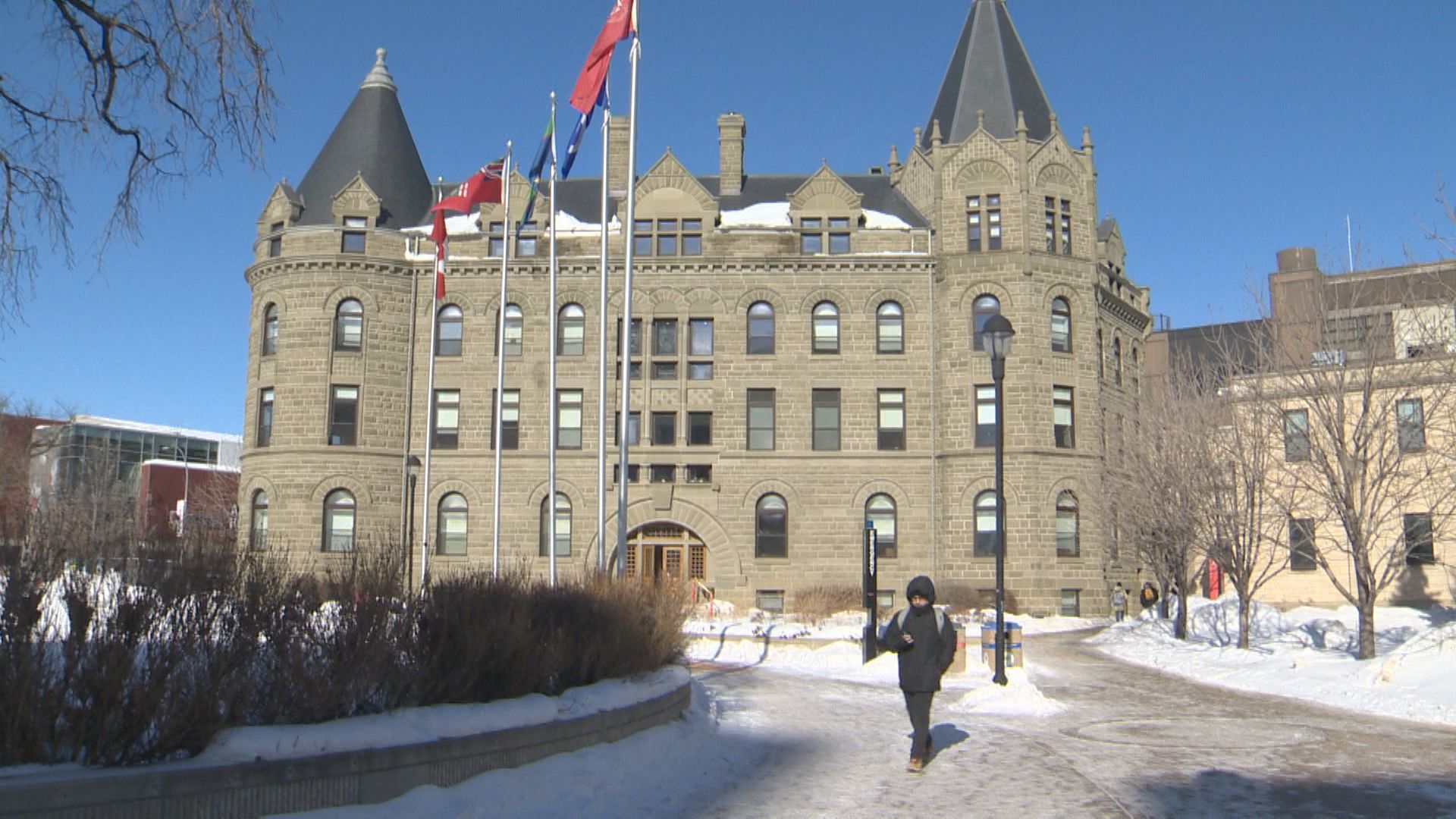
The fluorescent lights of the University of Manitoba’s Elizabeth Dafoe Library have a specific hum. It is the sound of ambition grinding against exhaustion. For Sarah, a third-year biology student whose story mirrors thousands across the province, that hum usually provides a backdrop for organic chemistry equations. Today, however, her notebook is open to a different kind of math. It is the math of survival in a province where the cost of a degree is shifting underfoot.
Manitoba has long marketed itself as the affordable heart of the Canadian prairies. For a decade, it was the place where you could get a world-class education without inheriting a lifetime of debt. But the quiet stability of the past is evaporating. The provincial government recently announced a 4% cap on tuition increases for the upcoming academic year. To a policymaker, 4% is a calculated compromise. To a student balancing a part-time job at a grocery store with a full-time course load, 4% is the difference between a textbook and a week of decent meals.
The stakes are rarely found in the text of a press release. They are found at kitchen tables in Brandon, in cramped basement suites in Winnipeg, and in the anxious eyes of parents in Thompson.
The Arithmetic of Anxiety
Consider the mechanics of the 4% increase. On its surface, the number seems modest. If a student pays $5,000 in tuition, a 4% hike adds $200 to the bill. In a vacuum, $200 is a weekend of overtime or a few months of cancelled streaming subscriptions. But education does not exist in a vacuum. It exists in an economy where the price of a head of lettuce has doubled and rent is a predatory beast.
When the government sets a cap, they are drawing a line in the sand. They argue that this limit protects students from the double-digit spikes seen in other provinces. They point to the need for universities to maintain crumbling infrastructure and retain professors who might otherwise flee to higher-paying jurisdictions. It is a balancing act performed on a high wire, where the safety net is made of taxpayer dollars that are already stretched thin.
The reality of the 4% cap is that it functions as both a shield and a sword. It prevents institutional greed, yes. But it also signals a permanent departure from the era of frozen tuition. For a generation of Manitobans, the "freeze" was a point of provincial pride. It was a social contract. That contract has been shredded and replaced by a sliding scale.
The Invisible Weight of the Degree
We often talk about tuition as a transactional fee. You pay the money; you get the lecture. This perspective ignores the psychological weight of the "invisible invoice." This is the tally of costs that aren't on the university website. It’s the $150 lab fee. It’s the $90 parking pass. It’s the $1,200 for digital access codes that expire the moment the final exam ends.
When the province moves the needle by 4%, every one of those auxiliary costs feels heavier.
Imagine a hypothetical student named Marcus. Marcus is the first in his family to attend university. He’s pursuing an engineering degree because he wants to build bridges, both literal and metaphorical, out of the poverty his parents worked so hard to endure. To Marcus, the 4% increase isn't just about the money. It is a psychological barrier. It reinforces the nagging voice in the back of his head that says higher education wasn't built for people like him. It suggests that the ladder is being pulled up, rung by rung, just as he reaches for it.
The government maintains that Manitoba still offers some of the lowest tuition rates in Western Canada. This is factually true. If you look at the numbers in Saskatchewan or Ontario, Manitoba appears like a bargain hunter's paradise. But comparing your neighbor's house fire to your own kitchen fire doesn't make your house any cooler. For the student living at the margins, the regional comparison is a cold comfort.
The Institutional Hunger
Universities are not villains in this narrative, though they are often cast in that role. They are massive, complex organisms that require constant nourishment. Heating a campus during a Winnipeg January costs a fortune. Maintaining specialized research equipment requires capital that tuition alone cannot provide.
The 4% cap is the government’s way of telling these institutions to "do more with less." It is a directive to find efficiencies. In the corporate world, "efficiency" is a buzzword for optimization. In the academic world, it often translates to larger class sizes, fewer elective options, and sessional instructors who are paid by the hour and have no office to meet with struggling students.
When we limit the revenue of a university, we are inevitably making a choice about the quality of the experience. We are choosing a world where the lecture hall is packed with 400 people instead of 40. We are choosing a world where the lab equipment is a decade out of date. The 4% cap is a compromise that leaves everyone slightly dissatisfied: the students feel the sting of the increase, and the universities feel the constriction of the limit.
A Shift in the Social Contract
There was a time when the University of Manitoba, Brandon University, and the University of Winnipeg were seen as public utilities, much like the roads or the power grid. They were the engines of social mobility. The drift toward higher tuition, even when capped, represents a fundamental shift in how we view the "public" in public education.
If the burden of funding shifts increasingly onto the individual, the individual begins to treat education like a consumer product. They demand a return on investment. They shy away from the arts, the humanities, and the "unprofitable" pursuits that actually make a society worth living in. They flock to degrees that promise a high starting salary just to service the debt they’ve accrued.
The 4% cap is a symptom of a larger identity crisis. Is a degree a right, a privilege, or a commodity?
Sarah closes her notebook in the library. She has decided she can't afford the new edition of her textbook. She will spend the next hour scouring online forums for a PDF or a used copy from three years ago, hoping the page numbers haven't changed too much. She is tired. The hum of the lights seems louder now.
She walks out into the crisp Manitoba air, passing buildings named after philanthropists and politicians. Most of them went to school when a summer job at a summer camp could pay for an entire year of tuition. They lived in a different province, under a different sun.
The 4% cap is now the law of the land. It is a number on a page, a line in a budget, and a flicker of heat in an ongoing debate. But for the people walking across the quad, it is a persistent, quiet pressure—the slow tightening of a knot that was already taut.
Behind the statistics and the political posturing, there is a simple, haunting reality. Every percentage point added to the cost of a dream is a person deciding whether that dream is still worth the price of admission. The lecture halls remain full for now, but the silence in the hallways tells a different story. It is the silence of a generation learning that the most expensive thing you can buy in Manitoba is a future.
Sarah reaches the bus stop, her bag heavy with the weight of things she cannot see, heading toward a shift at the store that will cover the increase, but never the exhaustion.