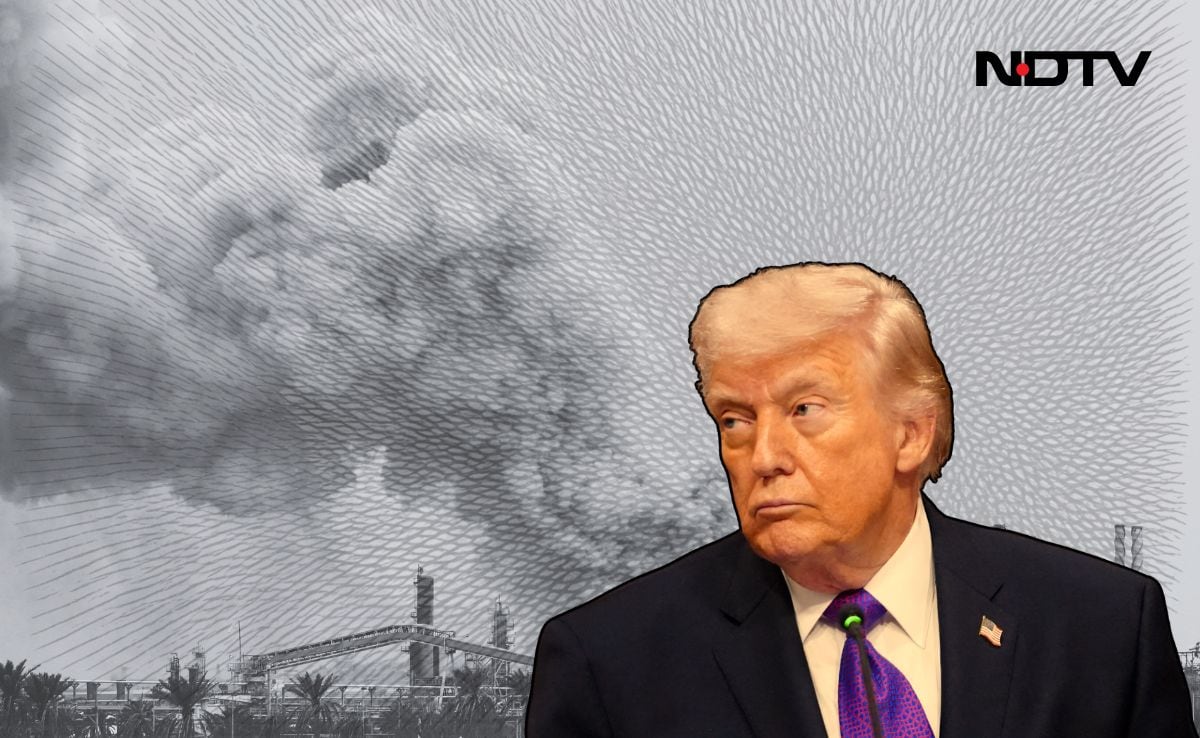
The persistence of diplomatic overtures in the face of explicit rejection is rarely a sign of naivety; it is a calculated deployment of geopolitical optionality. When the United States maintains that communication channels remain open despite Tehran’s public dismissal of the Trump administration’s outreach, it is navigating a specific "Credibility Gap" framework. The objective is not immediate consensus—which is mathematically improbable given the current alignment of domestic incentives in both capitals—but rather the management of three distinct operational variables: the maintenance of international coalition cohesion, the exhaustion of non-kinetic alternatives, and the psychological signaling of "The Open Door" to internal Iranian factions.
This friction exists because both nations are operating under fundamentally different cost functions. Washington views diplomacy as a tool to mitigate the risk of regional escalation and nuclear proliferation. Tehran views any engagement with the current administration through the lens of political survival and historical grievance. When these two utility curves fail to intersect, the result is the current state of "Diplomatic Stasis," where the act of talking about talks becomes more valuable than the talks themselves. Meanwhile, you can explore similar stories here: The Cold Truth About Russias Crumbling Power Grid.
The Architecture of Diplomatic Rejection
To understand why Iran rejects the outreach, one must deconstruct the internal Iranian power structure. The rejection is not a monolith; it is a defensive mechanism against perceived "Zero-Sum Negotiation."
- The Sovereignty Tax: For the Iranian leadership, engaging with an administration that previously exited the Joint Comprehensive Plan of Action (JCPOA) carries a high political cost. To return to the table without a massive "pre-payment" in the form of sanctions relief would be seen as a capitulation, devaluing the regime’s brand of resistance.
- Verification Bottlenecks: Tehran’s distrust is rooted in a structural reality. If a deal can be signed by one administration and discarded by the next, the "Net Present Value" (NPV) of any diplomatic agreement drops toward zero. Without a mechanism to bind future U.S. administrations—which the American system of government prevents for executive agreements—Iran sees no rational path to a durable bargain.
- The Leverage Paradox: Iran often believes that its leverage increases as it nears nuclear breakout capacity. Conversely, the U.S. believes its leverage increases as sanctions tighten. This creates a "Double Escalation" loop where both sides move further away from a compromise zone in an attempt to enter negotiations from a position of strength.
The U.S. insistence that talks are ongoing is a tactical move to prevent this loop from reaching a terminal point. By claiming the existence of a backchannel or a persistent "readiness," the U.S. shifts the "Onus of Escalation" onto Iran. If the situation deteriorates into conflict, the U.S. can demonstrate to the UN Security Council and European allies that it exhausted every possible verbal avenue, thereby legitimizing more aggressive measures. To understand the bigger picture, check out the recent analysis by USA Today.
The Three Pillars of US Persistence
The American strategy relies on three structural pillars designed to maintain the status quo until a shift in variables occurs.
1. The Multi-Channel Redundancy
Public rejections are often performative. Diplomatic history suggests that "Track II" and "Track III" channels—involving intermediaries like Oman, Switzerland, or Qatar—frequently operate in direct contradiction to public rhetoric. The U.S. insists talks are ongoing because, in a technical sense, the exchange of messages regarding de-confliction, prisoner releases, or maritime safety never truly stops. These are the "Operational Minimums" required to prevent accidental war.
2. Narrative Dominance and the Global Audience
Diplomacy is a theater for third-party observers. By maintaining a posture of "Reasonable Persistence," the U.S. holds together the "Sanctions Coalition." If Washington were to walk away and declare diplomacy dead, it would lose the support of allies who view diplomacy as the only legitimate path. The goal here is "Allied Alignment Maintenance." As long as the U.S. is "trying," the blame for regional instability remains squarely on Tehran in the eyes of the international community.
3. The Domestic Signaling Loop
The Trump administration’s approach to Iran is often characterized by "Maximum Pressure" coupled with "Maximum Transactionalism." By keeping the door open, the administration signals to its own domestic base that it is not seeking "Forever Wars," but rather a "Better Deal." This creates a political hedge. If Iran eventually buckles, it is a win; if they don't, the administration can justify further economic strangulation as a necessary response to Iranian intransigence.
The Cost Function of the Status Quo
Every day this standoff continues, both sides incur specific, measurable costs. Understanding these costs explains why the "Open Door" policy eventually hits a wall of diminishing returns.
- For the United States, the cost is "Strategic Distraction." Every hour spent managing the Iran file is an hour diverted from the Indo-Pacific theater and the competition with China. The "Opportunity Cost of Hegemony" is high; the U.S. cannot stay in a state of "Talks Ongoing" forever without weakening its posture elsewhere.
- For Iran, the cost is "Economic Atrophy." The decay of infrastructure, the devaluation of the Rial, and the brain drain of its youth population are compounding interest on a debt they may never be able to pay. However, the regime views this as a "Survival Premium"—a price worth paying to ensure they are not "regime-changed" by Western influence.
Identifying the Inflection Point
The current stalemate is held in place by the "Equilibrium of Mutual Dissatisfaction." For this to break, one of the following structural shifts must occur:
- A Domestic Legitimacy Crisis: If internal Iranian protests reach a scale that threatens the regime's existence, the leadership may seek a "Heroic Flexibility" moment to secure immediate economic relief.
- Technological Redline Crossing: If Iran’s enrichment levels reach a point where the "Time to Breakout" is measured in days rather than months, the U.S. and Israel will be forced to transition from "Diplomatic Outreach" to "Kinetic Intervention," rendering the talk of ongoing talks moot.
- Third-Party Intervention: A major shift in the posture of Russia or China—Iran’s primary economic and diplomatic lifelines—could force Tehran to re-evaluate its rejection of U.S. terms.
The U.S. is currently betting that time is on its side. By maintaining the fiction—or the reality—of ongoing talks, Washington is preserving a "Pivot Option." If the geopolitical environment shifts, they have an established, if frayed, cord to pull.
Strategic Recommendation for Regional Stakeholders
The most effective path forward for observers and regional actors is to discount public rhetoric by a factor of at least 70%. The real signal is found in the "Buffer Zones"—the movement of assets in the Persian Gulf and the specific wording of IAEA reports.
The U.S. will continue to project a posture of "Exhaustive Diplomacy" because the alternative—admitting that diplomacy has failed—triggers a sequence of escalatory steps that Washington is not yet ready to fund. Iran will continue to reject the outreach because the "Admission Fee" to the table is currently higher than the cost of the sanctions they are enduring.
The strategy for the next 12 months should be centered on "Risk Containment" rather than "Conflict Resolution." This involves formalizing de-confliction protocols through neutral third parties to ensure that while the high-level diplomacy remains frozen, the tactical-level friction does not trigger a systemic collapse. Focus should shift from the "Grand Bargain" to "Micro-Accords" on specific issues like maritime safety and humanitarian corridors, which allow both sides to interact without the political suicide of a formal summit. The "Open Door" must be treated as a pressure valve, not a doorway.