The rumors circulating through the back channels of Brussels and Washington have finally solidified into a concrete, if controversial, diplomatic strategy. In a move that caught most of the Mediterranean by surprise, the United States has successfully lobbied for a coalition of small European nations—led by the Grand Duchy of Luxembourg—to provide the boots on the ground for a post-conflict Gaza. This isn't just about peacekeeping. It is a calculated attempt to break the cycle of regional distrust by introducing a military presence that carries zero colonial baggage and lacks the geopolitical weight to threaten any of the major local powers.
For months, the bottleneck for any humanitarian or security resolution in the Gaza Strip has been the identity of the guarantor. Israel refuses to hand control to the Palestinian Authority without massive structural overhauls. Arab neighbors like Egypt and Jordan are wary of being seen as the jailers of the Palestinian people. Into this vacuum steps Luxembourg, a nation with a military smaller than the police force of most mid-sized American cities, but with a diplomatic credit score that is essentially spotless.
The plan, quietly backed by the Biden administration, involves a specialized force of several hundred personnel. Their primary mission is not combat, but the securing of logistics corridors and the oversight of reconstruction funds. By placing a "micro-state" in the crosshairs, the U.S. hopes to create a buffer that no side can comfortably attack without drawing the immediate and total condemnation of the European Union.
The Strategy of the Non-Threatening Force
The logic here is cynical and brilliant. Historically, peacekeeping fails when the peacekeepers are perceived as a proxy for one of the combatants. By selecting a nation like Luxembourg, the U.S. is betting on the power of perceived harmlessness.
Luxembourg’s military, the Lëtzebuerger Arméi, is a volunteer force that operates under a strictly defensive mandate. They don't have aircraft carriers. They don't have long-range ballistic missiles. What they do have is a deep integration with NATO and a reputation for technical excellence in logistics and communications. This makes them the perfect "neutral" administrator for the port facilities and aid distribution centers that are currently the subject of intense negotiation.
However, the "why" goes deeper than simple neutrality. This is a pilot program for a new brand of Western intervention. Washington is tired of the optics of American soldiers in the Middle East. If a small, wealthy European nation can successfully manage a small slice of the security pie, it provides a template for other nations like Belgium, the Netherlands, or even the Baltic states to follow. It distributes the political risk. If the mission fails, it is a European setback, not necessarily a fresh American quagmire.
Money and the Infrastructure of Peace
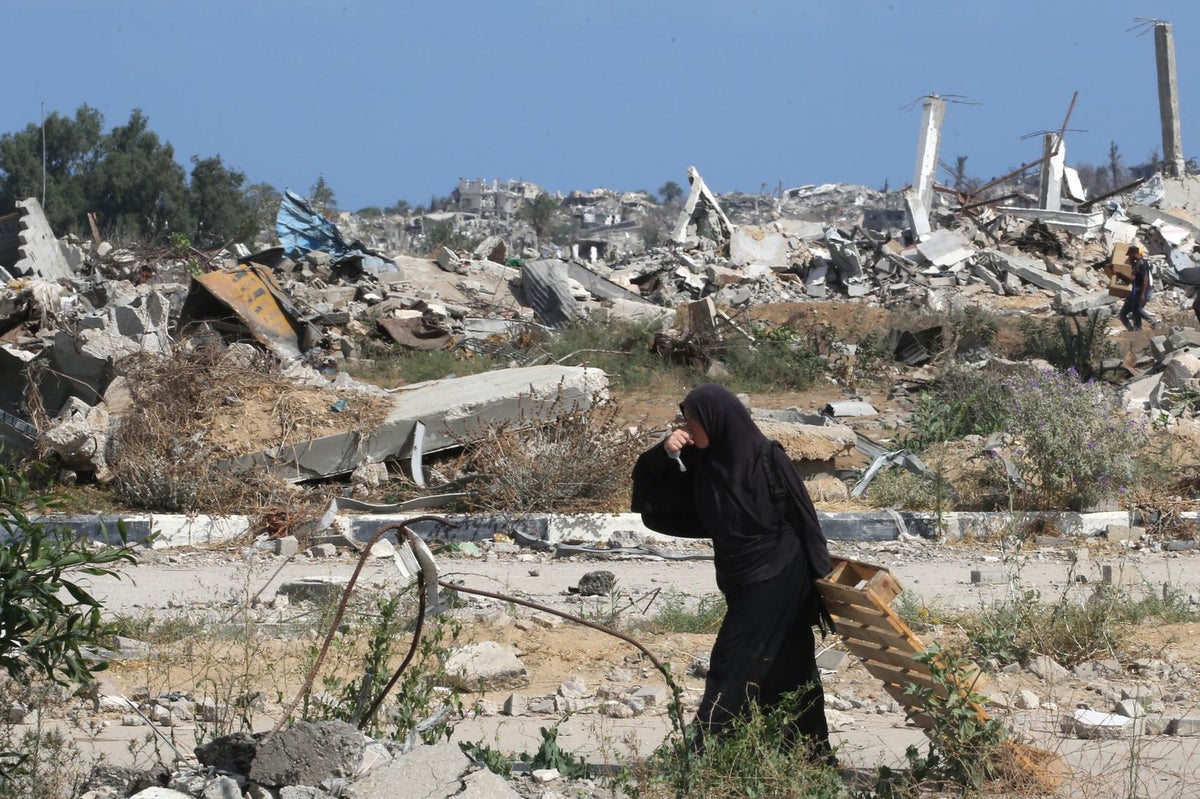
Peace is expensive, and Luxembourg is one of the few places that can actually afford to help bankroll the administrative side of this endeavor. The plan involves the creation of an international trust fund, headquartered in Luxembourg City, to manage the billions of dollars required for rebuilding Gaza’s leveled infrastructure.
By tying the military presence to the financial management, the U.S.-backed plan attempts to solve the "leakage" problem that has plagued previous aid efforts. The soldiers aren't just guarding gates; they are protecting the auditors.
The Security Mechanism
- Logistics Corridors: Establishing a secured route from the new floating pier to the major distribution hubs.
- Technical Surveillance: Utilizing high-end European drone and sensor tech to monitor the perimeter without a massive footprint.
- Civilian-Military Coordination: Acting as the middleman between Israeli security requirements and Palestinian humanitarian needs.
The technical specs of this mission are rigorous. We aren't talking about peacekeepers standing on a hill with binoculars. The proposal includes the deployment of advanced biometric scanning at entry points and the use of blockchain-based tracking for every ton of concrete and steel entering the strip. This level of oversight is designed to satisfy Israeli demands that reconstruction materials aren't diverted for military use by local factions.
The Pushback from the Ground
Not everyone is buying the "neutral arbiter" narrative. Local factions in Gaza have already voiced opposition to any foreign presence, regardless of how small or "non-threatening" the nation might be. To a resident of Gaza City, a soldier in a foreign uniform is an occupier, whether that uniform bears the stars and stripes or the red, white, and light blue of Luxembourg.
Inside Israel, the political right is equally skeptical. There is a deep-seated belief in the Knesset that European forces lack the stomach for the kind of high-intensity security work required in the region. They fear that at the first sign of real trouble—a suicide bombing or a mortar attack—the Europeans will pack up and leave, creating a security vacuum that will be filled by the very groups Israel is trying to sideline.
The U.S. is countering this by offering "over-the-horizon" support. This means that while Luxembourgish troops are the face of the operation, American intelligence, satellite coverage, and rapid-response capabilities will be idling just offshore. It is a puppet show of sorts, where the hands are American but the face is European.
Why the Small State Model Might Fail
The inherent flaw in the small-state model is the lack of escalation dominance. If a conflict breaks out, Luxembourg cannot defend itself. It relies entirely on the deterrent of its alliances. In the chaotic environment of a post-war Gaza, deterrence is a shaky concept.
If a small unit of European soldiers is taken hostage, the political pressure on the home government would be catastrophic. Unlike a superpower, a nation of 600,000 people cannot afford to lose fifty soldiers in a single afternoon. The domestic fallout would end the mission instantly. This creates a "fragility gap" that spoilers in the region could easily exploit.
Furthermore, there is the question of the legal mandate. The U.N. Security Council remains deadlocked. This mission is being framed as a "coalition of the willing" backed by the U.S., which sidesteps the U.N. but also strips the force of the broad international legitimacy that a formal Blue Helmet mission would provide. It makes them look like contractors for the West rather than representatives of the global community.
The Economic Incentive for Europe
Why would Luxembourg agree to this? The answer lies in the shifting power dynamics within the European Union. For decades, the "Big Three"—Germany, France, and the UK (pre-Brexit)—have dictated European foreign policy. Smaller nations have been relegated to the sidelines, providing support but never leading.
By taking the lead on the Gaza peace plan, Luxembourg is punching far above its weight. It gains significant leverage in Washington and cements its position as an indispensable player in the EU’s Common Security and Defence Policy. There is also the matter of the reconstruction contracts. European firms are hungry for the work, and having their own troops on the ground provides a significant advantage when the tenders are issued.
Practical Realities of the Deployment
The logistics of moving a European force into the most densely populated conflict zone on earth are staggering. The initial phase calls for a "Secured Green Zone" around the temporary pier and the Erez crossing.
- Phase One: Deployment of 150 technical specialists and engineers to establish secure communication nodes.
- Phase Two: Arrival of the main security contingent (roughly 400 personnel) to take over the inner perimeter of the aid corridors.
- Phase Three: Integration of local Palestinian administrative staff under European supervision.
This phased approach is designed to test the waters. If the first 150 personnel can operate without being targeted, the rest will follow. It is a slow, cautious creep toward a new reality.
The personnel selected for this mission are not your average infantry. They are being drawn from the elite ranks of the Grand Ducal Guard and specialized police units trained in de-escalation and urban management. They are being briefed on the cultural nuances of the region, but no amount of briefing can prepare a soldier from the Ardennes for the heat and hostility of a Mediterranean summer in a war zone.
The Israeli Vetoproofing
The most difficult part of the negotiation wasn't getting Luxembourg to say yes; it was getting Israel to not say no. The Prime Minister’s office has historically been allergic to foreign intervention. They remember the failures of the UNIFIL mission in Lebanon, where peacekeepers were seen as effectively providing a shield for militants.
To bypass this, the U.S. has guaranteed Israel "unfettered access" to all intelligence gathered by the European force. In essence, the Luxembourgish troops will be operating in a fishbowl. Every drone feed, every biometric scan, and every radio transmission will be mirrored to the IDF. This level of transparency is unprecedented and is the only reason the plan hasn't been blocked by the Israeli security establishment.
The Overlooked Factor of Regional Buy-in
While the U.S. and Europe are busy drawing maps and troop movements, the regional players—Saudi Arabia, the UAE, and Qatar—are watching from the sidelines. Their financial buy-in is the real linchpin. They have made it clear that they will not pay for the "beautification" of a perpetual occupation.
If the Luxembourgish presence is seen as a permanent fixture, the Arab money will dry up. The mission must have a clear exit ramp. The current draft of the plan suggests a three-year mandate, with a "transfer of authority" to a local Palestinian body at the end of that term.
But three years in the Middle East is an eternity. Landscapes change, governments fall, and new grievances are born every day. To believe that a few hundred soldiers from a tiny European nation can hold the line long enough for a functional state to emerge is a massive gamble. It is a bet that the people of Gaza are so exhausted by conflict that they will accept any hand that feeds them, even one that comes from a place they’ve likely never heard of.
The reality of the situation is that this isn't about Luxembourg at all. It is about the failure of the larger powers to find a solution they can live with. The "Tiny Nation" plan is a desperate attempt to outsource a problem that has become too heavy for the giants to carry. It is a move born of exhaustion, wrapped in the language of innovative diplomacy.
If it works, Luxembourg becomes the model for a new kind of surgical peacekeeping. If it fails, it will be remembered as the moment the West finally ran out of ideas and started throwing the smallest pieces on the board into the fire. The success of the mission won't be measured in treaties or handshakes, but in whether or not a convoy of trucks can drive from the coast to the heart of the city without being hit by a rocket or a drone. That is the only metric that matters now.
Watch the procurement cycles for the Luxembourgish defense ministry over the next six months. If you see a sudden spike in desert-spec armored vehicles and mobile desalination units, the plan is no longer just a theory. It is a deployment.