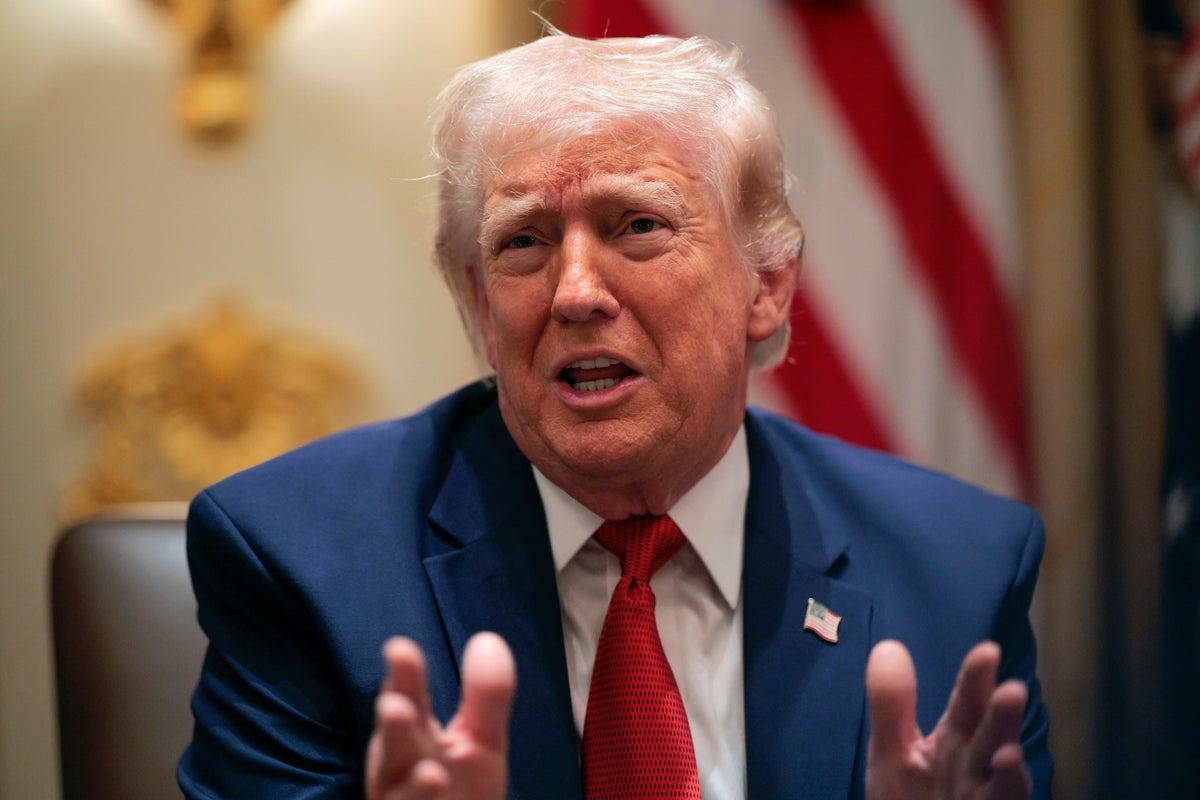
The threshold for using the United States military on American soil has historically been a glass ceiling reinforced by centuries of legal precedent and deep-seated cultural taboo. That ceiling is no longer intact. Donald Trump’s repeated assertions that he would use "troops on the ground" to manage domestic issues—ranging from mass deportations to the suppression of "the enemy within"—has shifted from campaign trail hyperbole to a central pillar of his governing philosophy. This isn't just about rhetoric anymore. It is about a fundamental reimagining of the Commander-in-Chief’s power under the Insurrection Act of 1807. While some Republican lawmakers view this as a necessary restoration of order, others are quietly grappling with the long-term erosion of the Posse Comitatus Act, which generally prohibits the use of federal military personnel to enforce domestic policies.
The internal logic of the MAGA movement suggests that the traditional distinction between foreign threats and domestic unrest has collapsed. To the most ardent loyalists, a porous border or a protest that turns into a riot is an "invasion" or an "insurrection" by another name. By framing domestic policy failures as national security crises, the legal path to deploying the National Guard—or even active-duty Army units—becomes significantly easier to justify to a base that prizes "strength" above procedural norms.
The Legal Architecture of Internal Deployment
To understand how a second Trump administration would actually execute these threats, one must look at the loopholes within the Insurrection Act. The law is notoriously vague. It allows a president to deploy troops domestically if they determine that "unlawful obstructions, combinations, or assemblages" make it impracticable to enforce federal law. There is no judicial review built into this decision. If a president says there is an emergency, for all intents and purposes, there is an emergency.
Historically, the act was a tool of last resort. It was used by Eisenhower to desegregate schools in Little Rock and by George H.W. Bush during the 1992 Los Angeles riots. In those instances, the goal was to restore a status quo that had been shattered by local failure or defiance. The Trump proposal differs because it seeks to use the military as a primary tool for policy implementation, specifically for the logistical nightmare of rounding up and detaining millions of undocumented immigrants. This is a massive shift in scope. Moving from "restoring order" to "executing a civil program" turns the military into a multi-purpose federal police force.
The Republican Split on Civilian-Military Boundaries
Within the halls of Congress, the reaction to these plans isn't the monolith many expect. You have the "Constitutionalists" versus the "Realists." The Constitutionalists, often represented by the dwindling wing of the party that prioritizes limited executive power, worry about the precedent. They know that if a Republican president uses the 82nd Airborne to clear a park or guard a detention center, a future Democratic president could use that same precedent to declare a "climate emergency" and seize private property or use the military to enforce gun control measures.
Then there are the Realists. These figures, including prominent MAGA voices like JD Vance and various members of the House Freedom Caucus, argue that the "administrative state" has become so entrenched that only the military has the logistical capacity and the chain-of-command discipline to bypass bureaucratic sabotage. They see the military not as a threat to liberty, but as a last line of defense for a "sovereign" American state. To them, the "Deep State" can't be reformed by legislation alone; it needs the overwhelming power of the Commander-in-Chief.
The Border as an Active War Zone
The most frequent scenario involves the U.S.-Mexico border. Trump’s proposal involves using the military as a de facto deportation force, bypassing the cumbersome processes of ICE and the Department of Homeland Security. This is a massive logistical challenge. It would involve the construction of temporary "cities" of tents to house millions of people and the deployment of the military's logistical and transportation wings. This is no longer about a wall; it's about a military-grade operation on U.S. soil.
Some Republican figures, like Senator Tom Cotton, have long been vocal about using the military for internal security. During the 2020 protests, his "Send in the Troops" op-ed in the New York Times was a harbinger of this current shift. It wasn't an outlier. It was the blueprint. But there are voices of caution. Former military officers and legal experts within the GOP point out that the military is not trained for civilian law enforcement. They are trained to destroy a target, not to interact with a civilian population in a constitutional republic.
The Operational Risk of Using Soldiers as Police
Soldiers aren't police. That is the fundamental disconnect between the rhetoric and the reality. A police officer is trained in de-escalation, local law, and individual rights. A soldier is trained in the rules of engagement (ROE). When you put a soldier with a carbine on a city street or in a detention camp, the risk of a lethal misunderstanding sky-rockets. One nervous 19-year-old private with a loaded weapon can create a domestic tragedy that would permanently damage the American military's relationship with the public.
Then there is the question of the oath. Every member of the military swears an oath to "support and defend the Constitution of the United States against all enemies, foreign and domestic." The ambiguity of "domestic enemies" is exactly what is at the heart of this entire debate. If a president orders a general to deploy troops into a city against the will of the governor, is that a "lawful order"? Many legal experts say yes, under the Insurrection Act. Many military leaders, however, are terrified of the choice they would have to make between their duty to the president and their commitment to non-partisan civil-military relations.
The Fracturing of the Republican Guard
This isn't just about Trump; it’s about a broader ideological transformation within the GOP. The "Old Guard" Republicans who believed in a strict separation between the military and domestic life are being replaced by a younger, more aggressive generation. This new cohort sees the military as just another lever of executive power to be used against a political opposition they view as an existential threat.
The tension is real. While figures like Marjorie Taylor Greene or Matt Gaetz might champion these measures as "common sense," more traditional Republicans in the Senate are quietly looking for ways to amend the Insurrection Act. They want to require a more stringent set of conditions before a president can override a state’s sovereignty. But in a party where loyalty to the top of the ticket is the primary currency, these legislative efforts are struggling to find oxygen.
The Fiscal Reality of Domestic Military Use
There is also the matter of the budget. Deploying hundreds of thousands of troops domestically is an expensive proposition. Where does the money come from? Typically, the Department of Defense budget is allocated for training, maintenance, and overseas operations. Re-directing those funds toward domestic policing and deportation camps would require either a massive increase in the defense budget or a significant gutting of the military's readiness for foreign conflicts. In an era of rising threats from China and Russia, the idea of tying up the military in a domestic quagmire is a nightmare for the Pentagon’s senior leadership.
Furthermore, the impact on recruitment could be devastating. The U.S. military is already facing its worst recruitment crisis in decades. Young people who join the military generally want to serve their country on a global stage, not spend their enlistment guarding a detention center in Arizona or patrolling a suburb in a blue state. The cultural fallout of the military becoming a domestic enforcer would fundamentally change the institution of the all-volunteer force.
The Shadow of 2020
The roots of this plan can be traced directly back to June 2020, when the Trump administration considered using the military to quell the George Floyd protests. The pushback from then-Defense Secretary Mark Esper and General Mark Milley was intense. They both publicly distanced themselves from the idea, leading to a rift that persists to this day. Trump’s current team has reportedly been vetting future appointees to ensure they won't provide the same kind of resistance in a second term.
They aren't looking for "yes men"; they are looking for "believers." This means that the next Secretary of Defense and the next Chairman of the Joint Chiefs could be individuals who see no inherent problem with the domestic use of force. This would remove the final institutional barrier between the White House and the deployment of troops on American streets.
The Impact on State Sovereignty
A central tenet of conservatism has always been states' rights. Yet, the domestic use of the military often involves the president overriding the authority of governors. If a governor of a state refuses to cooperate with a mass deportation plan, the Insurrection Act allows the president to federalize the National Guard of that state, effectively taking control of the state's own militia and using it against the state government's wishes. This is the ultimate centralization of power, a move that would have been anathema to the Republican party of twenty years ago.
The irony is that many of the same voices who rail against federal overreach in education or healthcare are the most vocal supporters of using the federal military to enforce immigration and public order policies in cities and states that disagree with them. This reveals a shift from a "limited government" philosophy to a "strong executive" philosophy. The focus has moved from "what the government should do" to "who the government should be used against."
The Inevitable Litigation
Any move to deploy troops domestically would be met with an immediate and massive wave of litigation. From the ACLU to state attorneys general, the courts would be flooded with requests for injunctions. But the Supreme Court has historically been extremely hesitant to second-guess a president on matters of national security and the use of the military. If the Court follows its recent pattern of expansive views of executive power, it is unlikely to intervene in any meaningful way.
This leaves the American public in a precarious position. The "norms" that we have relied on for decades are not laws. They are merely customs. And as we have seen, customs can be discarded in an afternoon. The Republican party's internal debate on this issue is not just a policy disagreement; it is a battle for the soul of the party and, by extension, the future of the American republic.
The plan is laid out in plain sight. It is not a secret. It is a campaign promise. Whether it is a necessary corrective to a broken system or a dangerous slide toward authoritarianism is a question that will be decided not in the courts, but at the ballot box and, ultimately, on the streets. The logistical, legal, and moral framework for a military-led domestic policy is already being built. All that's left is for someone to turn the key.