The security of democratic elections rests not on the perceived integrity of the individual, but on the redundancy of the physical and digital protocols governing access to critical hardware. When a volunteer in Palm Beach County, Florida—previously vetted through standard municipal channels—successfully exfiltrated a specialized "voter terminal key" (an encrypted USB device required for machine activation), the failure was not a moral one. It was a failure of the Control-Access-Audit (CAA) Triad. This incident serves as a diagnostic case study in how decentralized election administration creates high-entropy environments where the cost of internal sabotage is lower than the cost of the oversight required to prevent it.
The Vector of Internal Trust and the Failure of Vetting
Most election security discourse focuses on external state actors or remote cyber-penetration. However, the Florida case highlights a more immediate "Layer 0" risk: the trusted insider. Vetting processes for election volunteers typically rely on criminal background checks and residency verification. These metrics are lagging indicators; they measure past behavior but fail to account for current ideological volatility.
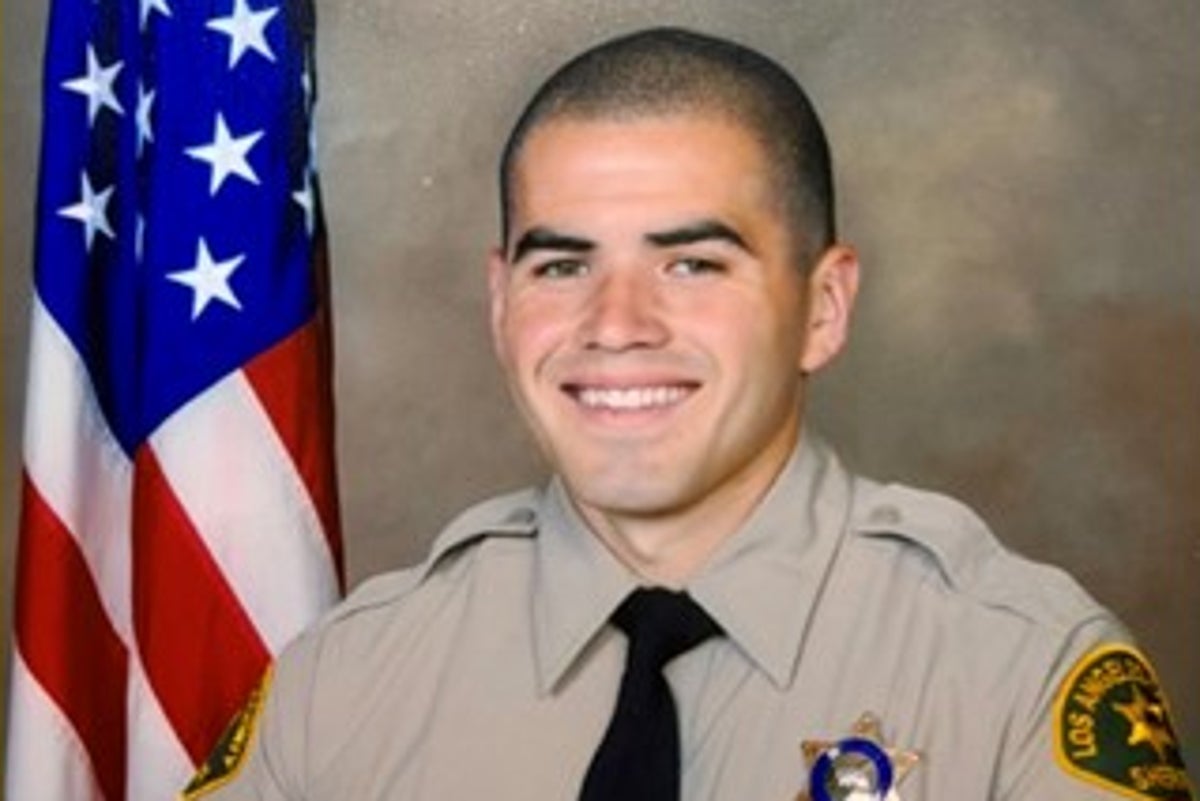
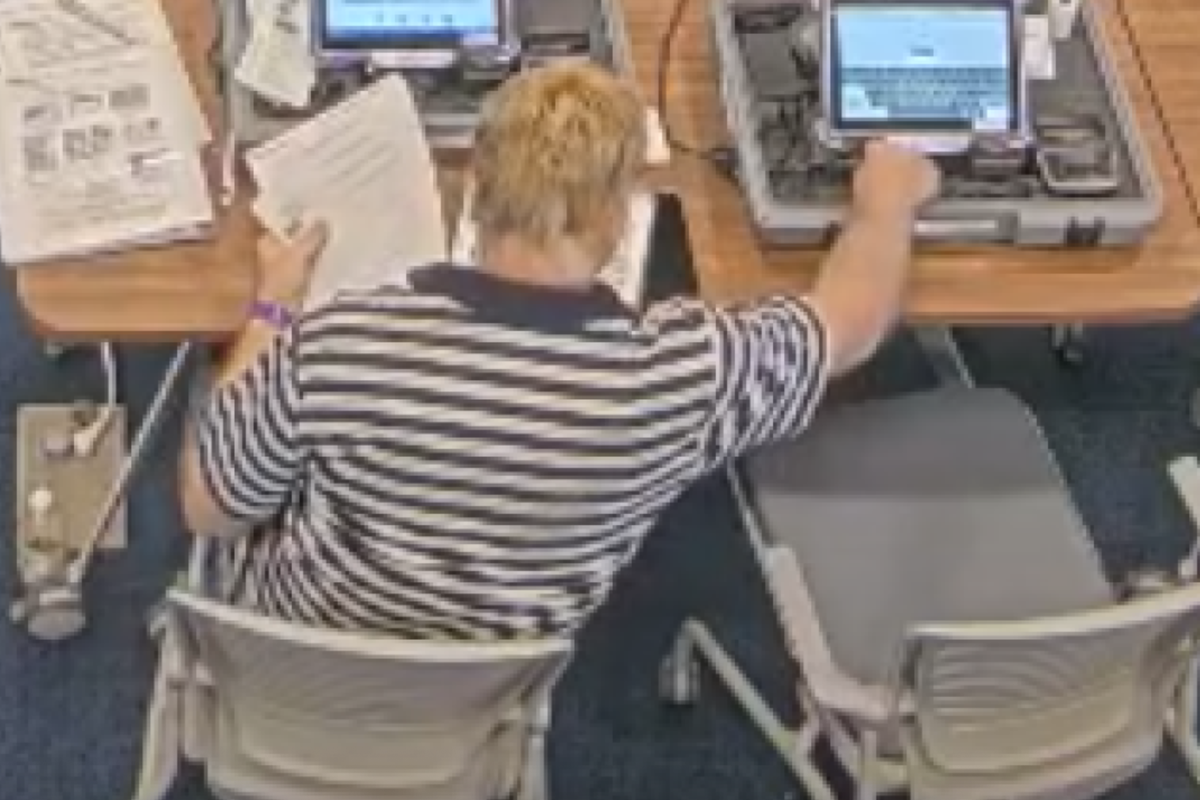
The volunteer in question, identified as 20-year-old Sean Aranda, reportedly expressed strong anti-Trump sentiments on social media. From a risk-management perspective, the issue is not the content of the political belief, but the Incentive-Alignment Gap. When an individual’s ideological objectives diverge from the institutional objective (neutrality and procedural integrity), the internal threat level rises.
Standard vetting fails to capture this because:
- Static Data Points: Background checks do not monitor real-time radicalization or shifts in sentiment.
- Privacy-Security Trade-offs: Municipalities often lack the legal or financial resources to conduct deep-web sentiment analysis on temporary volunteers.
- The High-Volume Bottleneck: The sheer number of volunteers needed for a general election forces a "low-pass filter" approach to onboarding, favoring availability over rigorous psychological or ideological profiling.
The Physical-Digital Interface The Voter Terminal Key
The stolen item—a media key—is a physical token that acts as a second factor of authentication for the ballot marking devices or tabulators. In a secure system, this key should be useless without a corresponding PIN or biometric handshake. Yet, the theft of the physical device creates a Denial of Service (DoS) risk at the precinct level. If a key is missing, the machine is offline, disenfranchising voters in that specific micro-geography until a replacement is provisioned.
The mechanics of this theft reveal a breakdown in Two-Person Integrity (TPI). TPI is a security principle used in high-stakes environments (like nuclear silos or bank vaults) where no single individual is allowed physical access to a critical component. In the Florida incident, the volunteer was able to pocket the key and exit the facility. This implies one of three systemic lapses:
- Supervisory Ratio Failure: The number of volunteers exceeded the capacity of full-time staff to maintain visual or digital "eyes-on" status.
- Logging Latency: The interval between the device being checked out and the audit of its return was long enough to allow the perpetrator to leave the perimeter.
- Physical Obfuscation: The design of the voter terminal—specifically the port location—allowed for a "blind spot" during insertion or removal.
Quantifying the Blast Radius of Localized Theft
While a single key cannot "flip" a national election, the strategic value of such an act lies in Erosive Trust Mechanics. We can quantify the impact of this security breach using three primary variables:
- The Tactical Delay: The time required to identify the theft, notify the central election office, invalidate the stolen credentials (if possible), and deploy a replacement.
- The Information Asymmetry: If the key is analyzed by a technically proficient actor, it could reveal firmware versions, encryption standards, or file structures that provide a roadmap for future, more sophisticated attacks.
- The Narrative Multiplier: The most potent "cost" of the theft is the delegitimization of the process. A single stolen key becomes a data point used to argue for the systemic insecurity of the entire state's voting apparatus.
The perpetrator was charged with "theft of an election lead" and "interfering with an election." These charges reflect the intent to disrupt the Operational Continuity of the precinct. In the context of Florida’s high-stakes electoral history, even a micro-disruption in a single county can have cascading effects on the timing of results reporting, creating a window for misinformation to proliferate.
The Cost Function of Election Hardening
To eliminate the risk of a volunteer pocketing a media key, an election office must increase its spend on Active Surveillance and Redundant Chain of Custody.
The current cost function looks like this:
$$C_{total} = C_{labor} + C_{hardware} + C_{risk}$$
Where $C_{risk}$ is the probability of a breach multiplied by the political and social cost of that breach. Most jurisdictions minimize $C_{labor}$ by using volunteers, which inadvertently spikes $C_{risk}$. A transition to a "Zero Trust" model would require:
- Hardware Tethering: Media keys physically anchored to the chassis of the voting machine, requiring a master key held only by a sworn officer to remove.
- Real-time NFC Geofencing: Tags on all critical hardware that trigger an alarm if moved more than 10 meters from their assigned station.
- Digital Ephemerality: Software-based keys that expire every 4 hours, requiring a fresh cryptographic handshake from a central server to remain active.
The limitation here is budget. Most local election boards operate on legacy funding structures that prioritize the purchase of machines over the lifecycle management of the security tokens used to run them.
Psychological Profiling vs. Technical Controls
The Florida volunteer’s social media activity is being used as a post-hoc explanation for his actions. However, relying on social media monitoring is a flawed strategy for two reasons. First, the False Positive Rate is prohibitively high; millions of people express extreme political views without ever committing a felony. Second, it encourages a "Whac-A-Mole" approach to security.
The structural solution is to treat all personnel—regardless of their social media presence or perceived character—as potential threats. This is the Principle of Least Privilege. A volunteer should never have the "privilege" to be alone with a media key. The fact that the theft occurred proves that the "privilege" was granted by default or by negligence.
The Strategic Play for 2024 and Beyond
Election officials must pivot from a "Vetting-Heavy" model to a "Process-Heavy" model. Vetting is a porous shield; process is a rigid cage. The objective is to move the vulnerability from the "Individual" (unpredictable) to the "System" (auditable).
Immediate operational changes should include:
- Visual Delta Audits: Every 60 minutes, a supervisor must visually confirm the presence of all media keys in a precinct. This creates a "short-cycle" audit trail that narrows the window of opportunity for theft.
- Serialized Tamper-Evident Tape: All ports and keys must be sealed with serialized tape. Any break in the seal, regardless of whether the key is present, triggers an immediate machine quarantine and forensic review.
- Social Media Neutrality Agreements: While unenforceable as a total ban, requiring volunteers to sign a "Code of Digital Conduct" creates a legal and psychological barrier, raising the "perceived cost" of committing a politically motivated crime.
The Florida incident is a warning shot. It reveals that the weakest point in the voting chain is the final three feet of physical space between a volunteer and the machine. Hardening this gap requires less focus on who the volunteers are, and more focus on what the system allows them to do when no one is looking.
Establish a mandatory "Equipment Custody Log" that requires dual-signature verification every time a voting terminal is powered on or off, ensuring that the physical media key never enters a state of unobserved possession. This eliminates the "Pocket Gap" that was exploited in the Palm Beach incident.