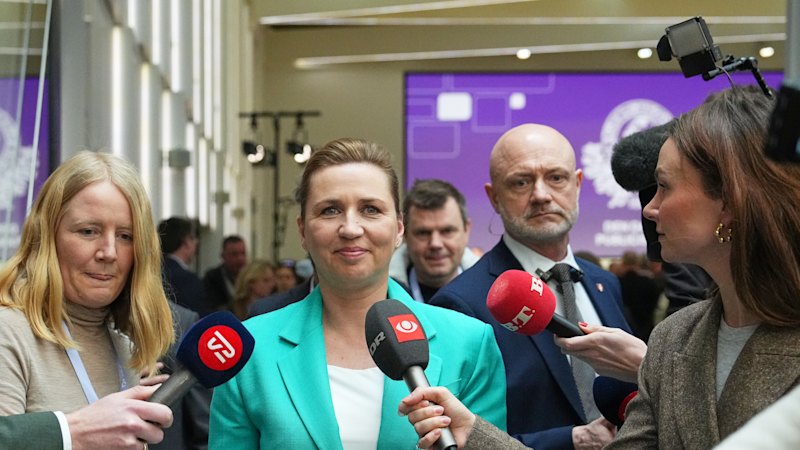
The wind in Nuuk doesn’t just blow; it carves. On an election night where the world expected the status quo to hold firm, that wind carried a message that Mette Frederiksen, Denmark's Prime Minister, apparently failed to hear from the comfort of Christiansborg Palace. She had gambled on a vision of a unified Kingdom, a strategic alignment where Greenland would serve as the loyal northern anchor of Danish interests.
She lost. Don't forget to check out our previous article on this related article.
Imagine a fisherman named Malik. He is a hypothetical man, but he represents a very real demographic that decided this election. Malik sits in a small wooden house in Ilulissat, watching the red and white glow of the television. For years, he has heard promises from Copenhagen about "partnership" and "investment." But when he looks at his harbor, he sees the encroaching interests of global superpowers and the thinning of the sea ice. To Malik, the Danish Prime Minister's visit was less like a meeting of equals and more like a landlord checking on a distant, increasingly valuable property.
The election results weren’t just a tally of votes. They were a seismic shift. The setback for the pro-Denmark factions in Greenland isn't a mere statistical hiccup. It is a heartbreak for a specific brand of Danish diplomacy that thought money and historical ties could buy silence on the issue of sovereignty. If you want more about the background here, The Washington Post offers an informative summary.
The Weight of the Arctic Soil
For decades, the relationship between Denmark and Greenland has been a delicate dance of subsidies and autonomy. Denmark provides a massive annual block grant—roughly $600 million—which keeps the Greenlandic economy breathing. In exchange, Denmark maintains control over foreign policy and defense.
It seemed like a stable arrangement.
Then the world got hot. Suddenly, the ice wasn't just frozen water; it was a veil covering billions of dollars in rare earth minerals, oil, and gas. The "Greenland Gamble" refers to Frederiksen’s attempt to tighten this bond before other suitors—namely the United States and China—could make a better offer. She wanted to prove that the Danish Commonwealth was a modern, thriving family.
But families have memories.
The Greenlandic voters looked at the offer of increased Danish involvement and saw the ghosts of colonization. They saw a future where their land was a chessboard for NATO and their resources were managed by bureaucrats in a city 2,000 miles away. The election setback for the Unionist parties—those most aligned with Frederiksen’s vision—was a cold, hard "no" to the idea that Greenland is a junior partner in its own destiny.
The Invisible Stakes of a Frozen Election
Why does this matter to someone sitting in London, New York, or Sydney? Because the Arctic is the last frontier of untapped power.
Consider the "Block Grant" not as a gift, but as a tether. If Greenland moves toward full independence, that tether snaps. Denmark loses its seat at the table of Arctic superpowers. The United States loses its most predictable ally in the region. China gains a potential opening to build infrastructure that could change global shipping routes forever.
The stakes aren't just about who sits in the parliament in Nuuk. They are about the minerals in your smartphone and the security of the North Atlantic.
The emotional core of this struggle is identity. For a Greenlandic voter, the choice wasn't about GDP or inflation targets. It was about the dignity of standing on one's own feet. When the pro-independence parties gained ground, they weren't just winning seats; they were reclaiming a narrative. They were telling Copenhagen that the "gamble" was being played with someone else’s chips.
The Silence of the Tundra
There is a specific kind of silence that follows a political defeat of this magnitude. It’s the silence of a leader realizing they misread the room—or in this case, the entire North Atlantic.
Frederiksen’s strategy was built on the assumption that economic security would always trump the desire for total self-determination. It’s a common mistake made by powerful nations. They focus on the ledger and ignore the soul. They provide the "what" (money, defense, stability) but forget the "why" (culture, language, pride).
The setback in the polls reveals a growing rift. On one side, a Danish administration trying to secure its place in a changing climate. On the other, a population that feels the ice melting under their boots and knows that the old rules no longer apply.
The results suggest that the era of "soft" Danish oversight is ending. The voters opted for candidates who demanded a more aggressive timeline for independence, even if it meant economic uncertainty. They chose the unknown over the managed. They chose the risk of the storm over the safety of the cage.
The Fracture in the Commonwealth
To understand the gravity of this, one must look at the geography of the heart. To a Dane, Greenland is a beautiful, rugged part of their heritage—a place of myth and strategic necessity. To a Greenlander, Denmark is often the voice on the other end of the phone telling them how to run their schools, their hospitals, and their mines.
The "setback" isn't a temporary delay. It is a fracture.
When the votes were counted, the message was clear: the gamble failed because it was based on an outdated map. The world has moved on from the 20th-century model of protectorates. We are in an age of radical localism, where even the smallest populations realize they hold the keys to the world's most valuable treasures.
The Prime Minister may continue to offer bridges and investments, but the bridge the people of Greenland want isn't one that leads back to Copenhagen. They want a bridge that leads to the rest of the world, built on their own terms, using their own stone.
The fire in the hearth of the Greenlandic home is burning brighter tonight, fed by the realization that they hold the power to say "enough." The ice remains, vast and imposing, but the political landscape has thawed in ways that no one in the Danish capital saw coming.
A single light flickers in a window in Nuuk. It is the light of a people who have decided that they would rather be cold and free than warm and beholden.
The Arctic moon hangs low over the water, reflecting off a sea that is no longer as quiet as it used to be.
Would you like me to research the specific economic impact of the Danish block grant on Greenland's current infrastructure?