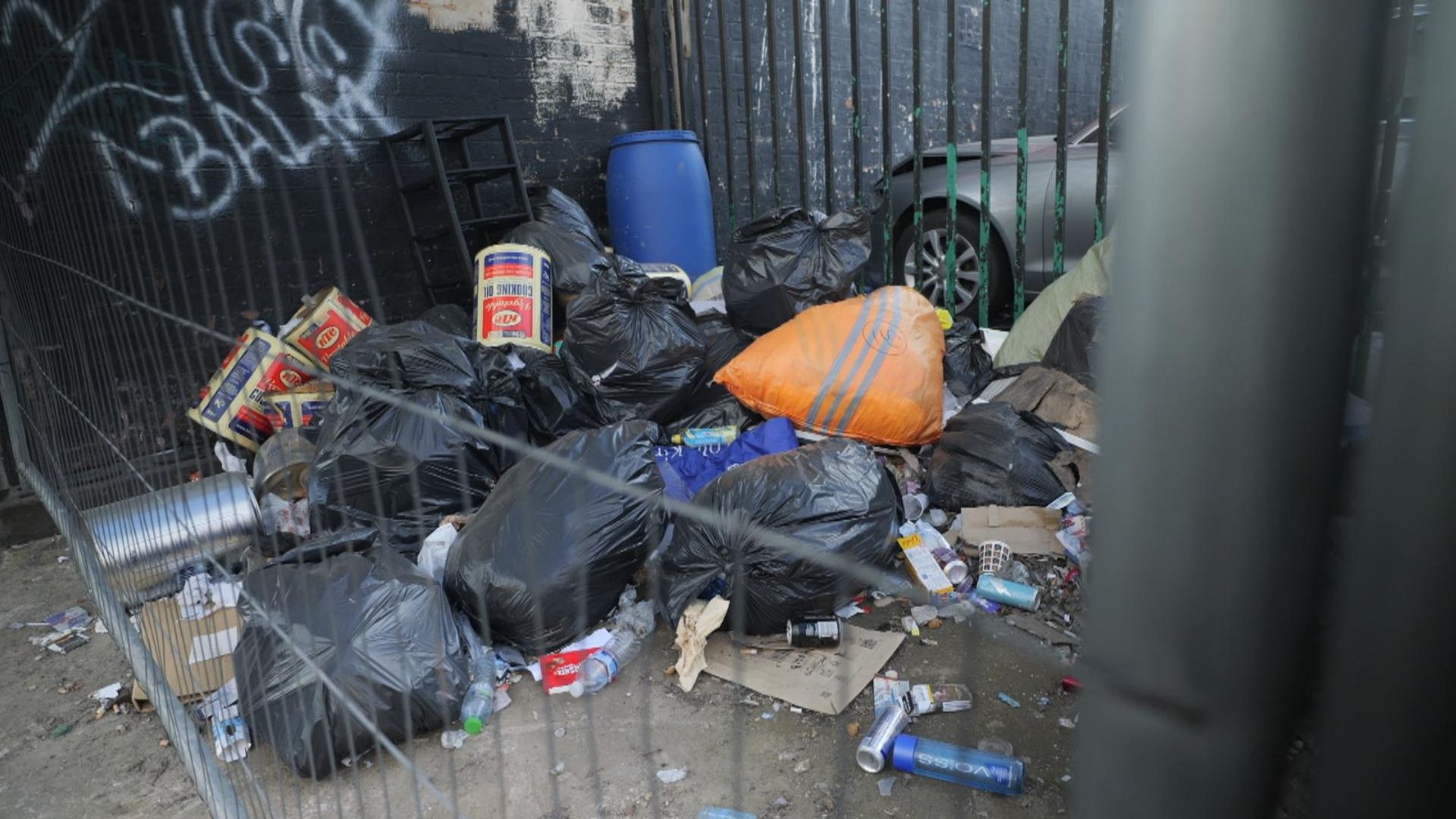
The headlines are predictable, lazy, and dripping with a specific kind of middle-class voyeurism. A journalist visits Birmingham, walks past a closed-down department store, sees a homeless person outside a New Street entrance, and decides the city is a failed state. They call it "the death of the high street" or "a city in crisis." They act shocked by the grit because they spent the last decade convinced that a city’s health is measured exclusively by the presence of a John Lewis and the absence of reality.
I have spent twenty years navigating the bones of Britain’s industrial hubs. I have seen developers burn through nine-figure budgets trying to turn Birmingham into "London-Lite," only to act surprised when the local culture vomits the transplant back up. If you think Birmingham is failing because the Bullring is quieter than it was in 2012, you aren't paying attention to how cities actually survive. You are mourning a retail corpse that should have been buried years ago.
The Retail Ghost Town Fallacy
The "shock" expressed by observers of the city center is rooted in a fundamental misunderstanding of urban economics. We are witnessing the correction of a thirty-year mistake. In the 1990s and early 2000s, British cities were hollowed out to create "destination shopping." We traded diverse, multi-use streetscapes for monolithic malls.
When those malls fail, the critics scream that the city is dying. In reality, the city is finally breathing again.
- Retail is a secondary function. A healthy city is a place of production and habitation, not just consumption.
- The "Vibrant High Street" was a debt-fueled hallucination. It relied on cheap credit and the physical impossibility of infinite growth in a digital world.
- The vacancies are an opportunity. High rents in prestige developments killed local soul. The drop in commercial real estate value is the only way to get interesting, risky, and authentic businesses back into the center.
The competitor articles love to show photos of boarded-up windows. I see those windows and see a future where a local artisan, a tech startup, or a community kitchen can actually afford the square footage. The high street isn't being murdered; it’s being evicted so something better can move in.
Poverty is Not a Performance for Your Discomfort
There is a particular brand of "poverty porn" that has become the staple of British regional journalism. A reporter takes a train from London, sees the visible struggle of the unhoused in a city hit by brutal local government austerity, and writes about it as if it’s a scenic feature of a failing theme park.
Birmingham City Council is broke. That is a matter of record. But to use the visibility of the vulnerable as a metric for the city’s "soul" is intellectually bankrupt.
I’ve sat in the boardrooms where these "regeneration" projects are pitched. The goal is always the same: sanitization. They want to move the "problem" three blocks over so they can build a luxury apartment block with a name like The Foundry or Ironworks. When the "problem" stays visible, the projects are deemed failures.
The discomfort you feel walking down Corporation Street isn't because the city is "gone." It’s because the safety net has been shredded at a national level, and Birmingham—as a massive, dense urban hub—is where that reality is most visible. If you want to fix the "look" of the streets, stop talking about "revitalizing retail" and start talking about the $5 billion shortfall in social care funding.
The Myth of the Second City Crown
Manchester and Birmingham have been locked in a "Second City" debate that is largely a marketing fabrication. Manchester won the PR war by turning itself into a shiny, glass-fronted media hub. Birmingham, meanwhile, stayed messy.
The mess is the point.
Birmingham remains the most "real" large city in the UK because it hasn't completely sold its identity to the highest bidding offshore developer. While Manchester’s center starts to feel like a high-end airport terminal, Birmingham still has the chaotic energy of the Jewellery Quarter and the industrial sprawl of Digbeth.
The Real Economics of the "Mess"
If you want to see where the money is actually moving, stop looking at the storefronts. Look at the logistics. Look at the tech talent moving into the West Midlands because they can’t afford a closet in Shoreditch.
- Manufacturing hasn't left; it evolved. The "dark satanic mills" are now precision engineering firms and med-tech labs. They just don't need a storefront in the city center.
- The demographic dividend. Birmingham is the youngest city in Europe. That brings volatility, yes, but it also brings the kind of cultural churn that creates long-term value.
- The failure of the "Grand Project". We should celebrate the collapse of the over-ambitious, top-down development models. They were never for the people of Small Heath or Handsworth anyway.
Why the "Shock" is Lazy Journalism
People ask: "Why is the city center so depressing?"
The answer is: "Because you are looking at it through the lens of a 1950s housewife or a 1990s yuppie."
If you judge a city by its ability to provide a clean, corporate path from a parking garage to a Disney Store, then yes, Birmingham is a disaster. But if you judge a city by its resilience, its refusal to be sanitized, and its ability to function as a pressure cooker for new ideas, it is one of the most exciting places in the country.
I’ve watched developers lose their shirts trying to "fix" areas that didn't want their version of a fix. I’ve seen millions wasted on "wayfinding" and "public art" that serves only to mask the smell of a crumbling infrastructure. The truth that nobody admits is that the "shabby" nature of the city is a defense mechanism. It keeps the rents low enough for the people who actually make the city work to stay there.
The Brutal Truth of the Council Bankruptcy
Let's address the elephant in the room: the Section 114 notice. The council's financial collapse is being framed as the end of the city. It’s actually a necessary, albeit painful, reckoning with decades of mismanagement and the toxic "equal pay" liabilities that were ignored for far too long.
Imagine a scenario where a corporation is forced to sell off its non-essential assets and focus on core survival. That is Birmingham right now.
Is it pretty? No.
Is it "shocking" to see the library hours cut and the grass grow long in the parks? Only if you’ve been living in a bubble.
The bankruptcy is a hard reset. It forces the city to stop chasing "vanity projects" like hosting international games it can't afford and starts the long, grueling process of rebuilding a functional social contract. The "shock" visitors feel is just the sound of a system hitting the floor. The floor is a solid place to start building.
Stop Trying to "Fix" Birmingham
The biggest mistake we make is assuming that every city needs to look like a CGI render of a "smart city." We don't need more "curated retail experiences." We don't need another artisanal sourdough bakery that closes in six months because the locals can't afford a $10 loaf.
What Birmingham needs is for the "outsider" critics to stop clutching their pearls and start looking at the mechanics of the city.
- Embrace the vacancy. Let the empty shops become studios, workshops, and gyms.
- Focus on the periphery. The city center is a tiny fraction of the Birmingham economy. The real growth is happening in the suburbs and the industrial fringes.
- Kill the "Second City" ego. Being "second" to London is a loser's game. Birmingham should aim to be the first Birmingham—a messy, loud, productive, and unpretentious hub that doesn't care if a tourist from the home counties finds it "shabby."
The next time you read an article about how "shocking" it is to see the state of Birmingham's streets, remember that the author is likely mourning a version of Britain that never truly existed for the people living there. They are mourning a facade.
The people who actually live and work in the city aren't shocked. They are busy. They are building. They are navigating the ruins of the retail age to find something more sustainable.
Stop looking at the boarded-up windows and start looking at the people walking past them. They aren't defeated. They are just waiting for the visitors to leave so they can get back to work.
Stop asking what happened to the city you remember. Start asking why you ever thought that version was worth saving.