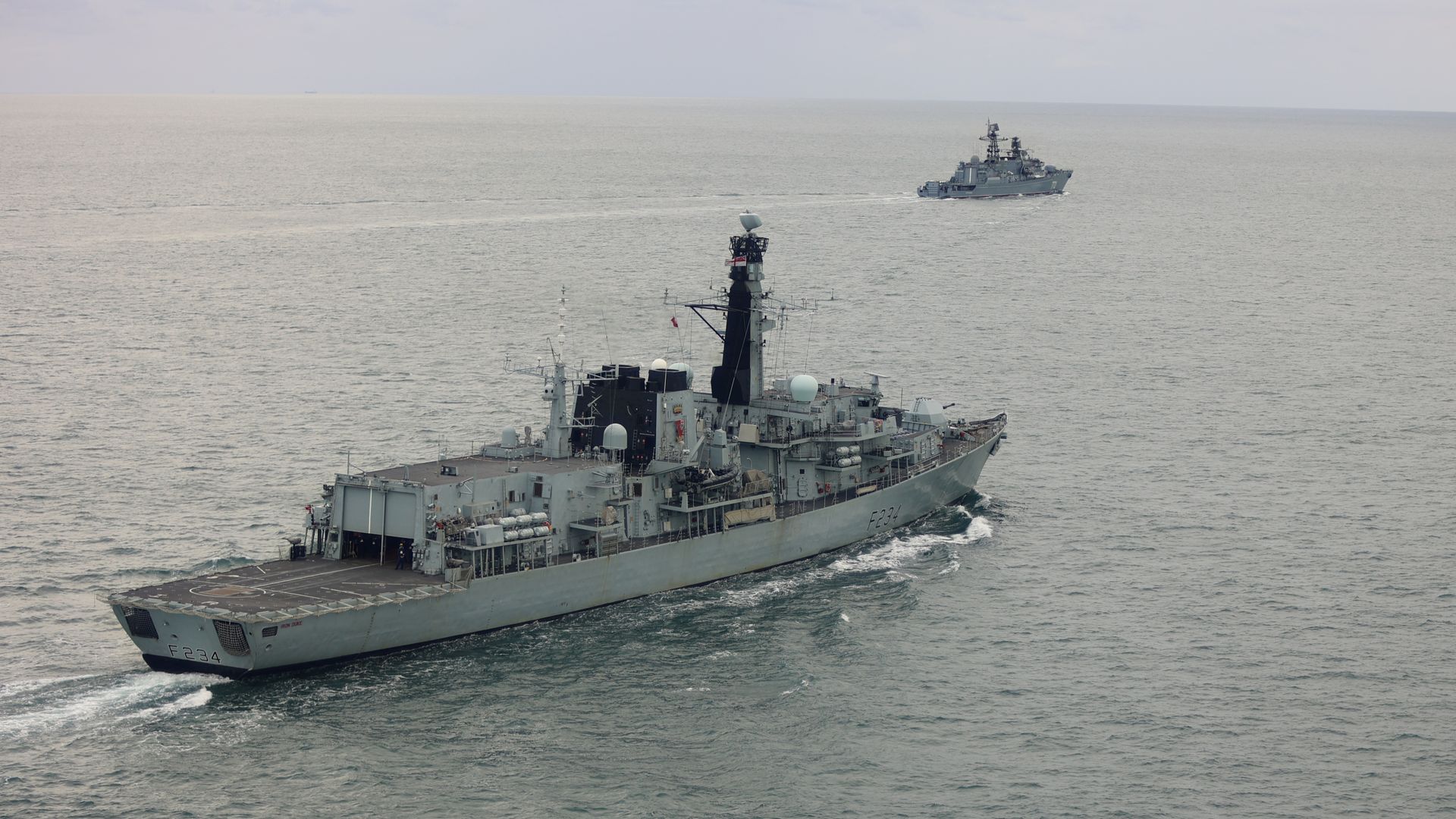
A thick, grey soup of fog often sits over the English Channel, the kind of mist that swallows the horizon and turns the world into a series of muffled echoes. For most people on the coast of Dover, it is just a damp Tuesday. But for the crews of the Royal Navy and the maritime pilots who monitor the world’s busiest shipping lane, that fog hides a growing, rusting, and incredibly dangerous secret.
They call it the shadow fleet. It sounds like something out of a Cold War thriller, but the reality is much more visceral—and much more oily.
Imagine a vessel the size of a skyscraper, lying low in the water, its hull caked in salt and neglected rust. It carries millions of barrels of Russian oil, worth a fortune on the black market. There is no blue-chip insurance policy. No clear ownership trail. Often, the transponders—the digital "heartbeat" that tells other ships where a vessel is—are switched off. These are the ghosts of the high seas, and they have been haunting the edges of British waters for months.
Until now.
The British government recently granted its forces the explicit authority to board and inspect these vessels. It is a massive shift in how the UK handles the maritime fallout of the conflict in Ukraine. Before this, these ships were a legal headache, drifting through a jurisdictional grey area that allowed them to bypass sanctions and, more importantly, bypass safety standards.
The Man on the Bridge
To understand why this matters, you have to look at the bridge of a legitimate tanker. A captain there is responsible for a billion-dollar asset. He has sensors, up-to-date charts, and a crew that is rested and trained. If he hits a sandbar or another ship, there is an international framework of insurance—the P&I Clubs—ready to pay for the cleanup.
Now, consider the hypothetical captain of a shadow fleet vessel. Let’s call him Mikhail. Mikhail isn't a villain in a movie; he’s likely a veteran mariner who needed a paycheck when the legal jobs dried up. His ship is twenty years old, nearing the end of its life cycle. It hasn't seen a dry dock in years. He is sailing through one of the most congested waterways on Earth with failing radar and a crew that is spread too thin.
If Mikhail’s engine fails in the middle of the Channel, he can’t just call for a standard tow. His owners are hidden behind a shell company in Dubai or the Marshall Islands. If his ship cracks open and spills 100,000 tons of crude onto the beaches of Kent, there is no insurance company to write the check.
The shadow fleet isn't just a way for Moscow to fund a war. It is an ecological time bomb ticking just miles from the British coastline.
The Invisible War of Paperwork
The sanctions imposed after the invasion of Ukraine were supposed to starve the Russian war machine of cash. The G7 price cap was the primary weapon: if you wanted to use Western insurance or shipping services, you couldn't sell Russian oil for more than $60 a barrel.
It worked, for a while. Then the shadows grew.
Russia began buying up hundreds of old tankers that were destined for the scrap yard. These ships "retired" from the visible market and reappeared under flags of convenience—countries like Gabon or Eswatini that have little to no maritime oversight. By moving the oil onto these ships, the Kremlin bypassed the Western financial system entirely.
But you cannot bypass physics.
A ship that is too old to be insured by Lloyd's of London is too old to be safe. These vessels are frequently involved in "ship-to-ship" transfers, where two massive tankers pull alongside each other in the open ocean to swap cargo. It is a delicate, dangerous dance. One spark, one failed hose, and the result is a catastrophe.
The new British mandate changes the math for these operators. By authorizing the Royal Navy and specialized boarding teams to intervene, the UK is signaling that the English Channel is no longer a "free pass" zone.
The Mechanics of the Interception
What does a boarding look like? It isn’t always a cinematic "fast-rope" from a helicopter, though it can be. Often, it starts with a radio call. A British patrol vessel identifies a ship with a patchy history or a disabled AIS (Automatic Identification System). They ask for the manifest. They ask for proof of insurance.
When the answers don't add up, the RIBs (Rigid Inflatable Boats) are lowered into the water.
The boarding teams are looking for more than just paperwork. They are looking at the state of the valves. They are checking the structural integrity of the hull. They are looking for "spoofing" technology—electronic devices used to broadcast a fake location to satellites, making a ship appear to be in the Atlantic when it is actually docking in a restricted port.
This is a high-stakes game of cat and mouse. Every time the UK tightens the noose, the shadow fleet finds a new way to hide. They change names. They change flags. They paint over the markings on their bows.
The True Cost of a Shadow
We often talk about sanctions in terms of billions of dollars and geopolitical leverage. Those are abstract numbers. They feel distant.
The true cost is much more intimate. It’s the fisherman in Cornwall whose livelihood would be erased by a single leak. It’s the maritime pilot who has to dodge a 300-meter ghost ship that isn't showing up on his radar. It’s the sailor on the shadow ship who is working in sub-standard conditions, knowing that if something goes wrong, his employers will vanish into the digital ether.
The British decision to board these ships is an admission that the "paper war" of sanctions has reached its limit. You can only do so much from a desk in Whitehall. Eventually, you have to put boots on a deck. You have to look a captain in the eye and demand to see the truth.
This isn't just about stopping the flow of money to a conflict. It is about reclaiming the rule of law on the water. For decades, the ocean has been governed by a set of shared rules: you maintain your ship, you insure your cargo, and you help others in distress. The shadow fleet ignores all of that. It treats the ocean as a lawless backyard.
The Weight of the Fog
As the Royal Navy begins these patrols, the tension in the Channel will inevitably rise. There will be diplomatic protests. There will be claims of "piracy" from those who profit from the shadows.
But the alternative is worse. The alternative is waiting for the morning when the fog clears and the white cliffs of Dover are stained black.
We are entering a new era of maritime security. The line between trade, war, and environmental protection has blurred into a single, complex struggle. The "shadows" are being dragged into the light, one inspection at a time. It is a slow, dangerous, and necessary process of reminding the world that even in the middle of the sea, you are never truly out of sight.
The next time you look out at the water, remember that not every ship you see is what it claims to be. Some are just shells, carrying the weight of a distant war and the rust of a thousand ignored repairs, waiting for a mechanical failure to become a headline. The boarding teams are the only thing standing between that failure and the shore.
The fog is still there. But now, someone is looking back through it.
Would you like me to generate a detailed map showing the primary routes and "transfer zones" used by the shadow fleet in European waters?