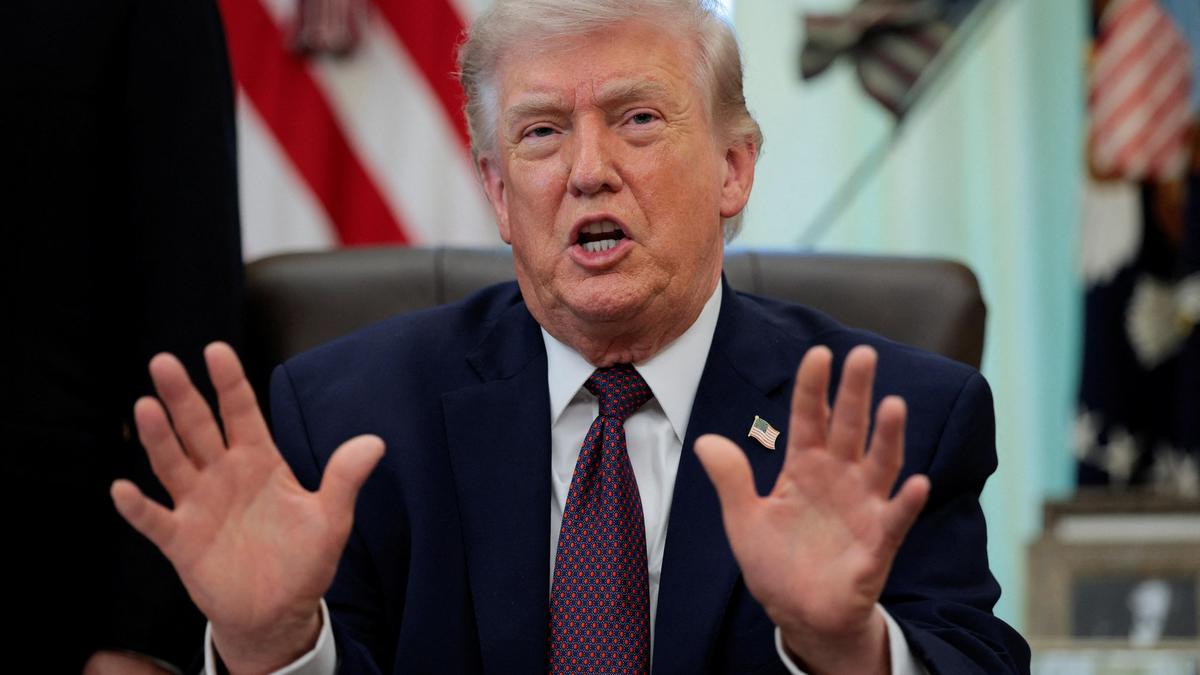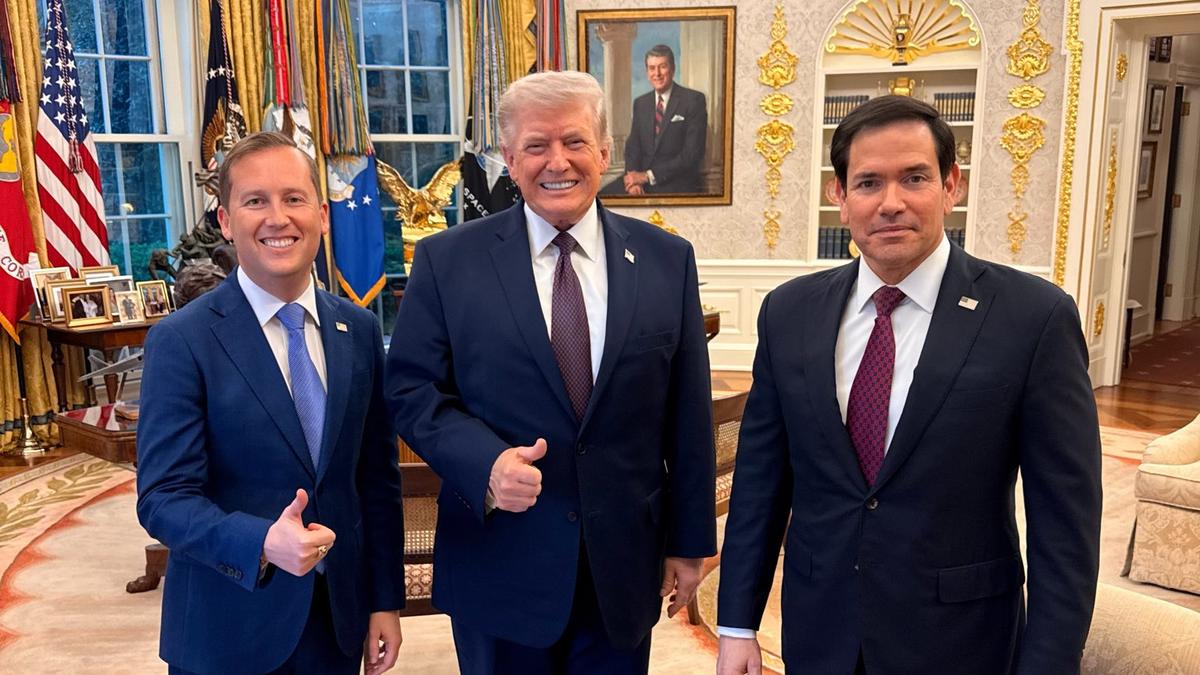
When Sergio Gor, the Trump administration’s Director of Presidential Personnel and a long-time confidant, stepped forward to assert that Donald Trump cares "deeply" about the U.S.-India relationship, he wasn't just recycling diplomatic pleasantries. He was signaling a return to a specific, transactional brand of statecraft that prioritizes personal chemistry between leaders over the slow-moving gears of traditional bureaucracy. For New Delhi, this represents both an open door and a potential trap. The relationship between the world's two largest democracies is currently defined by a shared obsession with containing Chinese expansionism, yet it remains anchored by friction over trade protectionism and immigration quotas.
The core of this alliance rests on a paradox. While the rhetoric from the Trump camp emphasizes a "special bond," the actual mechanics of the partnership are increasingly defined by cold, hard numbers and defense contracts. Washington views India as the ultimate counterweight in the Indo-Pacific. New Delhi views the U.S. as a source of high-end technology and a massive market for its services. If these two visions don't align perfectly, the "deep care" Gor speaks of will face immediate pressure from the "America First" and "Make in India" ideologies—two nationalist frameworks that are fundamentally at odds. Expanding on this topic, you can find more in: Why the Green Party Victory in Manchester is a Disaster for Keir Starmer.
The Personality Driven Pivot
Under the previous Trump term, the world witnessed the "Howdy, Modi" and "Namaste Trump" rallies, spectacles of political theater that bypassed the State Department’s usual caution. These weren't just photo ops. They were deliberate attempts to build a personal rapport that could survive policy disagreements. Gor’s recent affirmations suggest that this personalized diplomacy will be the primary engine of the second term.
Traditional diplomacy is a bottom-up process. Experts at the desk level iron out details, and the leaders sign the final document. Trump flips this script. He starts at the top. If the personal vibration with Prime Minister Narendra Modi remains strong, New Delhi can expect a level of access to the Oval Office that European allies might envy. However, this reliance on personality makes the entire bilateral structure fragile. A single disagreement over a tariff or a human rights report can derail years of institutional progress because the guardrails of traditional diplomacy have been dismantled. Observers at Al Jazeera have also weighed in on this matter.
Defense Ties and the China Shadow
The most significant driver of this renewed focus is the mutual distrust of Beijing. The Pentagon has spent years trying to pull India away from its historical reliance on Russian military hardware. We are seeing a massive shift as India increasingly looks toward American Predator drones, jet engines, and surveillance technology.
This isn't about shared values; it is about shared threats. India faces a volatile border in the Himalayas, and the U.S. faces a challenge to its naval supremacy in the South China Sea. By strengthening India’s military capacity, the U.S. creates a formidable "fortress" on China's western flank.
- The GE-F414 Engine Deal: This represents a level of technology transfer previously reserved for the closest NATO allies.
- MQ-9B SkyGuardian Drones: High-altitude long-endurance tools that change the surveillance game in the Indian Ocean.
- The iCET Framework: The Initiative on Critical and Emerging Technology, which aims to link the Silicon Valleys of both nations.
These are the concrete pillars Gor is referring to when he discusses "deep care." The U.S. is betting that by making India a major defense partner, it secures a permanent ally in the struggle for Asian hegemony. But India has a long history of "strategic autonomy." It will take the American tech, but it will likely refuse to join a formal military alliance. This creates a friction point where Washington might feel it isn't getting enough "return on investment" for its technology.
The Trade Wall and Economic Friction
Despite the warm words, the economic reality is messy. Trump has repeatedly labeled India the "tariff king." He isn't entirely wrong. India maintains high import duties on everything from Harley-Davidson motorcycles to American apples and medical devices.
In a second term, the "care" Gor promises will be tested by the U.S. Trade Representative’s office. Trump’s team will likely demand a reduction in India's trade surplus. They want more "Made in USA" products on Indian shelves. On the flip side, Modi’s "Make in India" initiative is designed to do the exact opposite—it aims to replace imports with domestic manufacturing.
We are looking at a collision course. If the U.S. imposes a universal baseline tariff on all imports, India’s IT sector and pharmaceutical exports will take a massive hit. The "deep care" from the White House won't mean much to a Mumbai-based software firm facing a 20% entry tax into the U.S. market. The administration will have to decide if the geopolitical gain of a strong India is worth the domestic political cost of a trade deficit.
Immigration and the H1B Tensions
For the Indian public, the U.S. relationship is often viewed through the lens of the H-1B visa. Thousands of Indian engineers and tech workers rely on this program. During his first term, Trump moved to tighten the rules, arguing that the program was being used to undercut American wages.
If the new administration pursues a "merit-based" system as Gor and others have hinted, it could actually benefit high-skilled Indian workers while hurting the "body shops" that provide low-cost outsourcing. This is a nuance often lost in the headlines. A move toward higher wage requirements for visas would favor the elite graduates of the Indian Institutes of Technology (IITs) but could cripple the broader Indian IT services industry.
The Russia Complication
One of the largest "gray areas" in this relationship is India’s continued friendship with Moscow. India has refused to join Western sanctions following the invasion of Ukraine and has instead ramped up its purchases of Russian crude oil.
In the past, the Trump administration showed a certain level of pragmatism regarding this. They understood that India needs cheap energy to grow. However, if the U.S. Congress pushes for stricter secondary sanctions, the White House will be forced to choose between enforcing the law and protecting the relationship with Modi. Sergio Gor’s assurance suggests that the executive branch will lean toward protection, but the legislative branch may have other ideas. The S-400 missile defense system deal between India and Russia remains a legal landmine under the CAATSA (Countering America's Adversaries Through Sanctions Act) regulations.
Energy Security as a Bridge
If trade in goods is a battlefield, energy is the peace treaty. India is a massive energy consumer, and the U.S. is now a leading exporter of Liquefied Natural Gas (LNG). We can expect a significant push to increase U.S. energy exports to the subcontinent.
This serves three purposes:
- It reduces India’s dependence on Middle Eastern and Russian oil.
- It helps narrow the trade deficit that so bothers the Trump team.
- It tethers India’s industrial growth to American energy infrastructure.
Investigative looks into the "Energy Dialogue" show that multi-billion dollar deals are already being sketched out. This is the transactional diplomacy that Gor’s team excels at. It is tangible, it is measurable, and it creates jobs in the American Rust Belt—the ultimate metric of success for this administration.
Institutional Skepticism vs. Executive Enthusiasm
While the political appointees like Gor talk about "deep care," the "Deep State"—the career diplomats at the State Department and the analysts at the CIA—remains more cautious. They worry about India’s internal politics, including issues surrounding religious freedom and the crackdown on dissent.
In a second term, expect a wider gulf between the White House and the career bureaucracy. Trump will likely ignore the State Department’s annual reports on human rights in India, viewing them as obstacles to the "big picture" of the China rivalry. This will be welcomed in New Delhi, where the Modi government has become increasingly frustrated with what it perceives as American "lecturing."
The removal of these "irritants" could lead to a golden era of cooperation, or it could lead to a lack of oversight that allows small problems to fester until they become diplomatic crises.
The Quad and the Maritime Frontier
The Quadrilateral Security Dialogue (the Quad), comprising the U.S., India, Japan, and Australia, will be the primary vehicle for regional strategy. Gor’s comments hint at a more muscular approach to this grouping.
We should expect more joint naval exercises in the Malacca Strait and more intelligence sharing regarding Chinese submarine movements. For India, this is a dangerous game. It risks provoking Beijing while relying on a Washington that has shown a tendency toward isolationism. If a conflict breaks out in the Himalayas, will the U.S. actually provide more than just "words of care" and some intelligence data? That is the question haunting the Indian Ministry of External Affairs.
Moving Beyond the Rhetoric
To understand the future of U.S.-India relations, one must look past the glowing quotes from envoys. The real story is found in the export control lists, the tariff schedules, and the quiet meetings between defense contractors in Arlington and Bengaluru.
The "care" Sergio Gor describes is real, but it is not sentimental. It is a calculated, strategic choice based on the reality that the U.S. cannot manage the rise of China alone. India, similarly, realizes that it cannot modernize its economy or secure its borders without American capital and technology.
This is a marriage of convenience, not a romance. Both sides are entering this next phase with their eyes wide open, knowing that "America First" and "India First" will eventually clash. The success of the relationship will depend on whether they can manage that clash without breaking the bond that keeps the Indo-Pacific from falling under a single, authoritarian shadow.
The next four years will determine if India is treated as a true peer or merely a convenient tool for American interests. The stakes for the global order could not be higher. Investors and policy-makers should watch the trade data more closely than the press releases; the numbers will tell the truth that the envoys cannot.
Identify the specific commodities targeted for tariff hikes in the first 100 days to see if the rhetoric of "care" survives the reality of "revenue."