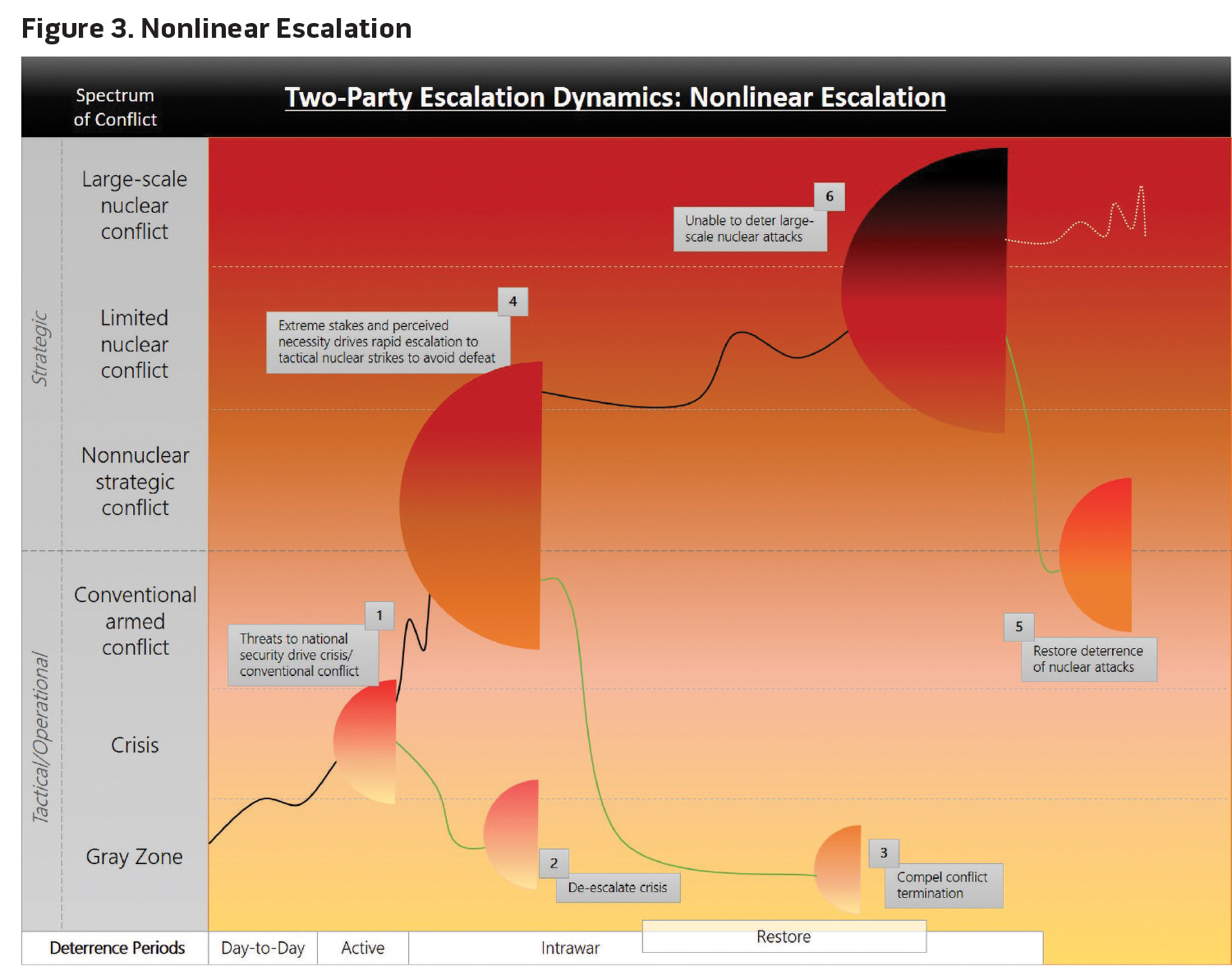
The recent expansion of Israeli kinetic operations within Iranian territory represents a fundamental shift from shadow warfare to direct attritional signaling. This transition is not merely an increase in volume but a strategic re-indexing of the "deterrence equation" that has governed the region for four decades. By executing wide-scale strikes on Tehran while simultaneously intercepting long-range threats from Yemeni proxies, Israel is testing the structural integrity of Iran’s forward-defense doctrine. The efficacy of these strikes must be measured against three specific vectors: the degradation of Iranian missile production throughput, the exposure of integrated air defense systems (IADS) vulnerabilities, and the psychological decoupling of the "Axis of Resistance" from its centralized command.
The Mechanics of Wide-Scale Interdiction
When military reports cite "wide-scale" strikes, the analytical focus often rests on the number of sorties. A more rigorous metric is the Target Value Density (TVD). Israeli operations in Tehran appear to prioritize the disruption of the solid-fuel mixing facilities required for medium and long-range ballistic missiles.
Solid-fuel production is a bottleneck in Iranian strategic depth. Unlike liquid-fueled rockets, which require extensive pre-launch preparation, solid-fuel missiles allow for rapid deployment and high mobility. The industrial machinery required to mix these fuels—specifically planetary mixers—is sensitive, difficult to replace under sanctions, and concentrated in a few identifiable geocoordinates. By targeting these specific nodes, Israel isn't just destroying existing inventory; it is lengthening the replenishment cycle of the Iranian arsenal.
The logistical chain of this conflict can be expressed as a function of production versus depletion:
$$R = \frac{P_{rate}}{D_{rate}}$$
Where $R$ is the sustainability ratio. If $P_{rate}$ (production) is suppressed by kinetic strikes while $D_{rate}$ (depletion through launches or interceptions) remains high, the strategic utility of the missile program collapses into a net-negative asset.
Interception Paradox and the Yemeni Vector
The identification and neutralization of a missile originating from Yemen—thousands of kilometers from its terminal target—reveals the maturation of a multi-layered sensor-to-shooter architecture. This is not a simple game of "hit a bullet with a bullet." It is a complex data fusion problem.
The flight path from Yemen to Israel requires the missile to transit multiple detection envelopes. The success of the Arrow-3 and Arrow-2 systems in this context demonstrates a high degree of Signal-to-Noise optimization.
- Early Phase Detection: Satellite-based infrared sensors detect the heat signature of a launch (the boost phase).
- Mid-Course Discrimination: Radars must distinguish the warhead from the spent booster and any potential decoys.
- Terminal Engagement: The kinetic kill vehicle must calculate an intercept point based on the target’s predicted ballistic trajectory.
The persistence of the Yemeni threat introduces a "distance-cost" variable. While the Houthis utilize relatively low-cost Iranian-designed platforms, the defensive interceptors used by Israel and its allies represent a significant capital expenditure. This creates a cost-asymmetry. However, the tactical success of these interceptions prevents the "saturation point"—the moment where more missiles are in the air than there are interceptors available—from being reached.
The Structural Failure of Iranian Forward Defense
For years, Iran’s primary defense against direct attack was the threat of proxy-led encirclement. This doctrine assumed that any strike on Tehran would trigger a simultaneous, overwhelming barrage from Hezbollah, the Houthis, and militias in Iraq and Syria.
This framework is currently fracturing due to a mismatch in Operational Synchronization.
- Command Latency: The elimination of key leadership nodes within the IRGC and its proxies has increased the time between a strategic order and tactical execution.
- Resource Fragmentation: By striking Tehran directly, Israel forces the Iranian leadership to choose between defending the "Center of Gravity" (the capital and its industrial base) and supporting its "Peripheral Assets" (the proxies).
- Intelligence Dominance: The precision of the strikes on Iranian soil suggests a deep compromise of internal security. When a state cannot guarantee the safety of its most sensitive military installations in the capital, the perceived reliability of its protection over its proxies evaporates.
Technical Vulnerabilities in Integrated Air Defense
The performance of Iranian air defenses during these strikes serves as a critical data point for global military analysts. Iran relies on a hybrid of domestic systems like the Bavar-373 and older Russian exports like the S-300.
The primary challenge for these systems is Electronic Countermeasure (ECM) Saturation. In modern aerial warfare, the kinetic strike is often preceded by a digital one. By jamming radar frequencies or spoofing "phantom" targets, the attacker can force the defender to deplete their surface-to-air missiles (SAMs) on non-existent threats or simply blind their sensors entirely.
The "wide-scale" nature of the Tehran strikes suggests that Israel successfully achieved Air Superiority within a Contested Environment. This indicates a failure of the Iranian IADS to maintain a "lock" on incoming stealth or low-observable platforms. The inability to intercept multiple waves of strikes over the capital creates a credibility gap that is difficult to close without significant technological infusions from external powers.
Economic and Industrial Implications of Prolonged Kinetic Friction
Warfare at this scale is an industrial competition. Iran’s economy, already constrained by systemic inflation and sanctions, faces a high Reconstruction Multiplier. Every military asset destroyed is not just a loss of capability but a significant drain on the state budget to replace, often requiring hard currency to smuggle in specialized components.
Israel, while possessing a more robust economy and a direct pipeline to Western defense industrial bases, faces a different constraint: Labor Force Attrition. The continued mobilization of reservists to manage multi-front threats pulls highly productive individuals out of the technology and manufacturing sectors.
The conflict is moving toward an equilibrium where the side with the more resilient supply chain and higher precision-to-cost ratio will dictate the terms of the eventual cessation of hostilities.
The Strategic Play: Forcing a Defensive Pivot
The objective of the current Israeli campaign is to move Iran from an offensive posture of "Exporting the Revolution" to a defensive posture of "Regime Survival."
By targeting the industrial infrastructure of the missile program and demonstrating the porousness of the capital's defenses, Israel is communicating that the cost of maintaining the proxy network is no longer sustainable. The "Shield" (the proxies) is failing to protect the "Sword" (the missile program), and the "Sword" is failing to deter direct attacks on the "Heart" (Tehran).
The next logical step in this escalation ladder involves the systematic targeting of dual-use energy infrastructure. If the current wave of strikes on military sites does not achieve the desired shift in Iranian policy, the kinetic focus will likely pivot to the refineries and power distribution nodes that fund the IRGC’s external operations. This would move the conflict from a military-to-military engagement into a total-war economic paradigm, forcing a domestic political crisis within Iran that the current leadership may not be equipped to manage.
Strategic planners must now prepare for a scenario where the "deterrence" of the past is dead, replaced by a "permanent state of active friction" where borders no longer offer sanctuary for high-value military assets.