The Ghost in the Machine
A single phone call in a bunker thousands of miles away can change the way you look at your grocery receipt. It sounds like hyperbole. It isn't. When the whispers of a ceasefire between regional powers begin to crack, the world doesn't just watch the news; it feels the tremor in its pocketbook.
In the glass towers of Manhattan and the frantic trading floors of London, the screens turned red this morning. The fragile truce involving Iran—a diplomatic tightrope walk that the world has been watching with bated breath—showed signs of fraying. The reaction was instantaneous. Crude oil prices didn't just tick upward; they surged, reclaiming territory that analysts hoped had been ceded to stability. Simultaneously, global shares retreated, pulling back like a tide before a storm. If you found value in this article, you should read: this related article.
But numbers on a Bloomberg terminal are bloodless. To understand why this matters, you have to look away from the ticker tape and toward the person sitting in a car at a gas station in Ohio, staring at the pump as the digits whir past their budget.
The Invisible Thread
Imagine a logistics manager named Sarah. She doesn't follow geopolitical strategy for fun. She follows it because she manages a fleet of delivery trucks. For Sarah, a "fragile ceasefire" isn't a headline; it’s a direct threat to her company’s solvency. When oil prices rise, her fuel surcharges spike. When fuel surcharges spike, the cost of shipping a crate of apples or a box of electronics climbs. For another look on this story, see the latest coverage from Reuters Business.
This is the hidden tax of instability.
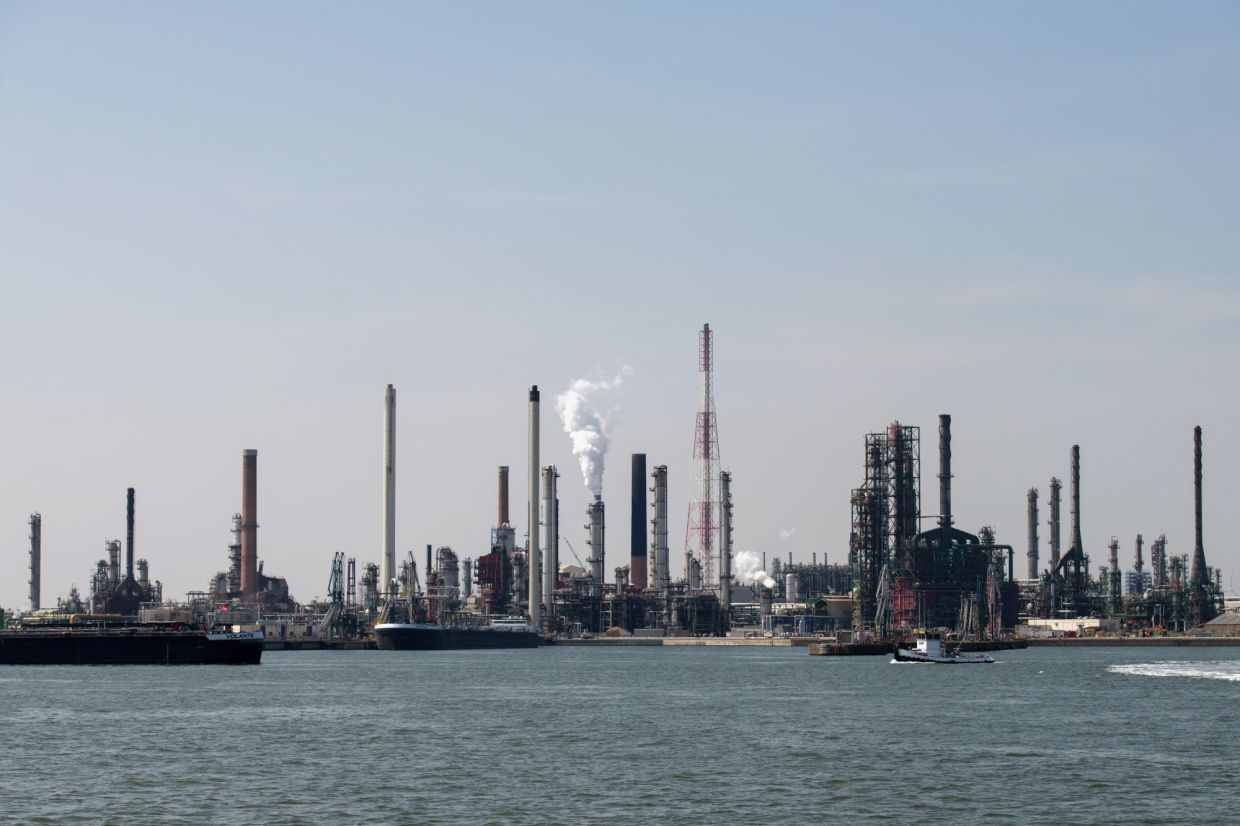
The market is a giant, nervous animal. It craves predictability. When Iran is involved, the stakes are elevated because of the Strait of Hormuz—a narrow choke point through which a fifth of the world's oil consumption passes. It is the jugular vein of the global economy. If the ceasefire holds, the pulse remains steady. If it falters, the throat tightens.
Investors hate uncertainty more than they hate bad news. Bad news can be priced in. Uncertainty is a fog. Today, that fog rolled back in, and the bulls of the stock market went into hiding.
The Arithmetic of Anxiety
Why do shares retreat when oil rises? It seems counterintuitive if you look at energy companies, who often see their profits swell. But for the rest of the world, oil is an input cost.
Consider a giant airline. Their largest variable expense is jet fuel. When oil prices climb, profit margins evaporate. The same applies to manufacturers, shipping giants, and even tech companies that rely on vast, energy-hungry data centers. When these companies' costs go up, their projected earnings go down. Investors see this math playing out in real-time and sell their shares, seeking the perceived safety of bonds or cash.
The "fragile" nature of the current peace is the primary culprit. If the ceasefire were robust, markets would be looking at interest rates or consumer spending. Instead, they are squinting at satellite imagery and diplomatic cables.
The Human Cost of a Cent
We often speak of oil in barrels. A barrel is $159$ liters, or roughly $42$ gallons. When the price of a barrel jumps by three dollars, it feels like a rounding error in a trillion-dollar economy.
It isn't.
That increase ripples through the system like a stone thrown into a still pond. The farmer pays more for diesel to run the tractor. The processor pays more to heat the plant. The trucker pays more to move the goods. By the time that "three-dollar jump" reaches the consumer, it has been compounded at every stage of the journey.
We are living in an era where the average household is already stretched thin by years of persistent inflation. A spike in energy prices acts as a regressive tax, hitting the lowest earners the hardest. They are the ones who cannot "pivot" to an electric vehicle or work from home to save on the commute. For them, the fragility of a Middle Eastern ceasefire is a kitchen-table issue.
The Psychology of the Sell-Off
There is a specific kind of exhaustion that settles over the market when a conflict refuses to resolve. For months, traders have been told that a de-escalation was imminent. They bought into the "peace dividend." They pushed stock indices to record highs on the hope that the geopolitical risk premium was finally fading.
Then comes the setback.
The retreat in world shares today is a physical manifestation of disappointment. It is the sound of thousands of algorithms and human traders simultaneously saying, "Not yet."
This retreat wasn't localized. From the Nikkei in Tokyo to the DAX in Frankfurt, the sentiment was uniform. We are tethered to one another. The fiction that any nation’s economy is an island was dismantled decades ago. We are all passengers on a ship powered by oil, and the person at the helm is often a diplomat we will never meet, negotiating a peace that feels increasingly like a ghost.
The Mirror of History
This isn't the first time we've been here. The history of the late 20th century is littered with moments where energy prices dictated the fate of presidencies and the stability of nations. The 1973 oil embargo and the 1979 revolution in Iran are the shadows that haunt today’s trading floors.
While we are more energy-efficient now than we were in the seventies, our "just-in-time" supply chains make us more sensitive to disruptions. We don't keep stockpiles the way we used to. We rely on the flow. When the flow is threatened, the panic is more acute because we have no buffer.
The current situation with Iran is particularly volatile because it sits at the intersection of old-world resource dominance and new-world ideological friction. It’s a collision of the $19$th-century map and $21$st-century technology.
The Weight of the Word Fragile
Language matters in finance. The word "fragile" is doing a lot of heavy lifting in the current reports. It implies that the peace isn't held together by shared interests, but by a lack of better options. It suggests that a single stray drone, a misunderstood transmission, or a hardline speech could shatter the status quo.
Investors are looking at this fragility and realizing they are overexposed. They are trimming their sails.
If you look at the charts, you see the "retreat." But if you look at the world, you see a collective holding of the breath. We are waiting to see if the architecture of modern diplomacy is strong enough to withstand the heat of regional ambition.
Beyond the Ticker
The sun set today with oil prices higher than they started and retirement accounts slightly lighter. On paper, it was just another day of market volatility. In reality, it was a reminder of how thin the ice is.
We like to believe we are in control of our economic destiny. We track unemployment, we debate tax policy, and we tweak interest rates. But sometimes, the most important factor in your financial well-being is a conversation happening in a language you don't speak, in a room you'll never enter, concerning a border you'll never cross.
The market's retreat is a bow to that reality. It is a recognition that for all our sophisticated models and high-frequency trading, we are still remarkably dependent on the basic human ability to stop fighting.
The pumps will keep spinning. The screens will keep flickering. And somewhere, Sarah is looking at a spreadsheet, trying to find a way to make the numbers work while the world waits for the next headline.
The cost of conflict isn't just measured in the tragic loss of life or the destruction of infrastructure. It is measured in the quiet erosion of security for people half a world away. It is the tax on hope. It is the premium we pay for the simple, elusive goal of a world at rest.
As long as the peace remains fragile, the price of everything will remain heavy.