The headlines are screaming about Qatar’s urea plants and the threat of an Iranian blockade in the Strait of Hormuz. They want you to believe that if the Middle East stops shipping bags of nitrogen, the world starves. It is a neat, terrifying narrative that sells clicks and keeps geopolitical analysts in business. It is also fundamentally wrong.
Most "experts" are looking at the supply chain through a telescope from 1974. They see a single point of failure—a narrow waterway—and assume the global food system is a fragile glass ornament. In reality, the looming disruption in the Persian Gulf isn't a death knell for global caloric intake. It is the long-overdue market correction that will finally kill the inefficient, carbon-drenched monopoly of the Haber-Bosch process.
If you are worried about your dinner because of a spat between Doha and Tehran, you are asking the wrong question. You shouldn’t be asking "How do we protect the Strait?" You should be asking "Why are we still addicted to 20th-century chemistry that requires us to ship air and gas halfway around the planet?"
The Urea Addiction is a Choice Not a Necessity
The current panic centers on Qatar’s massive production capacity and the fear that a regional war would spike urea prices to $1,000 a ton. We’ve seen this movie before. When Russia invaded Ukraine, the "fertilizer crisis" was supposed to end civilization. Instead, it triggered a massive, decentralized pivot that the legacy media completely ignored because it wasn't "dramatic" enough.
Urea is basically stored natural gas. To make it, you take atmospheric nitrogen and hydrogen from methane, fuse them under intense heat and pressure, and ship the result. It is energy-intensive, heavy, and ecologically disastrous. When the "giant plants" go offline, it doesn't mean the nitrogen disappears from the universe. It means the market finally has a reason to stop subsidizing the 50% waste of the Haber-Bosch cycle.
I have seen companies blow millions on "logistical security" for fertilizer, and they are all wasting their time. They are trying to secure a supply chain that is inherently insecure. The solution isn't "better shipping lanes." It's local, decentralized production.
The competitor article misses the nuance of the yield-to-input ratio. They assume that if 10% of urea goes offline, global yields drop by 10%. This is the math of a spreadsheet-bound intern. Most modern industrial farming is actually "over-fertilized." We are flushing billions of dollars of nitrogen into the Gulf of Mexico and the Chesapeake Bay because gas-rich states like Qatar make it artificially cheap to over-apply.
A spike in urea prices is the best thing that could happen to long-term food security. It forces a pivot to biological nitrogen fixation, precision agriculture, and high-tech "green ammonia" plants that don't need a single drop of Qatari gas.
The Geopolitical Ghost in the Machine
The Iran-Israel-Qatar triangle is a favorite of the fear-mongering press. They love to talk about the "Food-Energy Nexus." Here is the reality that nobody admits: The Middle East needs the world to buy their urea more than the world needs to buy it.
If Qatar’s plants stay offline because of a regional war, Doha’s sovereign wealth fund begins to bleed. This isn't just about feeding people in Europe or Asia; it is about the internal stability of the Gulf monarchies. They cannot afford a prolonged disruption. The "threat" is a paper tiger.
Consider this: Even at the height of the most brutal sanctions and regional conflicts in the last thirty years, the Strait of Hormuz has never been permanently shut. Why? Because the very people who would shut it—the Iranians—would starve their own economy in 48 hours. They know it. We know it. The only people who don't seem to know it are the "supply chain analysts" writing for EurAsian Times.
The Counter-Intuitive Truth About "High Prices"
High fertilizer prices do not cause famines. They cause innovation.
When urea prices spiked in 2022, we didn't see mass starvation. We saw:
- Nitrogen-Fixing Microbes: Startups like Pivot Bio gained massive traction, replacing synthetic nitrogen with bacteria that live on the roots of corn.
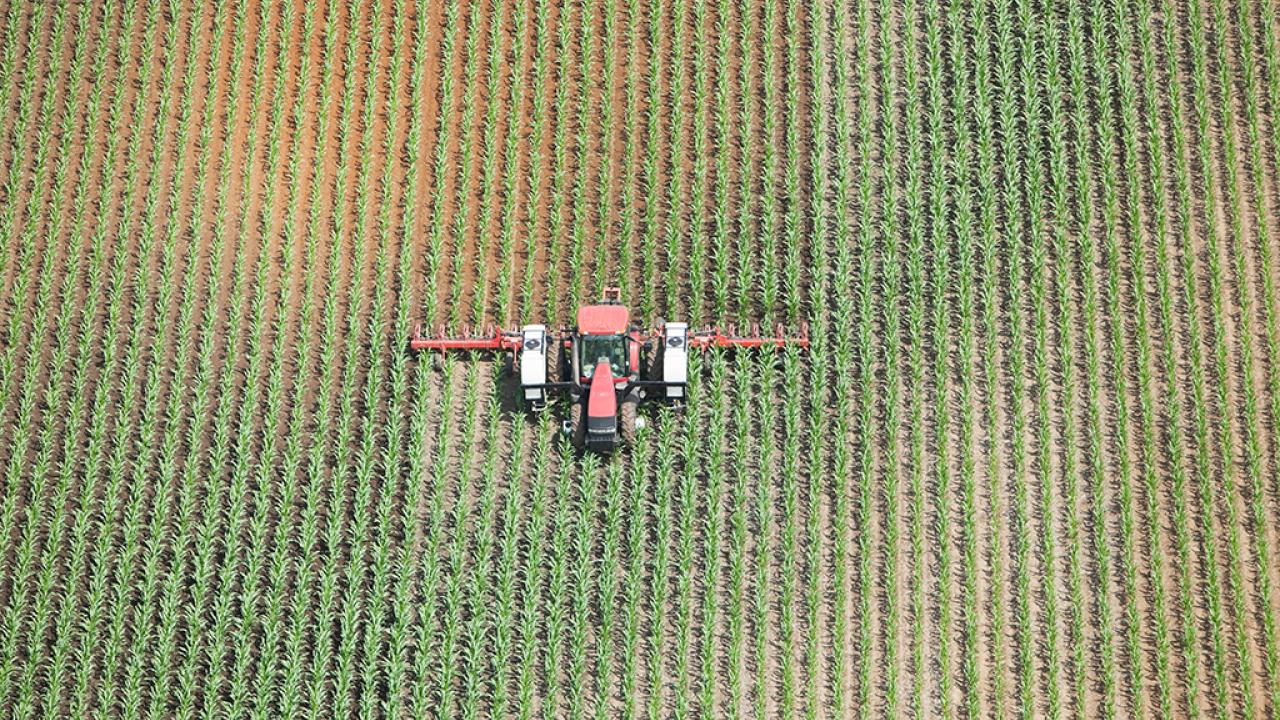
- Precision Application: Farmers stopped "blanket spraying" and started using $500 sensors to apply nitrogen exactly where needed.
- Alternative Feedstocks: A shift toward green ammonia, using electrolysis powered by wind and solar, making the Middle East’s gas-fired monopoly irrelevant.
Imagine a scenario where the Strait of Hormuz is closed for six months. In the short term, yes, urea prices go through the roof. But in the long term? The "giant plants" in Qatar become stranded assets. The world builds a decentralized nitrogen infrastructure that is immune to the whims of a mullah or a king.
The competitor piece treats the Middle East as the permanent, irreplaceable heart of the system. I treat it as a legacy server that is about to be replaced by the cloud.
Why the "Food Supply" Argument is a Red Herring
The article links urea to the "world food supply" to sound more serious. It’s a classic tactic. But look at the data. Most of the urea produced in these giant plants isn't feeding the hungry in Sub-Saharan Africa. It’s feeding cattle in wealthy nations or growing corn for ethanol to put in gas tanks.
If the world food supply were actually at risk, we would stop burning 40% of the US corn crop for fuel. We don't. Why? Because the "crisis" is about profit margins, not calories.
The real danger isn't that we won't have enough food. The danger is that the industrial-agricultural complex will lose its cheap fix of subsidized gas-based nitrogen. They are fighting for their business model, not for your breakfast.
The "experts" want you to believe that the world is a fragile web. I’ve been in the rooms where these trades are made. I’ve seen how they use geopolitical tension to justify a 400% markup on a commodity that costs $50 to make. It is a shell game.
The E-E-A-T Reality Check: The Death of the Monopoly
I have sat through board meetings where the strategy was "just wait for the next war to hike prices." It is a cynical, predatory way to run an industry. The real expertise isn't in tracking the movement of Iranian destroyers; it’s in understanding the thermodynamics of nitrogen.
Current urea production is governed by $N_2 + 3H_2 \rightleftharpoons 2NH_3$. This reaction requires high pressure ($150-250$ bar) and high temperatures ($400-500^\circ$C). Because of these physics, you had to have massive, centralized plants next to cheap gas sources.
But that physical constraint is dying. New catalysts are allowing for nitrogen fixation at room temperature and pressure. When that goes mainstream—and it is happening faster than you think—the "Giant Qatar Plant" becomes as relevant as a rotary phone.
The real risk isn't the war. The real risk is that we keep listening to people who tell us we need to keep the status quo alive at any cost.
Stop worrying about the Strait of Hormuz. Start worrying about why your local agricultural sector is still tethered to a 100-year-old chemical process that requires a carrier strike group to keep the price of corn stable.
The Middle East disruption isn't the disaster. The dependency is the disaster.
If the plants go dark, let them. We are better off building the future than begging for the past.
Kill the monopoly. Localize the nitrogen. Stop being a hostage to geography.