The targeted destruction of Iran’s offshore gas fields and the subsequent retaliatory strikes on Gulf refineries represent more than a localized skirmish; they signify the transition from asymmetric shadow warfare to a symmetric attrition model centered on energy export dependencies. When Israel targets an offshore gas platform, it is not merely striking a fuel source; it is attacking the fiscal solvency of a state that relies on domestic energy stability to power its internal security apparatus and regional proxies. Iran’s response—targeting Gulf Cooperation Council (GCC) refining capacity—demonstrates a calculated shift in the escalation ladder, moving from direct military engagement to the systematic degradation of the global energy supply chain. This feedback loop is governed by the principles of critical infrastructure vulnerability and the specific technical constraints of hydrocarbon extraction and processing.
The Fragility of Offshore Extractions and the Gas Sourcing Bottleneck
Offshore gas fields, such as the South Pars/North Dome complex shared between Iran and Qatar, are high-value, high-vulnerability assets. Unlike terrestrial infrastructure, which can be protected by geography or hardened bunkers, offshore platforms are static, exposed, and impossible to hide. The destruction of a production platform creates an immediate supply deficit that cannot be mitigated by drawing from reserves in the short term.
The technical reality of gas extraction involves a delicate pressure balance. Once a wellhead or a processing platform is kineticized, the risk of uncontrolled blowouts or environmental contamination increases exponentially. For Iran, losing offshore gas capacity directly impacts its ability to generate electricity, as natural gas accounts for over 70% of its power generation. This creates a cascading failure across the industrial sector.
The strike on an offshore field is a surgical economic blow because the specialized equipment required for repairs—subsea valves, high-pressure compressors, and specialized jack-up rigs—is often subject to international sanctions or long-lead-time procurement cycles. A single missile can take a multi-billion dollar project offline for years, effectively removing that revenue from the national budget permanently.
Refineries as Economic Chokepoints and the Logic of Proportionality
Iran’s decision to hit Gulf refineries rather than Israeli military targets serves a dual strategic purpose. First, it internationalizes the conflict. By disrupting the flow of refined products—petrol, diesel, and aviation fuel—Iran forces global markets to price in a "conflict premium." Second, it exploits the structural vulnerability of the GCC economies, which, despite efforts at diversification, remain tethered to the operational integrity of their downstream assets.
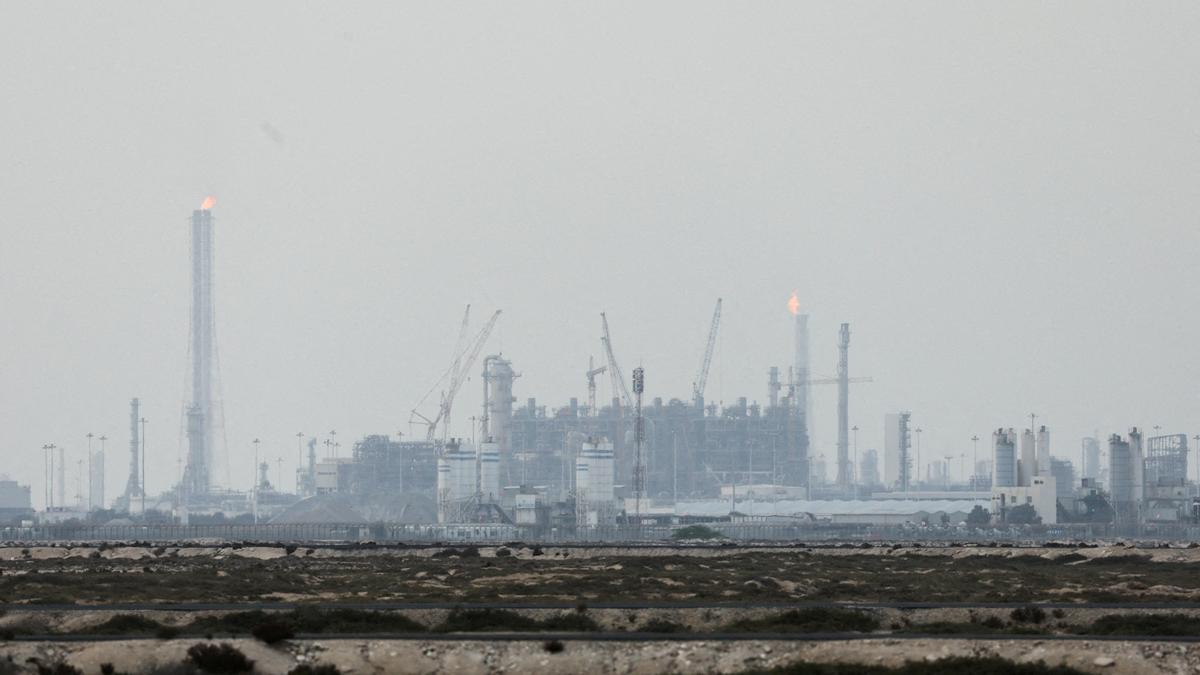
A refinery is an intricate network of heat exchangers, distillation columns, and cracking units. While a crude oil pipeline can be patched in days, a destroyed distillation column requires custom fabrication. The "Cost Function of Downtime" in the refining sector is non-linear; a 10% reduction in refining capacity does not lead to a 10% increase in prices, but rather a volatile spike as regional markets scramble to secure imports from distant alternative sources.
The Three Pillars of Infrastructure Attrition
- Recovery Asymmetry: It costs significantly less to destroy an infrastructure asset than it does to build or repair it. This asymmetry favors the aggressor in a prolonged conflict.
- Cascading Utility Failure: Energy infrastructure is the primary layer of the modern state. If the primary layer fails, secondary layers—water desalination, healthcare, and logistics—degrade within 48 to 72 hours.
- The Deterrence Deficit: Once a red line (striking energy assets) is crossed by both sides, the cost of de-escalation rises because both parties must prove they can sustain more damage than their opponent.
Kinetic Feedback and Market Elasticity
The immediate reaction of Brent and WTI crude prices to these strikes reflects a shift in the perceived risk of "Total Energy War." Historically, markets have been resilient to tanker seizures or minor pipeline sabotages. However, the systematic targeting of production (offshore fields) and processing (refineries) introduces a permanent risk to the "Security of Supply."
The elasticity of energy demand in the short term is remarkably low. Consumers cannot simply stop using fuel when a refinery is hit. This lack of elasticity means that even a minor disruption in supply results in a disproportionate increase in price. In the context of the Middle East, where most states provide subsidized fuel to maintain social stability, the destruction of refineries forces governments to choose between massive fiscal outlays to import fuel or the risk of civil unrest due to shortages.
Strategic Constraints of Missile Defense Systems
The efficacy of Integrated Air and Missile Defense (IAMD) systems is challenged by the sheer volume of assets requiring protection. While systems like the Iron Dome, David’s Sling, or the Patriot PAC-3 are highly capable, they face a "Saturation Problem." An adversary can utilize low-cost "suicide" drones to exhaust the interceptor inventory before launching high-precision ballistic or cruise missiles at high-value targets like a refinery’s control room or a gas field’s riser.
The cost-exchange ratio is heavily skewed against the defender. A Patriot interceptor may cost $3 million to $4 million, while the drone it destroys might cost $20,000. In an attrition-based conflict, the defender eventually runs out of interceptors, or the cost of defense becomes unsustainable for the national treasury. This creates a window of vulnerability that the aggressor can exploit to land a decisive blow on critical infrastructure.
Geopolitical Realignment and the Hydrocarbon Arms Race
The move toward energy infrastructure warfare forces regional players to rethink their "Strategic Depth." Countries that previously relied on centralized mega-refineries are now considering decentralized, modular processing units that are harder to target en masse. Similarly, there is a renewed push for domestic energy storage and strategic reserves that can provide a buffer against immediate kinetic disruptions.
The second limitation of this infrastructure-centric warfare is the involvement of external powers. China, as the primary importer of Iranian and Gulf oil, cannot remain a passive observer if the flow of hydrocarbons is permanently threatened. This introduces a new variable: the "Superpower Intervention Threshold." If the disruption crosses a certain percentage of global daily supply, the likelihood of direct military intervention by non-combatant states increases, potentially escalating a regional conflict into a global one.
The Operational Reality of Repair and Resiliency
The ability of a state to withstand strikes on its energy sector depends on three operational factors:
- Redundancy: The existence of bypass pipelines or idle refining capacity that can be activated immediately.
- Technical Sovereignty: The domestic capability to manufacture critical spare parts without relying on foreign OEMs (Original Equipment Manufacturers).
- Logistical Speed: The time required to clear debris and safely restart high-pressure systems.
Most GCC states possess high levels of redundancy but low levels of technical sovereignty, relying on Western or East Asian firms for specialized repairs. Iran, conversely, has high technical sovereignty born of decades of sanctions but lacks the modern, high-efficiency redundancy found in the Gulf.
The Shift Toward "Total Energy Denial"
We are entering an era where the goal of conflict is not the seizure of territory, but the "Total Energy Denial" of the opponent. This strategy aims to bankrupt the state and trigger internal collapse by removing the means of production and the revenue of exports. The strikes on gas fields and refineries are the opening salvos of this doctrine.
The shift from targeting military assets to energy assets indicates a breakdown in traditional deterrence. When a state decides that the economic cost of an attack is preferable to the political cost of inaction, the threshold for kinetic engagement lowers significantly. This creates a permanent state of high-alert for energy markets, where any flare-up has the potential to remove millions of barrels of oil or billions of cubic feet of gas from the global balance sheet in an afternoon.
The immediate strategic priority for energy-exporting nations must be the hardening of SCADA (Supervisory Control and Data Acquisition) systems against cyber-kinetic attacks and the physical reinforcement of distillation and compression hubs. The use of "Rapid Repair Teams" and the stockpiling of long-lead-time components must move from a secondary logistical concern to a primary national security directive. In the current paradigm, the resilience of the refinery is as critical to national survival as the lethality of the fighter squadron.
Deploying deep-water sensors and autonomous underwater vehicles (AUVs) to monitor offshore riser integrity is no longer optional; it is the baseline for maintaining energy sovereignty in an environment where offshore platforms have become the primary targets of state-level attrition.