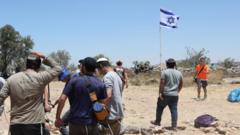
While international headlines focus on regional escalations and geopolitical chess matches, a much more intimate and deadly shift is happening in the hills of the West Bank. It’s not just "clashes" or "friction." It’s a systematic surge in violence that’s claiming lives while most of the world isn’t looking. On March 2, 2026, Mohammad and Faheem Mo’mar, two brothers from the village of Qaryout, became the latest names on a rapidly growing list of fatalities. Mohammad was shot in the head. Faheem was hit in the pelvis. They died in their own village, in their own home territory, during an attack by a group of armed settlers.
You won't find this level of aggression in the typical diplomatic briefings. This year is proving to be one of the deadliest on record for Palestinians in the West Bank. The killing of the Mo’mar brothers followed the February 19 shooting of 19-year-old Nasrallah Abu Siyam, a Palestinian American. By the end of March 2026, ACLED data showed at least eight Palestinians had been killed by settlers in a single month—the highest monthly total in over a decade.
The Reality of Settler Violence in 2026
What’s happening right now isn't a series of random incidents. It’s an organized pattern. In the Wadi al-Rakhim area near Hebron, just days after the Qaryout killings, 28-year-old Amir Mohammad Shnaran was shot in the neck and killed at close range. His brother Khaled was critically wounded in the same incident. The catalyst? Settlers released livestock near the family’s home and then opened fire when the residents tried to move the animals away.
Honestly, the numbers are staggering. In 2025, OCHA recorded an average of five settler attacks per day. By March 2026, that pace has accelerated. We’re seeing a 54% increase in injuries compared to the already brutal 2025 averages. If you think this is just about "extremists," you're missing the bigger picture. These aren't just rogue actors anymore; they're increasingly integrated into the formal security landscape.
- Weaponization of the Reserve: Many settlers are now serving in local reserve units, blurring the line between civilian and soldier.
- Impunity: Human rights groups like Breaking the Silence and B'Tselem have documented dozens of cases where Israeli security forces stood by or actively assisted during these raids.
- The Strategic Push: The goal isn't just harassment. It’s displacement. In the first two months of 2026 alone, nearly 1,500 Palestinians were forced from their homes due to settler attacks and movement restrictions.
Why Area C Is the Flashpoint
If you want to understand the geography of this crisis, you have to look at Area C. This region makes up about 60% of the West Bank. Under the Oslo Accords, it was supposed to be handed over to Palestinian Authority control decades ago. That never happened. Today, it’s under full Israeli military and administrative control, making it the primary site for settlement expansion and, consequently, the primary site for violence.
Life in Area C is a constant state of siege. Settlers from outposts like those near Elon Moreh often use "grazing" as a tactic to seize land. They bring their herds onto Palestinian olive groves or wheat fields, sparking confrontations that end in gunfire. For the Palestinian farmers, it’s a lose-lose situation. If they defend their land, they get shot. If they leave, they lose their livelihood.
The Government’s Role in the Surge
The rhetoric coming from the top is fueling the fire. In March 2026, Finance Minister Bezalel Smotrich spoke at a funeral for a settler, openly calling for the "collapse" of the Palestinian Authority and the erasure of the administrative lines that define the West Bank. When high-ranking officials suggest that settlements are a "strategic mission" to expel the "enemy," it’s a green light for violence on the ground.
It’s basically a policy of state-backed expansion. The Israeli government recently moved to legalize 30 outposts, many of which are the very locations where these attacks originate. This isn't a secret. The United Nations and several European missions have issued statements condemning "settler terror," but statements don't stop bullets.
Beyond the Physical Violence
The psychological and economic impact is just as devastating.
- Isolation: Village entrances are routinely blocked by iron gates or military checkpoints, turning towns into "isolated silos."
- Infrastructure Destruction: Settlers have targeted solar power systems and water wells, specifically in the Bedouin and herding communities.
- The Learning Crisis: UNESCO warned that the constant threat of violence is causing a "deeper learning crisis," as schools are forced to close or become shelters.
What You Can Actually Do
This isn't just a "Middle East problem" that's too complex to touch. It’s a human rights crisis that's being ignored because of other regional conflicts. Staying informed is the first step, but it’s not enough.
- Follow Credible Ground Reporting: Sources like +972 Magazine, OCHA oPt, and Haaretz provide granular details that rarely make it to the 6 o'clock news.
- Support Legal and Human Rights Advocacy: Organizations like B’Tselem and Yesh Din provide legal aid to Palestinian families and document every incident to ensure a record of these actions exists.
- Engage with Your Representatives: If you're in the US or EU, ask about the specific conditions placed on aid and the lack of sanctions against individuals documented as participants in settler violence.
The death toll is climbing because the cost of violence has remained too low for those committing it. Until there's actual accountability—not just "expressions of concern"—the hills of the West Bank will continue to see more funerals for men like Mohammad and Faheem Mo’mar. Check the latest OCHA Humanitarian Situation Update for the most recent data on displacement and fatalities in your region.