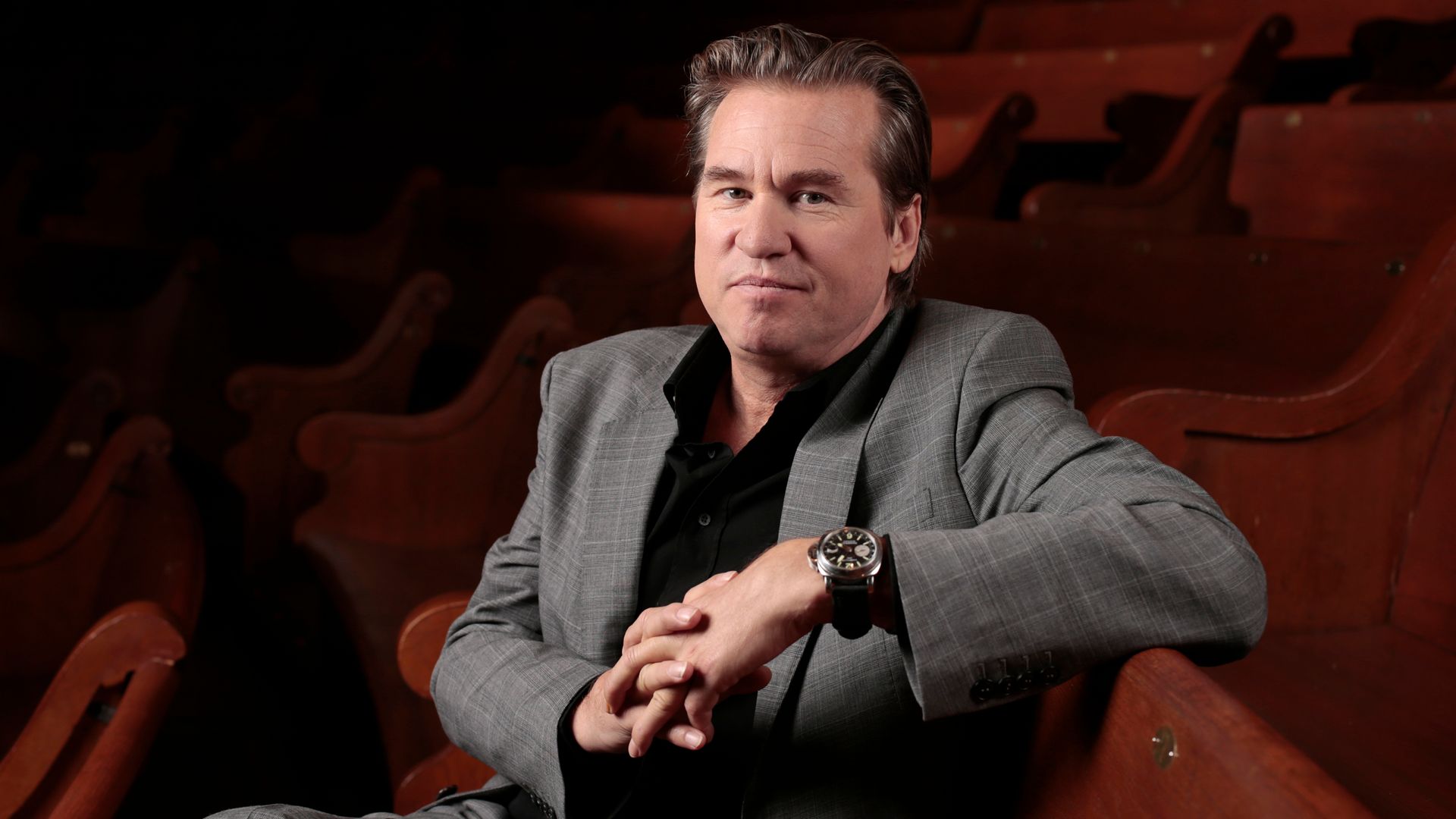
Hollywood has finally crossed a line it spent decades flirting with, and it chose the ghost of Val Kilmer to lead the way. Nearly a year after his death in April 2025, the industry is witnessing the first major "performance" by an actor who never actually showed up to the set. The film is As Deep as the Grave, and its lead is a generative AI construct meticulously stitched together from the scrapbooks and voice banks of a man who spent his final decade unable to speak without a machine.
This isn't a clever CGI cameo or a de-aged flashback used to bridge a narrative gap. This is a full-scale digital resurrection designed to carry a feature-length independent film. It is the realization of a future that the Screen Actors Guild spent months striking against, yet it is happening with the full blessing of the Kilmer estate. The move effectively turns an actor’s legacy into a perpetual software license, raising a jagged question that the industry isn’t prepared to answer. If we can manufacture a performance from a dead man's data, does the living actor still have a job?
The Ghost in the Machine
The mechanics of this "comeback" are as clinical as they are sophisticated. Director Coerte Voorhees had originally cast Kilmer in 2020 to play Father Fintan, a priest and spiritualist in a historical drama about Southwestern archaeology. By then, Kilmer’s battle with throat cancer had already ravaged his voice and stamina. He was too sick to film. When he passed away from pneumonia at age 65, the production faced a choice: recast or experiment.
They chose the experiment. Using a combination of archival footage, private family photos, and audio recordings from his final years, a team of engineers built a "digital twin." This wasn't a mask worn by a body double. It was a generative model trained on Kilmer’s unique physical tics—the way he tilted his head, the specific squint of his eyes, and the cadence of a voice that had been reconstructed by AI once before for his brief appearance in Top Gun: Maverick.
The result is a performance that claims to be Kilmer but is, in reality, a statistical average of his past self. It is a puppet made of light and code, controlled by technicians rather than an artist's momentary instinct.
Consent and the Estate Economy
The ethical shield for this project is the approval of Kilmer’s children, Mercedes and Jack. They have been vocal about their father’s interest in technology, noting that he viewed AI as a tool to bypass the physical limitations imposed by his illness. There is a certain logic to it. For a man who lost his voice but never his desire to create, the digital space offered a second life.
However, the "he would have wanted this" defense is a slippery slope in a town driven by bottom lines. Independent films like As Deep as the Grave operate on razor-thin margins. Voorhees admitted that the production simply didn't have the budget to "roll camera again" or recast and reshoot the entire project. In this context, AI becomes a cost-saving measure—a way to salvage an investment by using a dead star's name to secure distribution.
It creates a dangerous precedent where an actor’s "will" can be interpreted by heirs who stand to benefit financially from continued digital appearances. We are no longer just mourning icons; we are managing their intellectual property in perpetuity.
The Death of the Happy Accident
What made Val Kilmer a titan of the screen was his unpredictability. Whether he was chewing scenery as Doc Holliday in Tombstone or disappearing into the drug-fueled haze of Jim Morrison in The Doors, Kilmer was known for being difficult, brilliant, and entirely human. He made choices in the moment—glances, pauses, and outbursts that weren't in the script.
AI cannot choose. It can only predict.
When a machine "acts," it looks for the most likely pixel to follow the previous one based on thousands of hours of historical data. It eliminates the "happy accident," the very thing that defines great acting. By leaning on a digital ghost, the filmmakers are trading the soul of a performance for the familiarity of a brand. They are giving the audience a "Val Kilmer type" experience, rather than a Val Kilmer performance.
The industry likes to frame this as "expanding the possibilities of storytelling." That is a sanitized way of saying we are now comfortable with the idea of necro-entertainment. If this film succeeds, the pressure on the estates of other late legends will be immense. Why hire a new, unproven talent when you can simply rent the digital likeness of a proven box-office draw who can't complain about his trailer or argue about his lines?
The New Class System of Hollywood
This shift signals a deepening divide in Hollywood’s labor market. At the top, we have the "immortals"—the Cruises, the Hankses, and now the Kilmers—whose likenesses are valuable enough to be preserved and projected into the future forever. At the bottom, the working-class actors find their opportunities shrinking.
Every role given to a digital replica is a role taken from a living, breathing performer. In the case of As Deep as the Grave, the character of Father Fintan was specifically tied to Kilmer's own Native American heritage. Critics have rightly pointed out that instead of casting a living actor of similar background, the production chose to dig up a digital version of a man who is no longer here to represent that culture. It is a stagnant form of creativity.
The technology isn't going away. The 2026 release of this film will likely be the first of many. We are entering an era where death is no longer a retirement from the screen, but a rebranding opportunity. We have reached a point where we must decide if we want our cinema to be a reflection of life, or a high-resolution taxidermy of the past.
The tragedy isn't that Val Kilmer is being brought back. The tragedy is that we are so afraid of losing the stars of yesterday that we are willing to starve the stars of tomorrow. Hollywood is no longer dreaming of the future; it is merely reprocessing its ghosts.
Watch the credits of the next big "posthumous" hit. You’ll see the names of the engineers and the lawyers, but the person on the screen will be nothing more than a memory formatted for a hard drive.