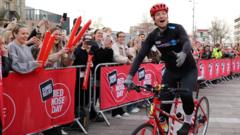
You’ve seen Greg James do some ridiculous things for charity over the years. There was the pedal boat challenge that looked like a slow-motion nightmare and the "Radio 1 Ghost Town" hide-and-seek games that gripped the nation. But those were warm-up acts compared to the "Longest Ride." By the time he rolled into Sunderland on Wednesday, the man looked like he’d been through a metaphorical and literal blender.
The physical toll is one thing, but the mental game is where these challenges usually fall apart. Greg isn't just riding a bike; he's riding a tandem. Alone. For hundreds of miles across the UK. It’s a gimmick that sounds funny in a production meeting but becomes a special kind of hell when you're battling a headwind in the North East. The "hardest day" wasn't just a marketing slogan—it was the moment the exhaustion finally met the scale of the cause. Meanwhile, you can find other events here: The MrBeast insider trading scandal is a wake-up call for the creator economy.
The £1.6 million milestone and why it matters
By the end of that grueling leg into Sunderland, the total hit £1.6 million. That’s not just a big number for a spreadsheet; it’s a staggering amount of money raised during a period when most people are tightening their belts. Greg’s "Longest Ride" for Comic Relief has tapped into something that goes beyond typical celebrity stunts.
Most people donate because they see the genuine struggle. You can’t fake the glazed look in someone's eyes after twelve hours on a saddle. When the BBC announced the £1.6m total, it was a shot of adrenaline for a guy who admitted he was running on empty. It’s the kind of moment that makes the blisters and the sleep deprivation almost feel worth it. Almost. To explore the bigger picture, we recommend the excellent article by Entertainment Weekly.
Why the tandem bike is a stroke of genius and a curse
Using a tandem bike for a solo journey is peak Radio 1 humor. It’s visually absurd. It leaves an empty seat behind him, symbolizing the people he’s riding for and the listeners who are "with" him on the journey. But from a technical standpoint? It’s a disaster.
- Extra weight: Tandems are heavier than standard road bikes.
- Wasted aerodynamics: That empty back seat creates drag that a solo rider shouldn't have to deal with.
- Handling issues: They aren't designed to be balanced by one person over long distances.
I’ve seen people try "fun" bikes for charity before—Paddy McGuinness famously tackled 300 miles on a Raleigh Chopper for Children in Need—and it’s always the same story. The "fun" lasts about twenty minutes. After that, you're just a person in spandex questioning every life choice you’ve ever made while pedaling a heavy piece of steel up a hill.
The Sunderland reception was the turning point
Sunderland didn't just show up; they took over. When Greg arrived just after 5pm, the crowds were thick. You had school kids who thought the ride looked "easy" (it definitely isn't) and adults who stood in the cold just to catch a glimpse of a very tired DJ.
This is the secret sauce of these BBC challenges. Whether it’s Vernon Kay running 115 miles to Bolton or Greg James cycling across the country, the magic happens in the "in-between" places. It’s the small towns and the roadside waves that keep these stars from quitting. Honestly, if Greg had to do this on a stationary bike in a studio, he wouldn't have made it past day two. The £1.6 million is a reflection of that community spirit.
Lessons from previous ultra challenges
We’ve seen a trend of "Ultra" challenges lately, and they’re getting more intense because the audience's bar for "impressive" keeps rising.
- Vernon Kay (2023): Raised over £6 million by running from Leicester to Bolton. He ended up with a shot Achilles and "shot to bits" knees.
- Paddy McGuinness (2024): Cycled 300 miles on a Chopper, raising nearly £6 million by the time he hit Scotland.
- Greg James (2026): The Longest Ride is proving that even with a smaller bike-to-foot ratio, the "Longest Ride" tag is earned through the sheer duration and the tandem handicap.
What happens when the cameras turn off
The hardest part of the "hardest day" isn't the cycling. It's the fact that Greg still has to be "Greg James" for the listeners. He’s broadcasting, he’s doing social media clips, and he’s meeting donors. Most athletes get to finish a stage and collapse into a massage table. Greg finishes a stage and has to do a three-minute link about why a 10-year-old’s bake sale is inspiring.
It’s a masterclass in endurance broadcasting. You're watching a man lose his filter in real-time. That’s why people are donating so much. It feels raw. It doesn't feel like a polished TV special; it feels like a guy who is genuinely struggling to get a tandem bike to the next town.
The total is only going to climb from here. If you're looking to support the cause, the best way to help isn't just watching the clips—it's hitting the donation link on the BBC website. Every pound at this stage is a literal "pedal stroke" toward the finish line for a guy who clearly needs all the help he can get.