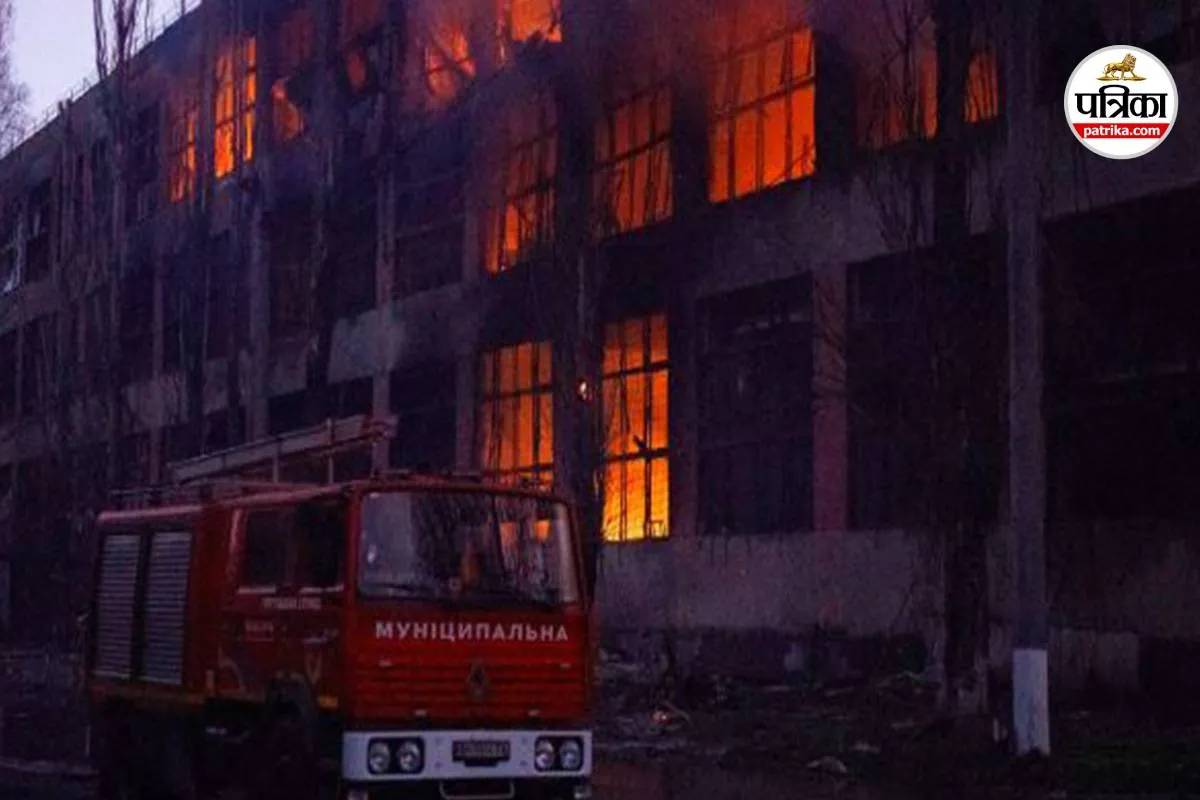
Russia’s energy infrastructure isn't the fortress Vladimir Putin wants the world to believe it is. The recent drone strike on the Ust-Luga Baltic Sea terminal proved that. When a Ukrainian drone traveled nearly 1,000 kilometers to hit a vital gas processing plant, it didn't just cause a fire. It shattered the illusion of safety for Russia’s most profitable exports.
You have to look at the geography to understand why this matters. Ust-Luga is a massive hub. It sits on the Gulf of Finland, way up north, far from the traditional front lines in the Donbas or Crimea. For two years, this region felt untouchable. Residents in St. Petersburg probably thought the war was something that happened "down there" in the south. They were wrong.
Why the Ust-Luga Attack Changes the Map
The strike targeted a site operated by Novatek, Russia’s largest liquefied natural gas producer. This wasn't a random hit on a warehouse. It was a surgical strike on a facility that processes stable gas naphtha—a product used for everything from jet fuel to plastic production. When those tanks went up in flames, the economic ripple effects started immediately.
Kyiv has shifted its strategy. They aren't just fighting in the trenches anymore. They're going after the wallet. If Russia can't refine and ship its fuel, it can't fund the tanks and missiles hitting Ukrainian cities. It’s a simple, brutal logic.
The distance is the most shocking part. These drones had to bypass some of the most sophisticated air defense systems in the world. S-400 batteries and electronic warfare units are supposed to protect the airspace around St. Petersburg. They failed. Either the drones flew low enough to hug the terrain, or Russian sensors are specifically tuned for larger missiles and struggled to pick up small, slow-moving suicide drones. Honestly, it's likely a mix of both.
The Economic Hit to the Kremlin
Let’s talk numbers because they tell the real story. Ust-Luga handles a huge chunk of Russia’s fuel exports to international markets. We’re talking about millions of tons of crude and refined products every year. When the terminal shuts down, even for a few days, the losses are measured in tens of millions of dollars.
- Supply Chain Chaos: Ships waiting to load naphtha or oil had to move to safer waters. This creates a backlog that takes weeks to clear.
- Repair Costs: High-tech refining equipment isn't easy to replace under Western sanctions. Finding the specific parts to fix a fire-damaged distillation unit is a nightmare for Russian engineers right now.
- Insurance Premiums: This is the invisible blow. Every time a terminal gets hit, the cost to insure a tanker in Russian waters spikes. Shipping companies start to wonder if the risk is worth the payout.
Ukraine's security services, the SBU, basically confirmed they were behind the operation. They called it a "special operation" aimed at cutting off fuel supplies to the Russian military. It’s hard to argue with that assessment. If you can't move the oil, you can't move the army.
A Breakdown of Russian Air Defense Failures
How does a drone fly 600 miles through "impenetrable" airspace? Russia has spent billions on its "A2/AD" (Anti-Access/Area Denial) bubbles. In theory, nothing should get through. But theory doesn't account for the sheer size of the Russian border.
You can't park a Pantsir-S1 air defense system every 500 meters. There are gaps. Ukraine’s intelligence teams are experts at finding these "dead zones." They use long-range drones, often made of composite materials like plywood or fiberglass, which have a tiny radar cross-section. These drones don't scream across the sky; they buzz along at the speed of a Cessna.
Russia’s radar operators are often looking for fast, high-altitude targets. A slow drone looks like a large bird or a weather anomaly until it’s too late. By the time the guards at Ust-Luga heard the engines, the drones were already diving into the fuel tanks.
The Psychological Shift in St. Petersburg
For a long time, the Russian elite in Moscow and St. Petersburg lived in a bubble. The war was something they saw on state TV—sanitized and distant. That bubble popped at Ust-Luga.
When the sky lights up with orange flames and the ground shakes from secondary explosions at a major port, you realize you're a target. This creates pressure on the Kremlin. Putin has to choose: does he pull air defense systems from the front lines to protect his oil refineries? If he does, the army in Ukraine becomes vulnerable. If he doesn't, the economy continues to bleed. It's a classic "no-win" scenario.
What Happens When the Fuel Stops Flowing
The Ust-Luga strike is part of a broader pattern. We’ve seen similar attacks on refineries in Tuapse and Bryansk. Ukraine is systematically mapping out the Russian energy grid and picking it apart piece by piece.
It’s not just about the fire. It’s about the technical complexity of these sites. A refinery isn't just a big tank of gas; it's a giant, interconnected chemistry set. If you hit the "fractionation tower," the whole plant stops working. You can't just bypass it. Russia is finding out that its greatest economic strength—its vast energy infrastructure—is also its biggest physical liability.
Western analysts often underestimate the grit of Ukrainian drone engineers. They are building these machines in garages and small factories, using off-the-shelf GPS components and engines found in hobby shops. It’s asymmetrical warfare at its most effective. A drone that costs $30,000 can destroy a facility worth $500 million. The math is heavily in Ukraine’s favor.
Immediate Risks for Global Markets
Don't think this is just a local fight. The Baltic Sea is a major artery for global energy. If Ust-Luga stays offline or faces repeated attacks, global oil prices will react. Traders hate uncertainty.
The Baltic route is the primary way Russian oil reaches Europe (what’s left of the market) and Asia. If that route becomes a combat zone, the logistical shift to Russian Black Sea ports or Arctic routes will be expensive and slow. We’re looking at a permanent shift in how energy security is viewed in the region.
The Path Forward for Energy Infrastructure Security
Russia will try to adapt. Expect to see more jamming equipment around ports and perhaps even anti-drone nets draped over sensitive equipment. But these are reactive measures. Ukraine has shown it can evolve its tactics faster than the Russian bureaucracy can respond.
The focus now shifts to other ports like Primorsk or Novorossiysk. If Ukraine can hit Ust-Luga, they can hit almost anything in Western Russia. The strategic depth that Russia relied on for centuries is evaporating in the age of cheap, long-range robotics.
For anyone tracking this conflict, the lesson is clear: the front line is wherever a drone can reach. Energy companies operating in high-risk zones need to realize that traditional security isn't enough. You need active, multi-layered electronic warfare and kinetic interception just to keep the lights on. Russia didn't have that at Ust-Luga, and they paid a massive price for it.
Keep an eye on the shipping data coming out of the Gulf of Finland over the next month. The number of tankers diverted or delayed will give you the true scale of the damage better than any government press release ever could. The war has moved to the Baltic, and it's not going away anytime soon.
Check the operational status of major Russian ports through independent satellite tracking services to see the real-time impact of these strikes on global shipping lanes. Compare the export volumes from February against these new figures to understand the long-term economic drain.