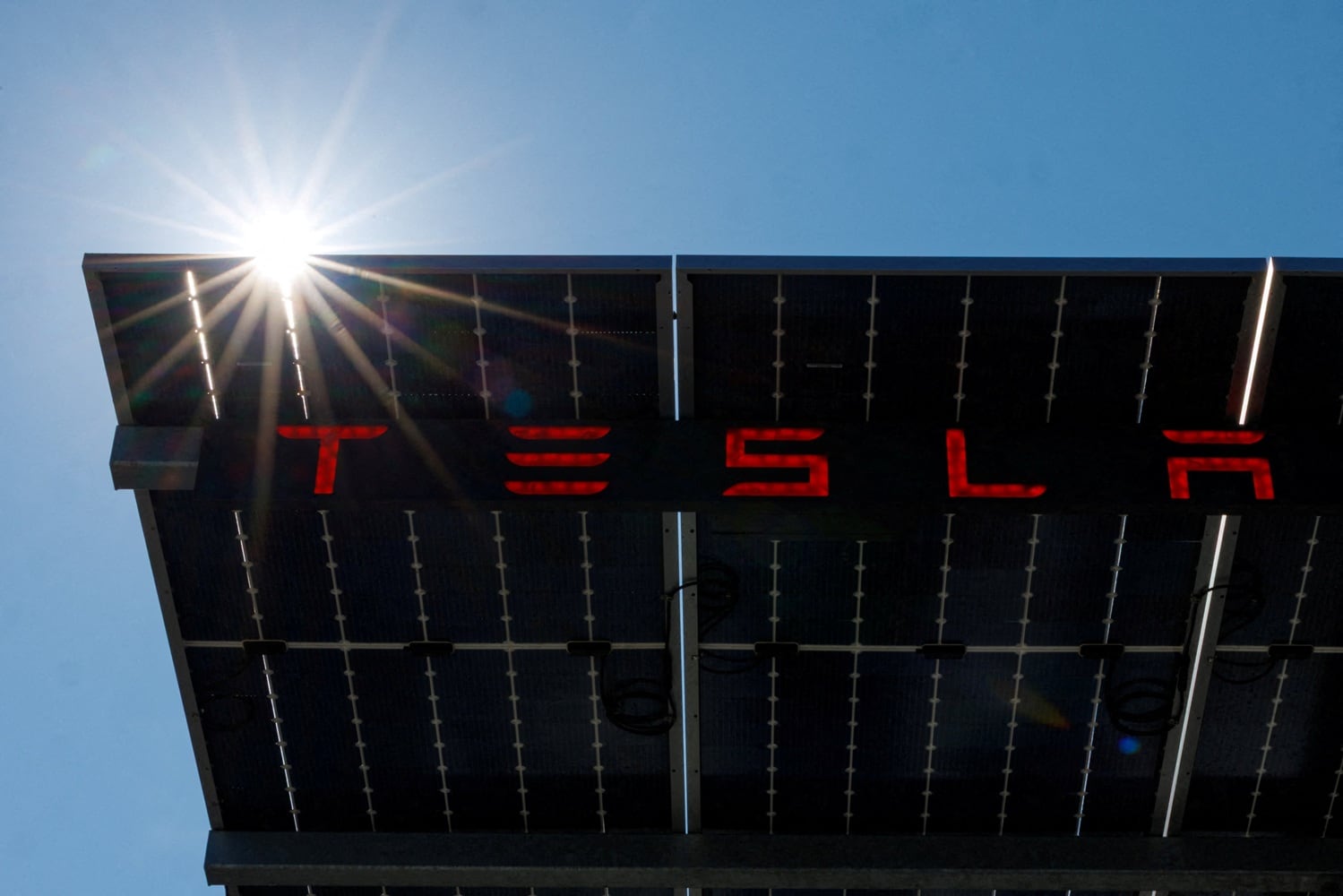
Elon Musk just dropped $2.9 billion on Chinese hardware to build a 100 GW solar empire in the United States, and the market is cheering like it just won the lottery. They are missing the point. This isn't a victory for American manufacturing; it is a confession of total systemic failure. By cutting a check to Suzhou Maxwell Technologies and Shenzhen S.C. New Energy, Tesla is admitting that "Made in America" is a ghost story we tell investors to keep the stock price North of $350.
The consensus is lazy. Most analysts see this as a savvy move to scale up domestic capacity to feed power-hungry AI data centers and SpaceX satellites. They think buying the machines to make the panels is the same thing as owning the supply chain. It isn't. It is an expensive lease on a technology stack we don't control, bought from the only people who actually know how to build it. Meanwhile, you can explore similar developments here: The Caracas Divergence: Deconstructing the Micro-Equilibrium of Venezuelan Re-Dollarization.
The Equipment Trap
If you want to build high-efficiency Heterojunction (HJT) solar cells with conversion rates pushing past 25%, you don't call a firm in Ohio. You call Suzhou Maxwell. They own the IP, the screen-printing precision, and the global scale.
Tesla’s plan to deploy 100 GW of solar manufacturing from "raw materials on American soil" by 2028 is a mathematical hallucination. The U.S. currently produces about 3.2 GW of solar cells annually. Musk wants to increase that by 3,000% in less than three years using equipment that requires Beijing’s explicit permission to even leave the port. To understand the bigger picture, we recommend the excellent analysis by Bloomberg.
Consider the mechanics of this deal. While the Biden administration—and now the Trump administration—carved out tariff exemptions for solar manufacturing equipment, they created a massive loophole that China is driving a freight train through. We aren't building an industry; we are building a museum for Chinese engineering. If Beijing decides to slow-walk the export licenses for those screen-printing lines, Tesla’s Texas expansion turns into a $2.9 billion paperweight overnight.
Why 100 GW is the Wrong Number
The 100 GW target is designed to sound world-changing. It’s a classic Musk-ism. But let's look at the actual utility.
- The Space Pivot: Morgan Stanley suggests a huge chunk of this capacity is for data centers in space. This is a retreat, not an expansion. It’s an admission that the regulatory and energetic hurdles of terrestrial AI are becoming insurmountable.
- The Grid Reality: The U.S. grid is a geriatric mess. Adding 100 GW of intermittent solar capacity doesn't solve the power crisis for AI data centers if you can't move the electrons or store them for more than four hours.
- The Yield Gap: First Solar, the current domestic heavyweight, is aiming for 14 GW. Tesla is claiming they will dwarf the industry leader by a factor of seven while using a supply chain that is fundamentally offshore.
I have seen companies blow millions trying to "reshore" manufacturing by simply importing the factory in a box. It never works. You don't just need the machines; you need the thousands of specialized engineers who know how to maintain, calibrate, and iterate on those machines. Those engineers live in Suzhou, not Buffalo or Corpus Christi.
The Tariffs are a Tax on Progress
Musk is right about one thing: tariffs make the economics of U.S. solar "artificially high." But his solution is to double down on a hybrid model that leaves Tesla vulnerable to the whims of two opposing governments.
Imagine a scenario where the U.S. decides to close the equipment tariff loophole in 2027 to "encourage" domestic tool-making. Tesla’s capex explodes. Or, imagine China decides solar manufacturing tech is a matter of national security and bans the export of HJT components. Tesla’s 100 GW dream dies in a shipping container.
We are pretending that buying the oven makes you a world-class baker. It doesn't. It just means you're the guy who bought the oven from the only bakery in town.
The Brutal Truth of Energy Independence
The "People Also Ask" sections of the internet want to know if this makes the U.S. energy independent. The answer is a hard no.
True independence requires a vertical stack: raw polysilicon, ingot pulling, wafer slicing, cell fabrication, and module assembly. Tesla is skipping to the end of the book and hoping no one notices the middle chapters are written in Mandarin.
Even if these factories in Texas and New York spin up to full capacity, they will be running on Chinese software, using Chinese spare parts, and following Chinese manufacturing processes. We are trading a dependence on foreign oil for a dependence on foreign industrial capital. It’s a lateral move, at best.
The Real Play
The only way this works isn't by "manufacturing" in the traditional sense. Tesla isn't trying to save the planet or the American worker. They are trying to secure their own private energy utility. By building 100 GW, Musk is effectively trying to exit the public grid.
SpaceX needs power. The Tesla Bot (Optimus) fleet will need power. The massive Dojo clusters need power. This $2.9 billion isn't an investment in "Green Energy"—it's an investment in a private, vertically integrated fuel source for the Musk ecosystem.
If you are an investor, stop looking at the solar installations as a product for sale. Look at them as a survival strategy for a company that knows the traditional energy infrastructure is about to buckle under the weight of AI.
The downside? It's expensive. Morgan Stanley estimates the 100 GW build-out could cost up to $70 billion. Tesla’s current capex doesn't even come close to covering that. This means more debt, more stock dilution, or more "regulatory credits" that are increasingly under fire.
Tesla is buying a $2.9 billion lifeline from its biggest rival. It’s a bold move, but don't call it independence. It’s a hostage situation with better marketing.
Would you like me to analyze the specific technical advantages of Suzhou Maxwell’s HJT equipment over current U.S. solar manufacturing standards?