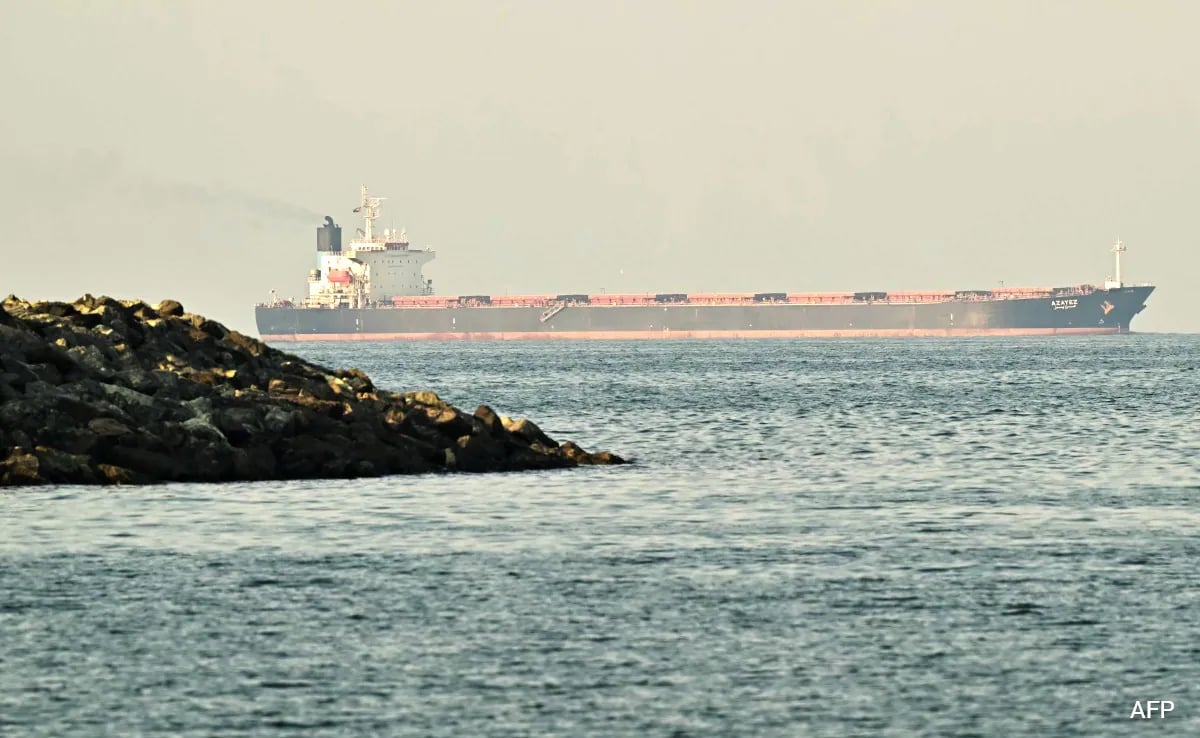
The seizure and subsequent immobilization of oil tankers in the Strait of Hormuz represent more than a localized maritime dispute; they are a breakdown in the global energy supply chain's "trust layer." When the United States Department of Justice attempts to enforce domestic sanctions on sovereign entities like Iran by seizing physical cargo, it triggers a chain of retaliatory logic that transforms liquid assets into frozen liabilities. The current stalemate regarding the Suez Rajan (renamed St Nikolas) and its counterparts illustrates how legal maneuvers in Washington can create physical bottlenecks in the Persian Gulf, where the cost of transit is no longer measured solely in fuel and freight, but in geopolitical risk premiums that markets are failing to price accurately.
The Mechanics of Cargo Paralysis
The primary driver of the current "stuck" status of oil in the region is the misalignment between international maritime law and unilateral sanction enforcement. This friction manifests in three distinct operational layers:
- Legal Clouding of Title: Once the US initiates a seizure based on sanctions violations, the legal ownership of the oil becomes "gray." No reputable Western refinery will touch the cargo for fear of being caught in secondary sanctions or litigation from the original state owner.
- Insurance Voids: Protection and Indemnity (P&I) clubs generally suspend coverage for vessels involved in contested seizures. A tanker without insurance is a floating environmental and financial hazard that most ports will refuse to host.
- Physical Retaliation Cycles: Iran’s "tit-for-tat" strategy—evidenced by the boarding of the St Nikolas—serves as a physical deterrent. This creates a circular dependency where the US cannot offload seized oil without risking further seizures of allied commercial vessels, and Iran cannot reclaim its oil without escalating to a direct military confrontation.
The result is a structural "U-turn" in logic. What was intended as a mechanism to drain Iranian state coffers has instead created a logistical vacuum. The oil is not moving because the risk of moving it exceeds the spot market value of the commodity itself.
The Cost Function of Maritime Brinkmanship
Standard economic models of the oil trade assume a frictionless environment where the $Price_{delivered} = Price_{wellhead} + Freight + Insurance$. In the Strait of Hormuz, we must introduce the Geopolitical Friction Variable ($\gamma$).
The $\gamma$ Variable Breakdown
- Demurrage Accumulation: Daily rates for a VLCC (Very Large Crude Carrier) can range from $30,000 to $100,000. When a ship is stuck for months due to legal disputes, the demurrage can eventually eclipse the value of the cargo.
- Transshipment Complexity: Moving "tainted" oil requires Ship-to-Ship (STS) transfers in jurisdictions that are willing to overlook US or Iranian pressure. Each transfer increases the risk of spills and adds roughly $2 to $4 per barrel in operational overhead.
- Security Escort Premiums: Private maritime security companies and increased naval presence add a fixed cost to every transit in the region, effectively acting as a regressive tax on global energy consumers.
The U-turn mentioned in recent reports isn't just a navigational change; it is a retreat from the assumption that Western legal mandates can be enforced in the Persian Gulf without a corresponding physical presence to protect the entire supply chain.
Strategic Asymmetry in the Strait
Iran’s leverage stems from its geographical proximity to a chokepoint that handles approximately 20% of the world's petroleum liquids. This creates a massive power imbalance in the "enforcement vs. disruption" ratio.
The US operates on a Rules-Based Enforcement Framework. It relies on courts, warrants, and the cooperation of commercial ship captains. Iran operates on a Kinetic Deterrence Framework. It uses the Islamic Revolutionary Guard Corps Navy (IRGCN) to physically board vessels. Because the IRGCN does not recognize the validity of US court orders, the legal "claims" made by the US Department of Justice are effectively unenforceable once the vessel enters the "grey zone" of the Arabian Sea or the Persian Gulf.
This asymmetry leads to the current "holding pattern." The US can win the legal battle in a DC District Court, but it cannot safely offload the oil if no commercial tanker company is willing to risk having their next ten ships seized by Iranian commandos in response.
The Erosion of the Flag of Convenience System
The Strait of Hormuz crisis highlights a systemic vulnerability in the "Flag of Convenience" (FOC) system. Vessels registered in nations like Liberia, the Marshall Islands, or Panama are technically under the jurisdiction of those nations. However, those nations lack the naval capacity to protect their flagged vessels from state-level actors like Iran.
When the US directs a Marshall Islands-flagged ship to divert its cargo to Texas, it places the vessel's owner in an impossible position. Following the US order makes them a target for Iran; ignoring the US order makes them a target for the US Treasury Department (OFAC). This "sovereignty gap" is why the oil remains stuck. The commercial players have realized that the flag on the back of the ship provides no shield against a fast-attack craft armed with cruise missiles.
Determinants of the Current Bottleneck
- Owner Risk Appetite: Smaller, independent ship owners are more likely to comply with US orders because they have less to lose from Iranian retaliation but everything to lose from being blocked from the US financial system.
- State-Backed Resistance: Tankers directly or indirectly controlled by sovereign entities (like the NITC) operate under a different risk profile, where the objective is not profit but the preservation of national prestige and market access.
The Liquidity Trap of Sanctioned Barrels
Oil is fundamentally a fungible asset, but the "seizure-retaliation" cycle has "de-fungiblized" specific parcels of crude. The oil currently stuck in or near the Strait of Hormuz has essentially been removed from the global supply without a formal production cut.
This creates a Contested Asset Discount. Even if a buyer could be found for the "stuck" oil, it would have to trade at a massive discount—possibly 40% to 50% below Brent—to account for the legal and physical risks of taking delivery. Since neither the US nor Iran is willing to accept that loss, the physical barrels remain in stasis. This is a classic liquidity trap where the asset exists, the demand exists, but the "transaction bridge" has been destroyed by geopolitical warfare.
Escalation Dominance and the Next Strategic Shift
The current stalemate will persist until one side achieves "escalation dominance"—the ability to raise the stakes to a level the other side is unwilling to match. Currently, we are in a state of Balanced Friction.
The US has demonstrated it can seize cargo on the high seas and through legal pressure on ship owners. Iran has demonstrated it can seize ships in the Strait as a direct response. Neither side can proceed with their ultimate goal (liquidity or reclamation) without triggering a maritime conflict that would spike oil prices to levels that are politically untenable for the West and economically ruinous for the region.
The strategic pivot will likely move away from physical seizures toward "Digital Blockades." Instead of trying to board ships and divert cargo—which creates the physical U-turns we are seeing—the US is likely to increase the frequency of "secondary sanctions" on the entire ecosystem: the insurers, the satellite tracking companies, and the port authorities.
Commercial operators must move from a reactive posture to a predictive one. The "stuck" oil in the Strait of Hormuz is a leading indicator that the era of secure, unescorted transit in the Persian Gulf is over for any vessel with even a tangential link to US-Iranian legal disputes. The only viable path forward for shipping firms is the total decoupling of their fleets—maintaining a "clean" fleet for Western trade and a "shadow" fleet for high-risk jurisdictions—as the middle ground has become a logistical graveyard.