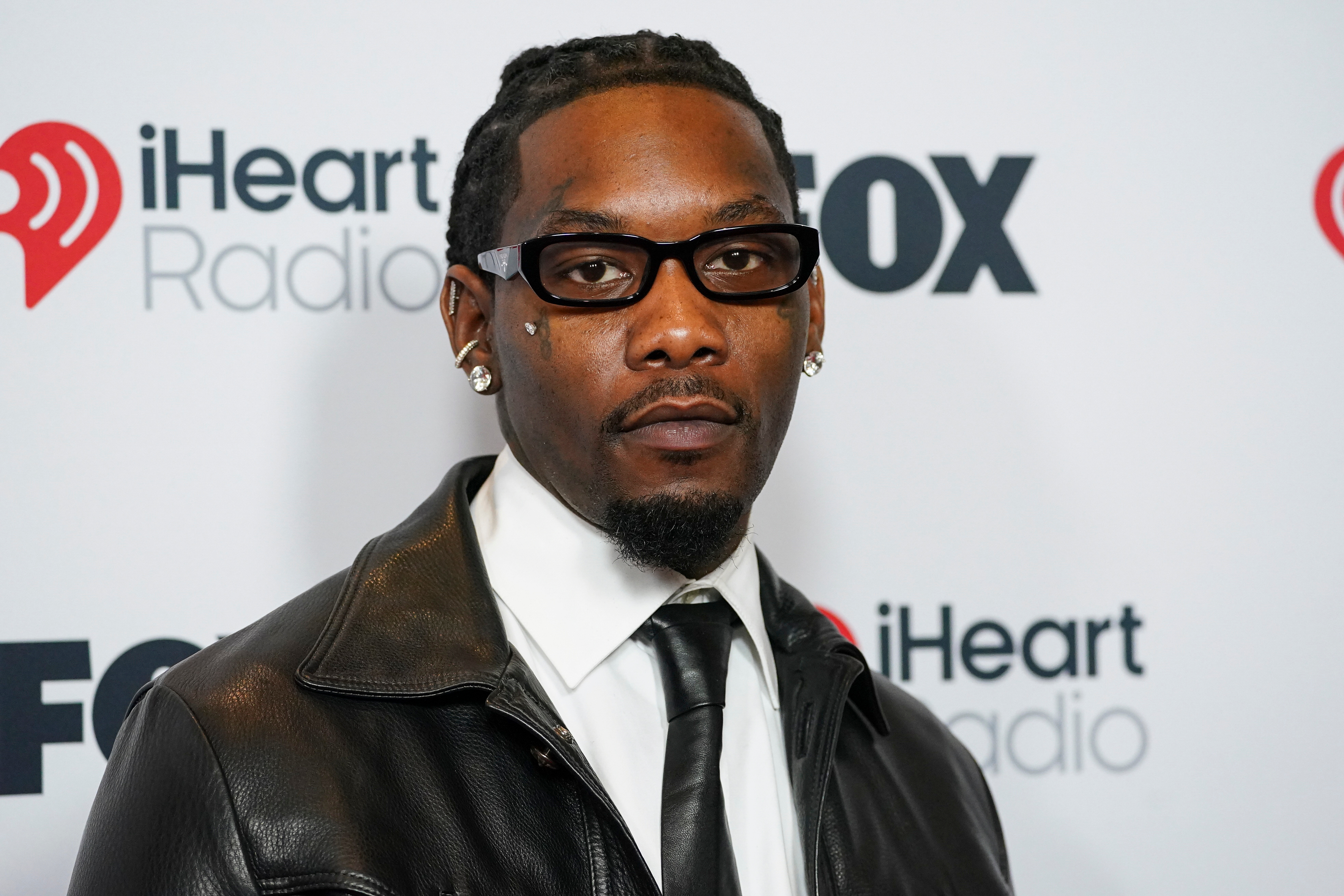
The hospitalization of Kiari Cephus, professionally known as Offset, following a shooting incident in Florida serves as a critical case study in the breakdown of executive protection protocols and the volatility of high-profile artist mobility. While standard reporting focuses on the emotional or sensational aspects of such events, a structural analysis reveals a failure in threat assessment and perimeter management. This incident is not an isolated occurrence but a data point in a broader trend of security vulnerabilities within the urban music industry, where the intersection of brand visibility and physical proximity creates a high-probability risk environment.
The Security Paradox of Public Visibility
For a public figure of Cephus's stature, security is not a binary state of "safe" or "unsafe." It is a dynamic management of exposure. High-profile artists operate within a Visibility-Vulnerability Matrix. As an artist increases their public engagement to maintain brand relevance and commercial momentum, they simultaneously expand their attack surface.
The Florida incident highlights three specific failures in the protective shell:
- Predictability of Movement: When an artist’s location becomes static or publicly known—even for short durations—the window for a coordinated strike opens.
- Environmental Variables: Florida’s specific legal and social landscape, including open-carry debates and high rates of firearm ownership, shifts the baseline threat level compared to other jurisdictions.
- Response Latency: The gap between the initial threat detection and the deployment of defensive measures determines the severity of the outcome. In this instance, the transition from a "soft" environment (social/recreational) to a "hard" tactical situation was insufficient.
Clinical Assessment of the Medical and Legal Aftermath
Hospitalization in the wake of a shooting necessitates a dual-track response: immediate physiological stabilization and long-term litigation/investigation management. From a physiological standpoint, the severity of the trauma is dictated by ballistics—specifically the kinetic energy transfer of the projectile and the proximity of the impact to vital organs or major arterial systems.
The legal repercussions introduce a secondary layer of complexity. An incident of this nature triggers an automatic state-led criminal investigation, but for the artist’s entity (their management and LLCs), it triggers a Liability Audit.
The Liability Audit Framework
- Contractual Obligations: Did the venue provide the stipulated level of security?
- Insurance Modifiers: High-value individuals often carry "key person" insurance or specialized personal accident policies. A violent incident can trigger "force majeure" clauses in performance contracts, leading to significant revenue loss from canceled appearances.
- Information Control: In the immediate 48 hours post-incident, the vacuum of information is usually filled by speculative digital media. Managing the narrative is not just a PR move; it is a defensive strategy to prevent the devaluation of the artist’s brand equity.
The Cost Function of Artist Safety
The financial burden of a security failure far exceeds the medical bills. We must quantify the Total Cost of Incident (TCI) using the following variables:
- Direct Costs: Hospitalization, emergency surgery, and immediate physical therapy.
- Indirect Costs: Canceled tour dates, delayed album releases, and the surge in premiums for future insurance coverage.
- Systemic Costs: The psychological impact on the artist’s creative output and the potential for a permanent shift in their public-facing strategy, which may reduce future earning potential in high-risk markets.
When an artist like Offset is sidelined, the entire ecosystem—producers, backup dancers, touring staff, and label executives—experiences a disruption in cash flow. The logistics of hip-hop, often characterized by large entourages, complicate this further. An entourage acts as a "buffer zone" but often lacks the tactical training required to manage an active shooter scenario. The reliance on "presence" over "protocol" is a systemic flaw in celebrity protection.
Operational Failures in Threat Detection
Modern executive protection (EP) relies on OODA Loops (Observe, Orient, Decide, Act). In the Florida shooting, the loop was likely compromised at the "Orient" stage.
Environmental Blind Spots
The geography of the incident—likely a transition point between a vehicle and a destination—represents the most vulnerable moment in an artist’s itinerary. These are known as "choke points." If the security detail fails to sweep the perimeter or secure the arrival zone, they lose the ability to orient themselves to a fast-moving threat.
Ballistic Risk in High-Density Areas
Florida’s urban centers present a high-density ballistic risk. The presence of bystanders increases the complexity of a defensive response, as return fire carries immense legal and ethical liability. This creates a "suppression disadvantage" for the artist's security, who must be more discerning than an aggressor.
Strategic Realignment for High-Risk Individuals
To mitigate the recurrence of such incidents, the industry must move away from the "muscle-bound bodyguard" model toward a Technological and Intelligence-Led Protective Model. This involves:
- Advance Reconnaissance: Deploying a team to the location hours before the artist arrives to map exits, identify cover, and monitor local social media for potential threats.
- Digital Footprint Management: Strict "no-live-posting" policies for all members of the inner circle to prevent real-time location tracking.
- Tiered Protection Zones: Establishing a three-ring security perimeter where only vetted individuals enter the inner circle, and the outer circle is monitored for suspicious behavior.
The hospitalization of Offset is a failure of the current protective paradigm. The reliance on reactive measures is insufficient in an era of instant information and high-capacity weaponry. The strategic play for any entity managing a high-profile asset is the immediate professionalization of their security apparatus, shifting the focus from "showing force" to "avoiding engagement." This requires a cold, data-driven assessment of every movement, treating every public appearance not as a social event, but as a tactical operation with a defined risk profile.
Future stability for the artist depends on their ability to transition from a target-rich environment to a controlled-access model. If the operational protocols are not tightened, the frequency of these incidents will likely increase as the "clout" associated with attacking a high-profile figure continues to grow in certain subcultures. The objective is now a total overhaul of the artist's movement logistics, prioritizing anonymity and rapid extraction over public grandiosity.