The mud of West Berkshire has a particular weight to it. It is thick, flinty, and indifferent to who is treading upon it. For generations, the residents of Kintbury and its surrounding hamlets have worn that mud as a badge of belonging. They walked the winding trails through the Barton Court Estate not as trespassers, but as participants in a quiet, unwritten contract between the land and the people.
Then came the gate.
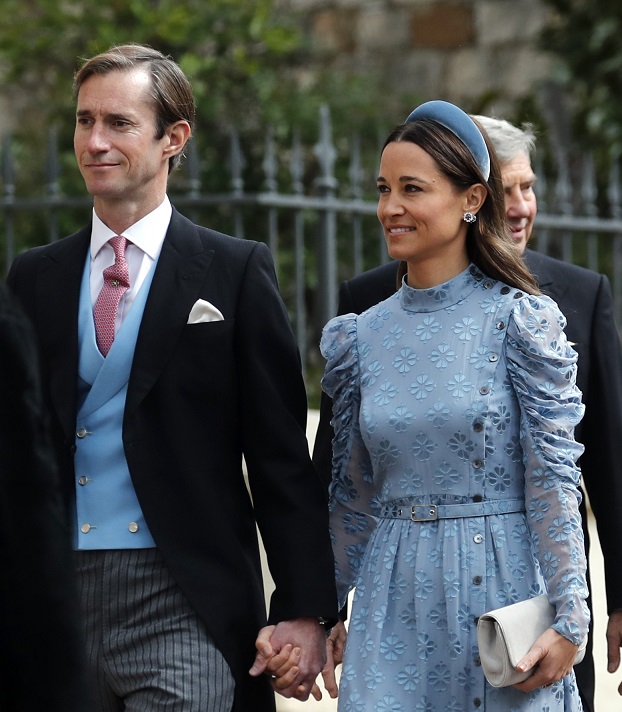
It wasn't just any gate. It was a statement in iron and wood, backed by the weight of a $24 million investment. When Pippa Middleton and her husband, James Matthews, purchased the sprawling Georgian mansion and its 72 acres, the village expected change. They expected the hum of high-end renovations and perhaps a glimpse of a royal relative at the local pub. They did not expect to find their world suddenly partitioned.
The conflict in Kintbury isn't about property lines. It’s about the collision of two very different ideas of what it means to "own" a piece of the English countryside. On one side, you have the fundamental right of a private citizen to secure their home. On the other, you have a centuries-old tradition of the "right to roam," a cultural heartbeat that views the landscape as a shared inheritance.
The Geography of a Grudge
To understand why a simple driveway has become a battlefield, you have to look at the map of the heart. For years, the previous owner allowed the public to use a specific private road on the estate. It was a shortcut, a scenic detour, a place to walk the dog while the mist was still clinging to the grass. It was a gesture of communal goodwill that existed outside the rigid boundaries of the law.
When the Middletons arrived, the "Private" signs went up. The gate was locked.
A village isn't a collection of houses; it’s a web of habits. When you break a habit that has existed for decades, you aren't just changing a route. You are telling the person who walks it that they no longer belong where they once felt at home.
Consider a hypothetical resident—let’s call him Arthur. Arthur has walked his spaniel past the old house every morning since the late nineties. He knew which trees turned gold first in October. He knew the specific sound the gravel made under his boots. Suddenly, Arthur is met with a physical barrier. He is told that his presence is now a security risk, an intrusion on a $24 million sanctuary.
Arthur’s frustration isn't about the extra five minutes it takes to walk the long way around. It’s the sting of being cast out.
The Security of the Few
From the perspective of the Matthews family, the logic is unassailable. If you spend tens of millions of dollars on a family home, you expect privacy. You expect that your children can play in the garden without a stranger wandering past with a camera or a curious gaze.
The Middletons are not ordinary citizens. They are tethered to the most famous family on the planet. For them, a "public footpath" isn't just a path; it's a vulnerability. The world’s obsession with the Princess of Wales’s sister creates a unique set of pressures. Security isn't a luxury for them; it’s a prerequisite.
They applied to the local council to officially close the path, citing that it was never a designated public right of way. Legally, they are likely correct. The path was used by "permissive right," meaning it was allowed by the grace of the owner, not by the mandate of the state.
But the law is a cold comfort when it’s used to extinguish a tradition.
The Weight of the Invisible
This is where the tension becomes a fever. The villagers have filed a formal objection with West Berkshire Council. They are fighting to have the path recognized as a public right of way based on historical usage. They are digging through old maps and gathering testimonies, trying to prove that their feet have earned them a place on that soil.
This happens all over England, but here, the stakes feel amplified by the sheer scale of the wealth involved. When a billionaire or a celebrity buys a piece of the local history, there is always a fear that they will "London-ify" the place—fencing it off, sanitizing it, and turning a living landscape into a static museum piece.
The "village feud" isn't just about a road. It’s a proxy war over the disappearing commons.
In the modern world, we are obsessed with boundaries. We fence our yards, password-protect our lives, and use noise-canceling headphones to block out the person sitting three feet away. We are increasingly isolated in our own private "estates," whether those are physical mansions or digital bubbles.
Kintbury is a microcosm of this narrowing. Every time a gate is locked on a path that was once open, the world gets a little bit smaller. The shared space where a wealthy landowner and a retired teacher might nod hello to one another vanishes.
The Cost of Privacy
What is the price of peace? For Pippa and James, it’s $24 million plus the cost of a high-end security system and the inevitable cold shoulders at the local grocery store. For the villagers, it’s the loss of a connection to the land that helped define their community.
There is a specific kind of silence that falls over a village when a feud like this takes root. It’s not a peaceful silence. It’s the silence of resentment. It’s the look shared between neighbors when they see the new gates. It’s the hushed conversations in the pub about "how things used to be."
The Middletons have the legal right to their privacy. They have the right to protect their family. But in the tight-knit ecosystem of rural England, legal rights are often outweighed by social responsibilities.
Imagine the first time a local child kicks a ball and it rolls toward that gated driveway. Imagine the hesitation. The child knows that the land beyond the gate is no longer "theirs" in the way it used to be. It belongs to someone else now. It belongs to the People on the News.
A Landscape of Walls
We often think of progress as an additive process—more technology, more money, more security. But progress can also be subtractive.
The story of the Barton Court Estate is a story of subtraction. It is the removal of a public grace to make room for a private necessity. It is the victory of the deed over the footstep.
As the council weighs the evidence and the lawyers draft their arguments, the gate remains. It stands as a sentinel between two worlds that are increasingly unable to communicate. One world speaks the language of investment, liability, and privacy. The other speaks the language of memory, heritage, and the right to walk where your father walked.
The problem with gates is that they work both ways. They keep people out, but they also lock people in.
While the Middletons sit within their beautifully restored Georgian walls, they are separated from the very community they sought to join. They have purchased the view, the history, and the prestige, but the one thing they cannot buy—and the one thing they may have accidentally destroyed—is the feeling of being a neighbor.
The path remains empty. The mud dries. The flint stays hidden beneath the surface. And in the silence of the West Berkshire countryside, the only thing growing is the distance between the house on the hill and the people in the valley.
True ownership isn't about a signature on a piece of parchment. You can own the dirt, you can own the trees, and you can certainly own the gate. But you can never truly own the wind that blows across the path, or the way the light hits the valley at six in the morning, or the collective memory of a village that remembers when the way was open.
Those things belong to the people who walk. And for now, they are walking somewhere else.