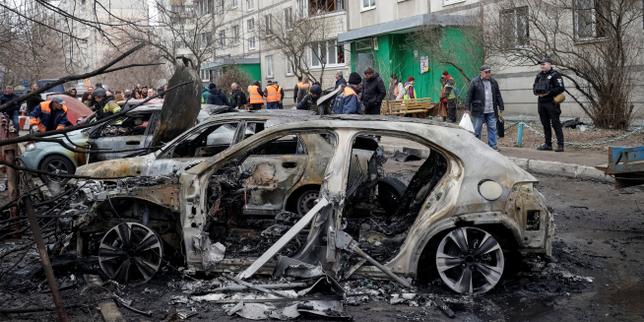
The windows in Tehran do not just rattle; they hum. It is a low, dissonant frequency that begins in the soles of your feet before the sound of the explosion actually reaches your ears. On this particular night, the hum was constant. For the families huddled in the hallways of apartment blocks—far from the glass that might turn into shrapnel—the geopolitical chess match between Israel and Iran ceased to be a headline. It became a physical weight.
Israel’s strikes on the Iranian capital were not a sudden flash of lightning in a clear sky. They were the thunder following a long, suffocating heat. When the Israeli Defense Forces confirmed they were hitting "military targets," they spoke the language of precision and protocol. But for the people on the ground, "precision" is a terrifyingly abstract word. It means the building two blocks over remains a skeleton of concrete while your own tea kettle stays on the stove. It is the lottery of modern warfare. Discover more on a related topic: this related article.
Consider a hypothetical father, let’s call him Arash, sitting in a dark corridor in Tehran. He isn't thinking about the Revolutionary Guard’s missile capabilities or the intricacies of the F-35’s stealth coating. He is counting the seconds between the flashes of light outside and the roar that follows. He is wondering if the pharmacy where he gets his daughter’s medicine will still be standing by sunrise. This is the invisible tax of a shadow war that has finally, irreversibly stepped into the light.
The Negotiator and the Noise
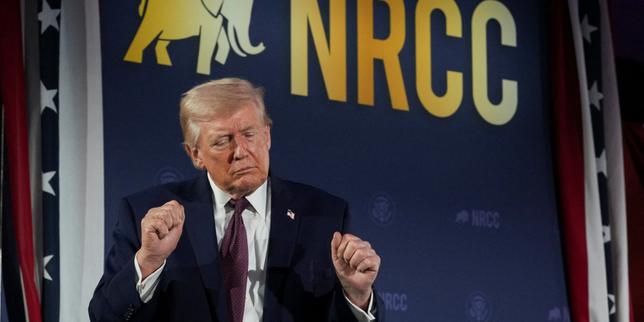
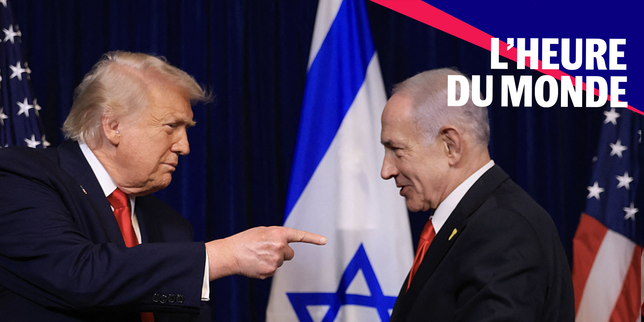
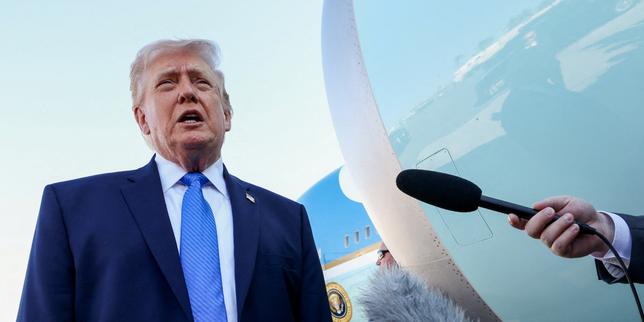
While the sky over Tehran burned, another kind of heat was building thousands of miles away. In the marble-lined halls of American power, the rhetoric shifted from "if" to "how soon." Donald Trump, stepping into the breach of a global crisis, began the delicate and often blunt dance of negotiation. He claimed the U.S. was working to end the war, a statement that feels both like a lifeline and a gamble. More journalism by USA Today highlights comparable perspectives on the subject.
Diplomacy is often described as a game of chess, but that gives it too much credit for logic. It is more like a high-stakes auction where the currency is blood and the auctioneer is shouting over the sound of sirens. The U.S. position is a tightrope. On one side, there is the ironclad commitment to Israel’s security—a bond forged through decades of shared intelligence and ideological alignment. On the other, there is the terrifying reality that a full-scale regional war would swallow the global economy whole.
If the Strait of Hormuz closes, the price of gasoline in a small town in Ohio doesn't just go up. It skyrockets. The supply chains that bring components for your smartphone or the fruit for your breakfast table begin to fray. We often treat foreign policy as a distant drama, a play we watch from the safety of the balcony. In reality, we are all on the stage. We are just waiting for our cues.
The Weight of Every Word
The strikes on Tehran were a response to Iran’s own massive missile barrage weeks prior. This is the cycle of "deterrence." In military theory, deterrence is the act of hitting someone hard enough that they decide hitting you back isn't worth it. In practice, deterrence often looks like a staircase with no top. Each side takes a step up, convinced the other will be the first to get dizzy.
The statistics tell a story of escalating power. We are talking about ballistic missiles that can travel over 1,000 miles in minutes. We are talking about air defense systems, like the S-300 or Israel’s Arrow and Iron Dome, that try to "hit a bullet with a bullet." These are marvels of engineering. They are also monuments to our collective failure to exist without the threat of mutual destruction.
$v = \sqrt{2GM/R}$
Even the physics of escape velocity and terminal ballistics feel cruel when you realize they are being applied to cities filled with schools and parks. When a missile enters the atmosphere, it isn't just a piece of metal; it is a concentrated expression of a nation's will. And when it lands, that will becomes a crater.
The Shadow in the Room
There is a specific kind of silence that follows an air raid. It is a thick, artificial quiet. People emerge from their shelters blinking, looking at a world that is subtly different from the one they left an hour ago. The smell of ozone and dust hangs in the air.
The Israeli strikes targeted missile production facilities and air defense arrays. The goal was to blind and declaw the Iranian military. From a strategic standpoint, it was a masterclass in modern electronic warfare and long-range strike capability. But the psychological shrapnel travels much further than the physical kind.
The Iranian leadership now faces a choice that has no good outcome. Respond, and risk a total war that could topple the regime and devastate the country. Do nothing, and look weak in a region where weakness is an invitation for further aggression. It is a claustrophobic position. The walls are closing in, and the only door out is labeled "negotiation"—a door many in Tehran are still hesitant to touch.
The Human Cost of Grand Strategy
We often hear experts talk about "proxies." They talk about Hezbollah in Lebanon, the Houthis in Yemen, and various militias in Iraq. These groups are treated like buttons on a remote control. But every time a button is pressed, a village is erased. Every time a "proxy" fires a rocket, a family in northern Israel has seconds to reach a bomb shelter.
This is not a story about two governments. It is a story about the exhaustion of millions of people who just want to wake up and know the currency will be stable and the sky will be empty of drones. The rhetoric of "total victory" or "crushing the enemy" sounds grand in a speech. It sounds hollow in a hospital ward.
The U.S. negotiation efforts, led by the Trump administration, are operating on a theory of "peace through strength." The idea is that if the consequences of war are made sufficiently terrifying, the parties will have no choice but to talk. It is a high-pressure tactic. It assumes that all actors are rational. History, however, is a long list of people making very irrational decisions because they felt their honor or their survival was at stake.
The Ripples in the Water
Imagine the ripples in a pond after a stone is thrown. The strike on Tehran is the stone. The ripples are moving through the oil markets, through the halls of the United Nations, and through the election booths of Western democracies.
The Middle East has a way of making the rest of the world look small. It is the cradle of civilization and, too often, its potential grave. The current conflict is a reminder that the world is not a collection of isolated islands. We are a web. When one strand is pulled, the whole structure shudders.
The irony of modern warfare is that we have never been better at killing each other from a distance, yet we have never been more connected. A programmer in Tel Aviv and a student in Tehran might use the same open-source code for their projects. They might listen to the same music. They might even share the same fear. But the machinery of statehood has placed them on opposite sides of a targeting reticle.
The Dawn After the Fire
As the sun rose over Tehran following the strikes, the smoke began to clear, but the uncertainty only thickened. Reports filtered in about the extent of the damage. The Israeli jets had returned home. The Iranian air defenses had gone quiet. The world held its breath, waiting for the inevitable "we reserve the right to respond" statement from the Iranian Foreign Ministry.
Negotiation is not a sign of friendship. It is an admission of exhaustion. If the U.S. can indeed broker a cessation of this specific cycle, it won't be because the underlying hatreds have vanished. It will be because both sides have looked into the abyss and realized they don't like the view.
The "invisible stakes" are the lives of people whose names we will never know. It is the teacher in Haifa who can't sleep. It is the baker in Isfahan who can't find flour because the shipping lanes are blocked. These are the characters in the real story of the Iran-Israel war. They are not the ones sitting at the negotiating tables, but they are the ones who will pay the bill for whatever is decided there.
The sky over the Middle East is a canvas of ancient stars and modern steel. On nights like these, the steel wins. But the stars are still there, waiting for the smoke to drift away, waiting for a time when the only thing falling from the heavens is the rain.
The hum in the windows has stopped for now. The silence is not peace, but it is a chance to breathe. In the quiet, you can almost hear the scratch of a pen on a map, the rustle of a diplomat’s papers, and the heartbeat of a region that is tired of being a battlefield. The next few days will determine if that heartbeat continues or if it is drowned out once again by the roar of the engines.
The true ending of this story hasn't been written yet. It is being debated in secure bunkers and whispered in the corridors of Mar-a-Lago. It is being weighed by generals and feared by mothers. We are all just waiting to see if the world can find a way to turn the iron back into air.
The father in Tehran, Arash, finally opens his front door. The air is cool and smells of burnt rubber. He looks at his daughter, who is still asleep in her bed, oblivious to the fact that the world nearly ended while she dreamed. He closes his eyes and waits for the sound of the morning call to prayer, hoping it won't be interrupted by the sound of the sky breaking open.