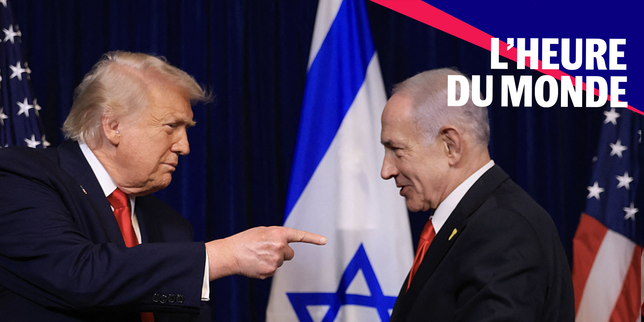
The prevailing geopolitical discourse surrounding a potential "Guerre en Iran" often fails to account for the fundamental shift in Israeli military doctrine from tactical containment to structural degradation. Benjamin Netanyahu’s current strategic posture is governed not by a single endgame, but by a multidimensional cost-benefit matrix designed to address the "Octopus Doctrine." This framework shifts the target of Israeli kinetic operations from the regional proxies—the "tentacles"—directly to the Iranian "head." To understand the current escalation, one must dissect the three structural pillars defining Israel’s operational logic: the degradation of the nuclear breakout window, the neutralization of regional encirclement, and the restoration of domestic deterrence through high-technology dominance.
The Breakout Variable and the Failure of Traditional Containment
Traditional diplomacy and the Joint Comprehensive Plan of Action (JCPOA) operated on the assumption that Iranian nuclear ambitions could be paused through economic incentives. From the perspective of Israeli defense planners, this was a categorical error in risk assessment. Netanyahu’s strategy now operates on the "Red Line Logic," where the primary metric is the quantity and enrichment level of Uranium-235.
The technical reality is that Iran has achieved a state of "latent capacity." This means the bottleneck is no longer scientific knowledge, but the physical accumulation of high-enriched uranium (HEU). Israel’s strategy focuses on three specific points of intervention within the nuclear fuel cycle:
- Centrifuge Efficiency and Longevity: Kinetic and cyber operations, such as the deployment of advanced malware or physical sabotage of power grids (as seen in Natanz), target the IR-6 and IR-9 centrifuge cascades. By inducing mechanical failure, Israel forces Iran into a cycle of replacement that consumes financial and temporal resources.
- Hardened Facility Penetration: The Fordow Fuel Enrichment Plant represents a geographical challenge, buried deep within a mountain. Netanyahu’s procurement strategy—specifically the acquisition of GBU-57 Massive Ordnance Penetrators (MOP) and the modernization of the IAF’s F-35I Adir fleet—is a direct response to this "immunity zone."
- Personnel Attrition: The systematic elimination of key scientific figures is a psychological operation designed to create a "brain drain" within the Iranian Organization of Defensive Innovation and Research (SPND). This increases the margin of error in Iranian calculations, potentially leading to detectable mistakes.
The Proxy Attrition Model and the Collapse of the Ring of Fire
For a decade, the Iranian Revolutionary Guard Corps (IRGC) cultivated a "Ring of Fire" around Israel, utilizing Hezbollah in Lebanon, Hamas in Gaza, and militias in Syria and Iraq. The Israeli response has transitioned from "The Campaign Between Wars" (MABAM) to a state of active structural dismantling.
The logic here is a "Degradation of Command" (DoC) model. Israel is no longer content with hitting weapons shipments; it is targeting the logistical backbone and the senior leadership hierarchy. This creates a functional vacuum. When a proxy’s leadership is eliminated faster than the IRGC can vet and install replacements, the proxy reverts to a localized, uncoordinated force.
This shift has profound implications for the Iranian strategy of "Forward Defense." If Hezbollah’s precision-guided missile (PGM) arrays are neutralized or their command-and-center (C2) nodes are severed, Iran loses its primary deterrent against an Israeli strike on its mainland. The cost function for Iran changes: they can no longer guarantee a massive retaliatory strike that would make an Israeli operation "unacceptable" in terms of domestic casualties.
The Economic and Cyber Attrition Variable
Direct kinetic warfare is only one component of the broader Israeli strategy. The second mechanism is "Structural Economic Paralysis." By targeting Iranian infrastructure—specifically oil terminals, port facilities (like Shahid Rajaee), and the banking sector—Israel aims to exacerbate internal Iranian instability.
The strategic goal is to force the Iranian leadership to choose between "Guns or Bread."
- The Currency Devaluation Loop: Continuous cyberattacks on Iranian financial systems lead to public panic and bank runs, further devaluing the Rial.
- Infrastructure Fragility: The Iranian power grid and water distribution systems are aging and vulnerable to sophisticated cyber-physical attacks. By disrupting these, Israel increases the domestic cost of the IRGC’s regional ambitions.
This creates a "Domestic Pressure Valve" effect. Netanyahu’s gamble is that the Iranian regime will be forced to prioritize internal survival over external expansion, effectively shrinking its regional footprint without a full-scale ground war.
Tactical Superiority vs. Strategic Stalemate
The primary limitation of Netanyahu’s strategy is the "Sunk Cost of Knowledge." While Israel can destroy physical centrifuges and kill scientists, the fundamental physics of nuclear weaponization cannot be unlearned. This leads to a persistent "Whack-a-Mole" dynamic.
Furthermore, the "Octopus Doctrine" carries the risk of a miscalculation that leads to a "Total War" scenario. If Israel strikes the Iranian mainland and the regime perceives its existence is at stake, it may bypass its proxies and launch a direct, sustained ballistic missile campaign. The efficacy of Israel’s multi-layered defense system (Iron Dome, David’s Sling, and Arrow 2/3) is high, but it is not infinite. A saturation attack involving hundreds of hypersonic or high-speed ballistic missiles would test the "Probability of Leakage"—the statistical certainty that some warheads will hit high-value targets.
The Intelligence Supremacy Prerequisite
The entire Israeli strategy rests on the assumption of "Total Intelligence Dominance." Unit 8200 and Mossad must maintain a level of penetration that allows them to anticipate Iranian moves before they are executed. This is a fragile advantage. If Iranian counter-intelligence improves, or if they shift to low-tech, air-gapped communication methods, the Israeli "First Strike" advantage evaporates.
The reliance on artificial intelligence for target acquisition and real-time battlefield management also introduces new risks. These systems are optimized for known variables; they may struggle to account for "Black Swan" events or irrational actors within the Iranian command structure.
The Strategic Final Play
The objective of Benjamin Netanyahu’s current strategy is the forced recalibration of the Iranian regime's risk appetite. By systematically removing the "Ring of Fire" and demonstrating the ability to strike hardened targets with impunity, Israel is attempting to render the Iranian nuclear program a liability rather than an asset.
The ultimate strategic move is not a singular, decisive "Big Bang" strike, but the creation of a "Continuous Attrition Environment." In this state, the Iranian regime finds itself in a perpetual defensive crouch, its resources depleted, its proxies fractured, and its scientific progress stalled. Success for Israel is not the "surrender" of Iran, but the permanent "management" of its decline through a combination of technological overmatch and surgical kinetic interventions.
The window for this strategy is narrow. As Iran moves closer to Russia and China for technological and economic support, the "Diplomatic Shield" around Tehran may strengthen. Therefore, the frequency and intensity of Israeli operations are likely to increase in the immediate term, aimed at achieving irreversible structural damage before the geopolitical window closes.
Israel's next operational phase will likely involve the deployment of "Autonomous Swarm Systems" to target IRGC naval assets in the Persian Gulf, further extending the theater of conflict and forcing Iran to spread its defensive resources even thinner. The move from "Containment" to "Dismantlement" is now the baseline of Israeli foreign policy.