Mainstream media is currently choking on its own indignation. Over the weekend, the chattering classes focused on two "scandals": Donald Trump’s pivot on Iran strikes and Japanese Prime Minister Sanae Takaichi’s supposedly "embarrassing" behavior at the White House. The consensus is that Trump is erratic and Takaichi is out of her depth.
They are dead wrong. For a deeper dive into similar topics, we recommend: this related article.
What the "5 weekend reads you missed" crowd calls a change of plans, I call the final squeeze of a geopolitical vice. What they call a mocked leader, I call a strategic realignment that is leaving Beijing terrified and the West’s "strategic ambiguity" in the trash heap where it belongs. I’ve watched administrations play the "quiet diplomacy" game for twenty years only to watch China build islands and Iran build centrifuges. The rules have changed.
The Art of the Five-Day Deadline
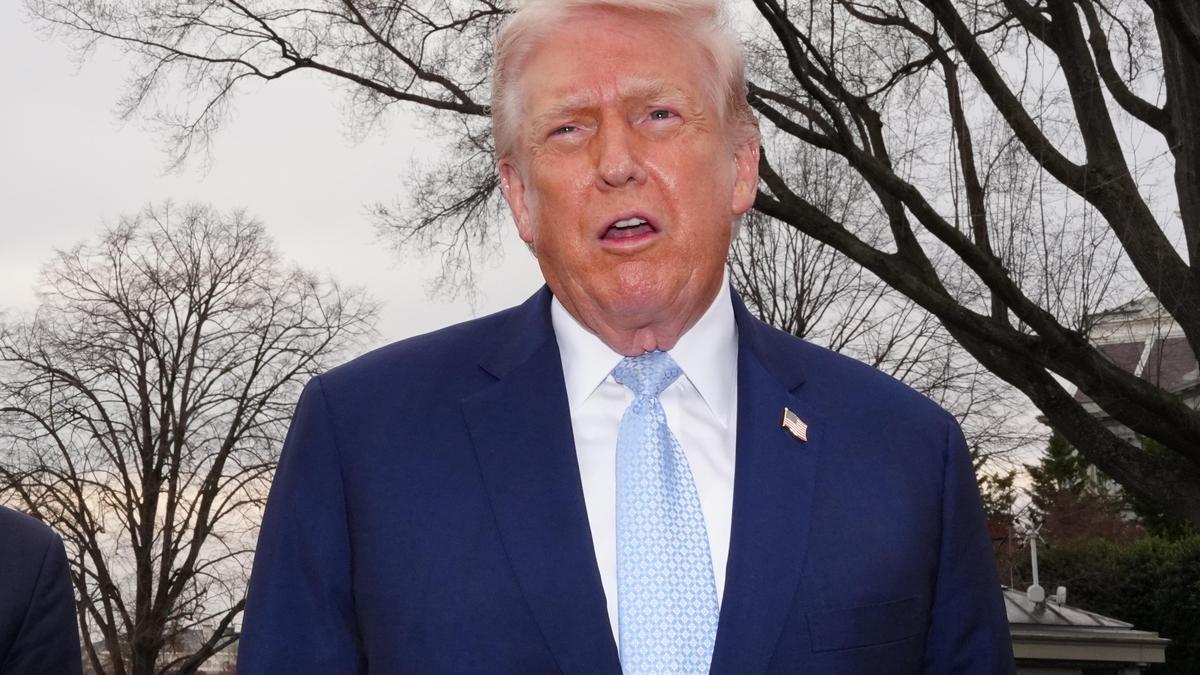
Trump’s decision to postpone strikes on Iranian power plants for five days isn't a "backdown." It is a classic liquidity trap applied to warfare. By issuing a 48-hour ultimatum and then extending it based on "productive talks," Trump has effectively frozen the Iranian energy market and forced Tehran to negotiate under the barrel of a literal gun. For additional context on this issue, in-depth analysis is available on The Washington Post.
Critics point to Brent Crude’s 13% drop to $96 as a sign of volatility. In reality, it is a massive transfer of power. High oil prices were Iran’s only remaining shield. By cooling the market through the threat of peace, Trump stripped the regime of its economic leverage before the first bomb even fell on a transformer.
Imagine a scenario where a CEO threatens to liquidate a competitor, watches their stock price crater, and then offers to buy them for pennies on the dollar. That isn’t "changing plans." That is hostile acquisition. The five-day window isn't for Iran to breathe; it’s for the U.S. to finalize the target list while the Iranian Defense Council argues over whether to mine the Strait of Hormuz—a move that would alienate their last remaining customers in Asia.
Takaichi Is Not Being Mocked She Is Being Reassigned
The obsession with Takaichi’s "uneasy" reaction to Trump’s Pearl Harbor joke is a distraction for the intellectually lazy. While Twitter users in China and Japan obsess over her facial expressions or her "casual" dancing at the state dinner, they are missing the most aggressive shift in Japanese defense policy since 1945.
Takaichi secured the largest supermajority in post-war history specifically to dismantle Article 9. Her "dependency mindset," as Beijing’s state media desperately labels it, is actually a calculated trade. She gives Trump the optics he wants—the "loyal ally" who laughs at the jokes—in exchange for the one thing Japan has lacked for eighty years: the green light to go nuclear-capable.
The "mockery" from China is a coping mechanism. Beijing is terrified of Takaichi because she is the first Japanese leader to explicitly state that a Chinese blockade of Taiwan is a "survival-threatening situation" for Japan. When Trump asks her to "dial down the volume," he isn't reprimanding her; he’s playing the "Good Cop" to her "Unpredictable Samurai." It forces Xi Jinping to deal with a Washington that claims it can’t control its newly re-armed partner in Tokyo.
The Manufacturing Mirage
The competitor piece mentions that China’s exports are "booming" while factories are closing. They treat this as a mystery. It isn't. It is the result of the "China Plus One" strategy finally hitting the terminal phase.
I’ve seen companies blow millions trying to keep supply chains in Shenzhen because "that's where the talent is." That talent is now moving to Vietnam, India, and Mexico. The factory closures in China’s hubs aren't a glitch; they are the result of a deliberate, painful decoupling that the media still refuses to call by its name.
The "booming" export numbers are a facade of low-margin green tech—EVs and solar panels—that the West is already slapping with 100% tariffs. China is overproducing because its internal consumption has collapsed. They are trying to export their way out of a depression, and the world is slamming the door.
Why Your Geopolitical "Experts" Are Wrong
The "People Also Ask" section of your brain is probably wondering: Is this leading to World War III? That is the wrong question. We are already in a state of high-intensity economic and proxy warfare. The real question is: Who has the most to lose from a broken global order?
- China: Needs stable sea lanes for energy and food.
- Iran: Needs $100+ oil to keep the lights on.
- The U.S. and Japan: Need a manufacturing base that isn't controlled by a strategic rival.
Trump and Takaichi are the only ones acting like they understand this. The "weekend reads" you usually consume want you to believe that stability comes from polite communiqués. It doesn't. It comes from the credible threat of total systemic disruption.
Takaichi isn’t "relying on charm." She is leveraging the U.S. security umbrella to transform Japan into a regional hegemon that can no longer be bullied by Beijing. Trump isn't "erratic." He is using the "Madman Theory" to de-risk the global energy market while simultaneously dismantling the Iranian regime's ability to project power.
The downside? It’s ugly. It’s loud. It involves "embarrassing" jokes and Truth Social posts in all caps. But in a world of high-stakes leverage, I’d rather have a leader who makes the enemy "uneasy" than one who makes them comfortable.
Stop looking for "decorum" in the middle of a systemic collapse. Start looking at the scoreboard.
Would you like me to analyze the specific impact of the new rare-earth magnet export quotas on the Japanese tech sector?