A 93-year-old man named Étienne Davignon walked into a Brussels courtroom this year to face a reckoning 65 years in the making. He is the last surviving suspect in the 1961 assassination of Patrice Lumumba, the first democratically elected Prime Minister of the Democratic Republic of the Congo. While the world treats this as a historical footnote or a somber piece of museum-grade restitution, the reality is far more jagged. The Lumumba case is being talked about now because the "Congo Crisis" never actually ended; it just upgraded its hardware.
On March 17, 2026, a Brussels court ruled that Davignon must stand trial for war crimes, specifically for his role in the abduction and transfer of Lumumba to the firing squads of Katanga. This isn't just about a gold-capped tooth returned in a blue box two years ago. It is about a legal precedent that strips away the statute of limitations for colonial-era atrocities. For the first time, a former official of a colonial power is being criminally prosecuted for the political murder of an African leader.
The Last Witness and the First Precedent
The legal machinery in Belgium is finally grinding forward because the Lumumba family refused to let the clock run out. Of the eleven original suspects named in their 2011 complaint, ten are dead. Davignon, a former diplomat and high-ranking European Commission official, stands alone. The charges are heavy: unlawful detention, humiliating treatment, and the deprivation of a fair trial.
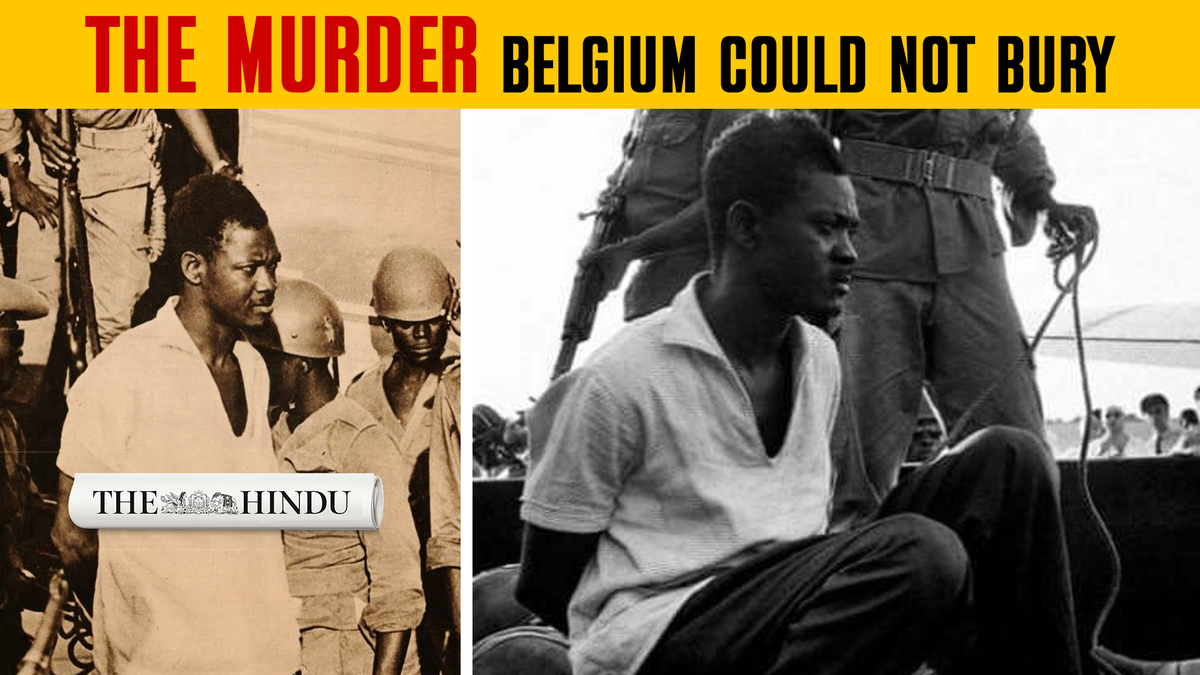
Prosecutors aren't just looking at the pull of a trigger. They are dissecting the logistics of a state-sponsored disappearance. In 1961, Lumumba was a 35-year-old visionary who terrified Washington and Brussels because he demanded that Congo’s riches—uranium for nuclear bombs and copper for industry—belong to the Congolese. Within months of taking office, he was deposed in a coup, beaten, and flown to the secessionist region of Katanga. There, under the watchful eyes of Belgian officers, he was executed. His body was dissolved in acid to ensure no grave could become a shrine.
Davignon’s defense has argued that "reasonable time" has passed. The court disagreed. By classifying the murder as a war crime and a crime against humanity, the Belgian judiciary has signaled that the passage of six decades does not grant immunity. This trial, set to begin in earnest by 2027, is the first time the "moral responsibility" admitted by the Belgian government in 2001 will be tested as individual criminal liability.
Why the Ghost of Lumumba Haunts the Present
The timing of this trial coincides with a terrifying escalation in eastern Congo. As Davignon’s lawyers argue over decades-old cables, the M23 rebel group—widely documented as receiving support from Rwanda—has captured Goma and pushed the region toward a total collapse.
There is a direct line from the 1961 assassination to the 2026 mineral wars. When Lumumba was removed, he was replaced by Mobutu Sese Seko, a dictator who facilitated the systematic looting of the country for 32 years. That era shattered the Congolese state's ability to protect its borders or its people. Today, the world is desperate for Congo’s cobalt and copper to fuel the green energy transition. The same foreign interests that viewed Lumumba’s resource nationalism as a threat are now navigating a landscape of "security-for-minerals" bargains.
In March 2026, the Congolese government began blocking Chinese takeovers of cobalt mines, favoring U.S.-backed firms in a desperate bid for security alliances. This is the neocolonialism Lumumba warned about in his final letters. The "Congo Crisis" isn't a chapter in a history book; it is the daily reality of a nation that produces 70% of the world's cobalt while its children die in collapsed mines at Rubaya.
The Tooth and the Trial
In June 2022, Belgium returned a gold-capped tooth to Lumumba's family. It was a macabre souvenir kept for decades by Gerard Soete, one of the Belgian police officers who helped dispose of the body. The return was framed as a moment of reconciliation, but the Lumumba family and their legal team, led by Wolfgang Kaleck, saw it differently. They saw it as physical evidence of a crime that remained unpunished.
The current trial isn't interested in symbols. It is interested in the "how." How did a 28-year-old diplomatic intern like Davignon find himself in the middle of a triple assassination? How did the Belgian state coordinate with Katangan separatists? The court has expanded the trial's scope to include the murders of Lumumba’s associates, Maurice Mpolo and Joseph Okito.
This expansion is critical. It moves the narrative away from the "martyrdom" of one man and toward the systematic decapitation of a nation's leadership. If the trial proves that Belgian officials actively facilitated these war crimes, it opens the floodgates for similar cases across the former colonial world.
A System on Trial
Critics argue that putting a 93-year-old man on trial is a hollow gesture. They are wrong. This isn't about the frailty of the defendant; it is about the durability of the law. For decades, the Western narrative was that Lumumba was an "erratic" leader who brought his fate upon himself by flirting with the Soviet Union. This trial forces a confrontation with the fact that his "erratic" behavior was simply a refusal to be a puppet.
The Democratic Republic of Congo is currently embroiled in a political confrontation with Rwanda, while global powers treat the country like a warehouse for battery metals. The ghost of Lumumba is being summoned now because the Congolese people are recognizing that the "independence" celebrated in 1960 was never fully realized.
The trial in Brussels will not bring Lumumba back, nor will it stop the M23 rebels from marching on Kinshasa. But it strips the mask off the "civilizing mission" of the past and exposes it as a series of calculated, violent thefts. If a Belgian court can find a Belgian official guilty of war crimes in the Congo, the entire architecture of colonial impunity begins to crumble.
Keep a close eye on the appellate hearings scheduled for later this year; they will determine if the 2027 trial date holds or if the last witness will take his secrets to the grave.