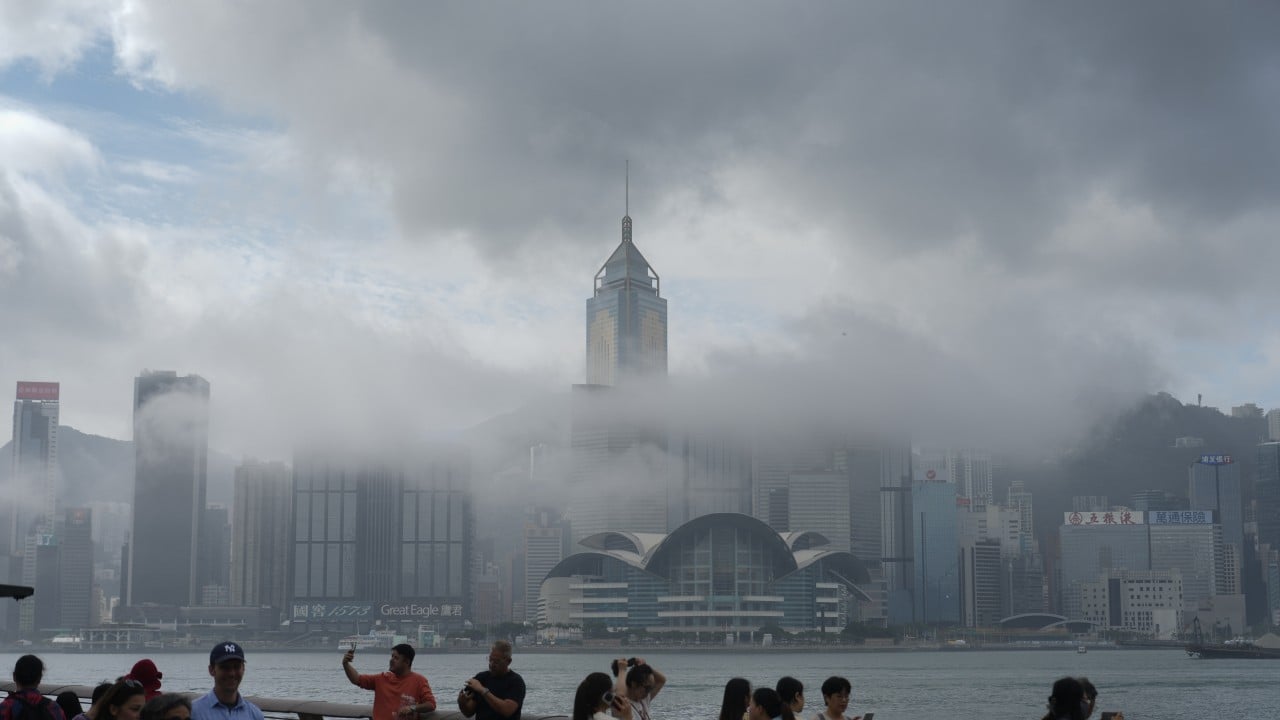
The intersection of Hong Kong’s subtropical maritime climate and its high-density urban morphology creates a recurring biological hazard during the spring transition. While public discourse focuses on the inconvenience of "humidity," the actual threat is a systemic failure of moisture management within building envelopes, leading to the rapid proliferation of Aspergillus and Penicillium species. These fungal colonies do not merely damage aesthetics; they function as active biological reactors, releasing mycotoxins and volatile organic compounds (mVOCs) that compromise respiratory health and immune function.
The Thermodynamic Drivers of Residential Moisture
Indoor dampness in Hong Kong is driven by the dew point differential—the temperature at which air becomes saturated and water vapor condenses into liquid. During the "shui nisa" or "humid foggy" periods, outdoor relative humidity frequently sustains at 95% to 100%. When this warm, moisture-laden air enters a residence where surfaces have been cooled by previous air conditioning use or structural thermal mass, condensation is inevitable.
This process follows a specific causality chain:
- Thermal Lag: Concrete structures retain lower temperatures longer than the rapidly warming ambient air.
- Vapor Pressure Gradient: High outdoor vapor pressure forces moisture into the indoor environment through infiltration and natural ventilation.
- Surface Saturation: Once the surface temperature of walls or ceilings falls below the dew point of the indoor air, a thin film of liquid water forms.
This liquid water is the critical catalyst. Fungal spores are omnipresent in the Hong Kong environment; however, they remain dormant until they encounter a substrate with a water activity ($a_w$) level typically above 0.80. Most common building materials, such as gypsum board, wallpaper, and latex paint, provide the necessary carbon source for these spores to transition from dormancy to active hyphal growth.
The Biological Payload: Fungal Pathogens and Human Health
The health risks associated with dampness are often underestimated as mere "allergies." A more accurate classification identifies three distinct physiological pathways:
Type I Hypersensitivity and Respiratory Inflammation
Exposure to fungal spores triggers an IgE-mediated immune response. In the context of Hong Kong’s dense housing, the concentration of spores can reach levels that overwhelm the natural filtration of the upper respiratory tract. This leads to chronic rhinosinusitis and the exacerbation of asthma. The prevalence of childhood asthma in the territory correlates significantly with poorly ventilated, damp living environments where the fungal load is constant.
Opportunistic Mycoses
For individuals with compromised immune systems or pre-existing lung conditions, certain fungi—specifically Aspergillus fumigatus—can transition from environmental contaminants to internal pathogens. Aspergillosis represents a severe escalation from simple irritation, where fungal hyphae begin to colonize lung tissue.
Mycotoxin Sequestration
Fungi produce secondary metabolites known as mycotoxins. Unlike spores, which can be filtered, mycotoxins are often found on smaller dust particles that penetrate deep into the alveoli. These compounds can suppress macrophage function, the primary defense mechanism of the lungs, creating a feedback loop that increases vulnerability to secondary bacterial infections.
Structural Vulnerability and the Failure of Traditional Mitigation
The "wipe and dry" approach common in local households is a superficial intervention that ignores the ecology of fungal growth. To effectively manage the risk, one must address the three pillars of the mold growth equation: Nutrients, Temperature, and Moisture. Since nutrients (dust and building materials) and temperature (subtropical climate) are largely fixed, moisture is the only lever available for control.
Standard dehumidification often fails due to improper capacity scaling. A dehumidifier rated for a 200-square-foot room will fail in a 500-square-foot open-plan flat because the moisture infiltration rate exceeds the machine's removal rate. Furthermore, the placement of these units is frequently suboptimal. Placing a dehumidifier in the center of a room does little to address the "dead zones" behind wardrobes or inside cabinets where air circulation is stagnant and the relative humidity remains high enough to support colony expansion.
The Operational Protocol for Moisture Suppression
Effective mitigation requires a shift from reactive cleaning to proactive environmental control. This involves a rigorous technical sequence:
- Vapor Barrier Integrity: During peak humidity, natural ventilation must be suspended. The common belief that "fresh air" is beneficial is a fallacy during Hong Kong's damp season; "fresh air" is simply a vehicle for more water vapor and spores.
- Mechanical Dehumidification Scaling: Units must be operated based on the total volume of air, not just floor area. Maintaining an indoor relative humidity (RH) of 50% to 60% is the target threshold to keep $a_w$ levels below the fungal trigger point.
- Micro-Climate Airflow: High-output fans should be used to eliminate stagnant air pockets. Moving air increases the rate of evaporation from surfaces, preventing the liquid water film required for spore germination.
- HEPA Filtration: While dehumidifiers remove water, they do not remove existing spores. Integrating HEPA-grade air purifiers is necessary to reduce the airborne spore count that has already accumulated.
The Limitation of Chemical Interventions
Bleach is the most common household response to visible mold, yet it is often the least effective for long-term control. Sodium hypochlorite is effective at killing surface spores, but it does not penetrate porous materials like drywall or wood. The water content in bleach can actually soak into the substrate, providing the moisture needed for the remaining deep-seated hyphae to regrow once the chlorine has evaporated.
A more technically sound approach utilizes antimicrobials with residual efficacy, such as quaternary ammonium compounds or specialized fungicidal coatings that create a surface environment hostile to colonization. However, even these are temporary measures if the underlying thermodynamic imbalance—the condensation—is not corrected.
Strategic Allocation of Resources
Property owners and tenants must prioritize interventions based on the risk-to-utility ratio. The most critical areas are those with high organic loads and low airflow:
- Walk-in closets and wardrobes: These act as incubators due to the presence of natural fibers (cotton, wool, leather) and zero air exchange.
- External-facing walls: These have the highest thermal differential and are the primary sites for condensation.
- Bathrooms without mechanical extraction: If moisture is not vented directly to the exterior, it migrates to adjacent rooms, raising the overall humidity floor of the entire residence.
The long-term solution for Hong Kong’s dampness crisis is not found in more cleaning supplies, but in the structural integration of thermal breaks in building design and the mandatory installation of high-efficiency energy recovery ventilators (ERVs) that can manage moisture exchange at the point of entry. Until the building stock is upgraded, the burden of atmospheric management remains with the individual, requiring a disciplined, data-driven approach to humidity control.
Measure the internal wall temperature using an infrared thermometer during the next high-humidity event; if that temperature is within three degrees of the current dew point, immediate mechanical dehumidification and localized airflow must be directed at that specific surface to prevent the initiation of a biological colony.