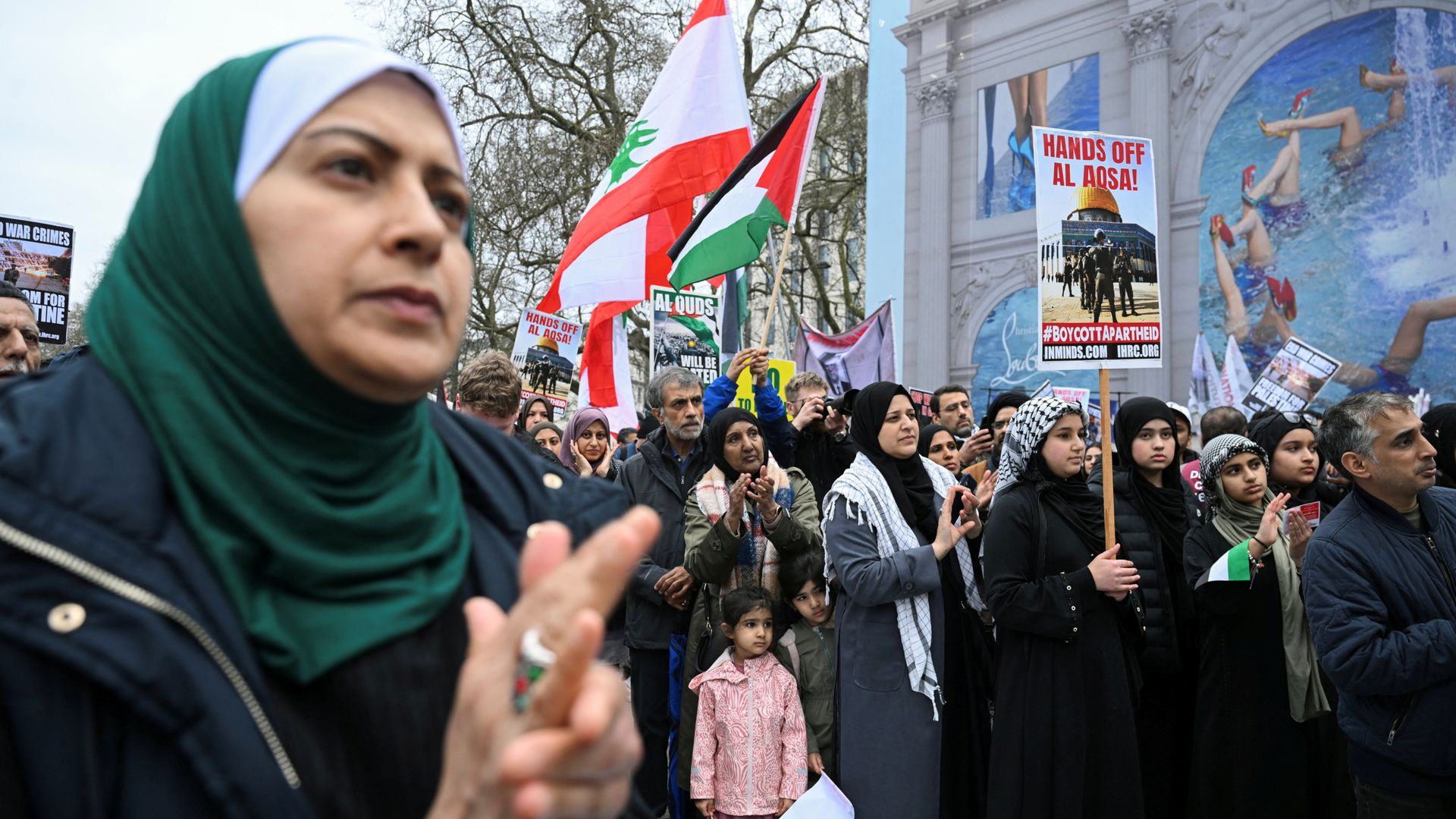
The Metropolitan Police just drew a line in the sand that's going to change how we see the streets of London for a long time. By citing "severe" risks to public order to block a high-profile march, the authorities aren't just managing traffic or noise anymore. They're making a massive statement about the limits of assembly in a city that’s increasingly on edge. You might think this is just another bureaucratic hurdle, but it’s actually a fundamental shift in how the UK handles the friction between free speech and public safety.
People are searching for answers because they want to know if their right to protest is being eroded or if the police are genuinely preventing a catastrophe. The short answer is both. The Met is using powers under the Public Order Act that were recently beefed up, and they aren't afraid to use them when they think things will turn ugly. When the police mention "severe" risks, they aren't talking about a few broken windows. They're talking about intelligence that suggests a total breakdown of control. Don't forget to check out our recent post on this related article.
The Legal Teeth Behind the Ban
To understand why this happened, you have to look at the tools the police are using. We’re not in the old days of "policing by consent" where a few officers walk alongside a crowd and hope for the best. The Public Order Act 1986, and its subsequent updates in 2023, gave the Home Secretary and the Police Commissioner some serious muscle.
The threshold for a ban is high. The police can't just say they don't like the message of the march. They have to prove that their existing powers to impose "conditions"—like changing the route or limiting the duration—simply won't be enough to prevent "serious public disorder." In this case, the Met argued that the scale of the counter-protests and the specific timing created a perfect storm. It’s a rare move. Banning a march is usually the last resort because it’s a PR nightmare and a legal minefield. To read more about the context here, Associated Press provides an excellent summary.
I've seen these situations play out before. Usually, the police try to negotiate behind the scenes. They’ll ask organizers to move the start time or stay away from specific monuments. When that dialogue fails, or when the "intelligence" suggests that fringe elements are planning to hijack the event, the ban comes out. It’s a blunt instrument.
Why Severe Risks Are Hard to Dispute
When the police cite "intelligence," they're essentially playing a card that nobody else can see. This is where it gets frustrating for organizers and civil liberties groups. If the Met says they have evidence of planned violence or a massive influx of agitators, it’s incredibly hard to challenge that in court on short notice.
The risk isn't just about the people marching. It’s about the "mosaic effect." You have one group marching for a cause, another group showing up to oppose them, and a third group of opportunistic troublemakers who just want to cause chaos. London is a dense city. You can't just wall off a square mile of Westminster without affecting hospitals, transport hubs, and thousands of residents. The police are essentially saying the math doesn't add up anymore. They don't have enough boots on the ground to keep those three groups apart while also answering 999 calls in the rest of the city.
The Cost of Policing London Streets
Let's talk about the money and the manpower because that's the reality of these decisions. Every time a major march is planned, the Met has to cancel leave for thousands of officers. They bring in units from across the country—the "mutual aid" system. It costs millions of pounds for a single weekend.
- Officer Fatigue: Many officers are working 12-hour shifts for days on end.
- Sector Coverage: While the police are at a protest, response times for "lower priority" crimes like burglary often skyrocket.
- Specialist Equipment: The cost of barriers, horses, and helicopter surveillance adds up fast.
Critics argue that the "cost" shouldn't be a factor when it comes to human rights. They're right in principle. But in practice, the police have a finite budget and a finite number of bodies. When they say the risk is severe, they're often saying they’ve reached a breaking point where they can no longer guarantee the safety of their own officers, let alone the public.
The Backlash and the Future of Dissent
You can't ban a march without people getting angry. The immediate reaction is usually a shift toward "static" protests or smaller, decentralized "flash" events that are even harder to police. By banning the organized march, the authorities might be trading a controlled headache for an unpredictable one.
The organizers are already calling this an attack on democracy. They point out that London has a long history of rowdy, even dangerous protests that weren't banned. So what changed? It's the climate. We're living in a period of intense polarization. The "intelligence" the police are seeing likely reflects a level of vitriol and planned confrontation that we haven't seen in decades.
Some think this sets a dangerous precedent. If you can ban one march because it’s "risky," you can eventually ban any march that the government finds inconvenient. That’s the slippery slope. The courts will likely be busy for months reviewing this decision, but by then, the date of the march will have passed. The damage—or the "protection," depending on your view—is already done.
What Happens if You Show Up Anyway
If you’re thinking about heading to London despite the ban, you need to be smart. A ban on a "procession" doesn't always mean a ban on "assembly," though the police often apply for both. If you show up and start marching, you're breaking the law. It’s that simple. You risk arrest, a criminal record, and a hefty fine.
The police will likely have a massive presence at the original start point. They use "kettling" or "containment" to hold people in one place for hours. It's not fun. It's cold, there are no toilets, and the tension is thick. If the march is banned, the best move for any activist is to pivot to legal forms of protest—letter-writing, digital campaigns, or localized events that don't trigger the "severe risk" threshold of the Met.
Practical Steps for Staying Informed
If you're following this story or planning to join future events, don't just rely on social media hype.
- Check the Met Police Official Site: They post the actual legal orders there. Read them. Know exactly which streets are off-limits.
- Monitor Transport for London (TfL): Large-scale police operations always mean closed tube stations and diverted buses.
- Follow Legal Watchdogs: Groups like Liberty or Netpol often provide "bust cards" that tell you your rights if you're stopped and searched or arrested during a period of high police activity.
The reality of London in 2026 is that the streets are no longer a guaranteed stage for every voice. The "severe" risk tag is a powerful weapon in the police arsenal. Whether it’s a necessary shield or a muzzling of the public is something we’re going to be debating for years. For now, the banners are staying in the garage, and the police are keeping their line.
Stay updated on the specific legal challenges being mounted by the organizers, as these will determine if the "severe risk" justification holds up under judicial review. If the courts find the Met overstepped, it could open the door for a massive, legally protected march in the coming weeks. If they don't, the playbook for London protests has just been rewritten.