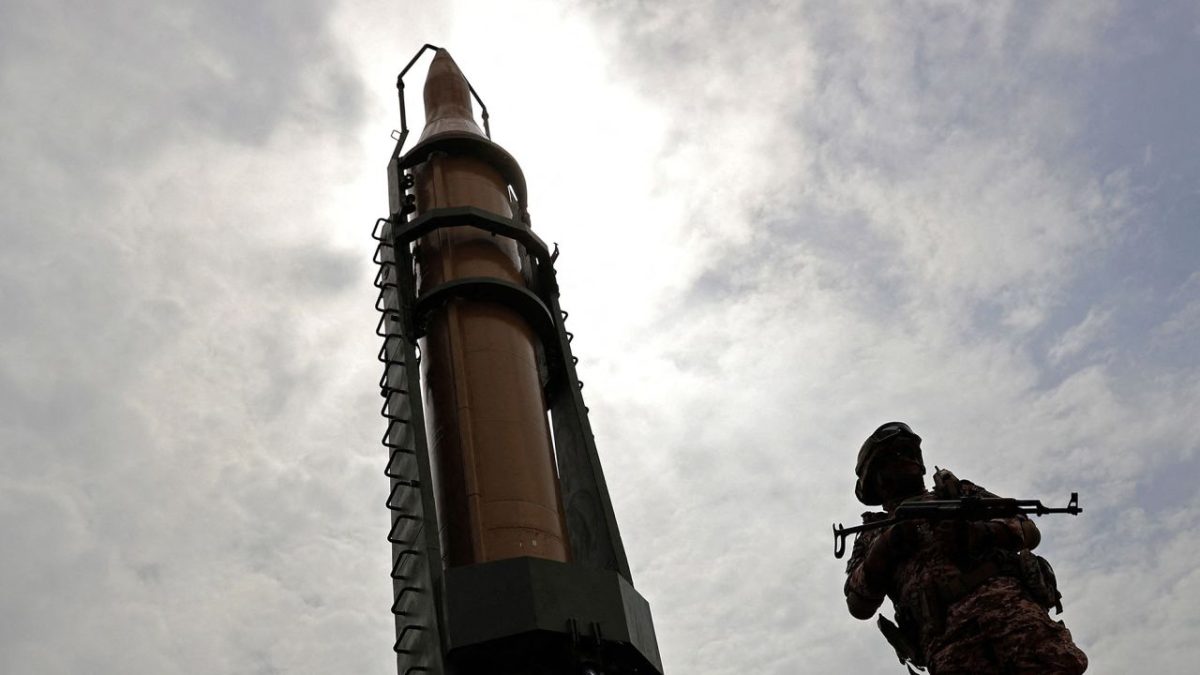
Fear sells newspapers, but it shouldn't dictate your board meetings. The recent rhetoric from Iran's Revolutionary Guards regarding the "destruction" of US corporate units is being treated by mainstream media as a catastrophic omen. They are wrong. This isn't a funeral notice for American enterprise; it’s a stress test that most domestic companies desperately need but are too comfortable to seek out.
The lazy consensus suggests that geopolitical friction is a pure liability. The narrative insists that if a foreign entity threatens a "unit," the only logical response is retreat, insurance-hedging, or frantic lobbying for government intervention. This view is narrow, reactive, and fundamentally misunderstands the mechanics of modern industrial resilience.
The Myth of Vulnerability
Global corporations have spent the last decade chasing "efficiency" at the cost of durability. They built fragile, just-in-time supply chains and digital architectures that fold under the slightest pressure. When the IRGC or any other state actor issues a threat, they aren't creating a problem; they are exposing a pre-existing condition.
If your "unit" can be destroyed by external geopolitical posturing, that unit was already a zombie. True industrial power doesn't come from operating in a vacuum of safety. It comes from building systems that thrive on volatility. We call this antifragility—a concept championed by Nassim Taleb—where a system actually gets stronger when subjected to stressors and shocks.
Digital Sovereignty is the New Border
Most executives are still thinking in terms of physical assets. They worry about a factory in the Middle East or a regional office in Dubai. They are fighting the last war. The real "destruction" mentioned in these threats happens in the bits and bytes.
The IRGC’s cyber capabilities are often underestimated by the "everything is fine" crowd and overestimated by the "doomsday" crowd. The reality lies in the middle: they are persistent. But here is the contrarian truth: The threat of cyber-sabotage is the best incentive for a company to finally purge its legacy technical debt.
I have watched Fortune 500 companies burn through $50 million budgets on "digital transformation" that resulted in nothing but prettier user interfaces. It takes a credible, state-level threat to force a C-suite to actually authorize the hardening of core infrastructure. When the IRGC targets a unit, they are effectively providing a free, high-stakes security audit.
Why Decoupling is a Coward's Strategy
The immediate reaction to geopolitical heat is often "decoupling"—the corporate equivalent of taking your ball and going home. This is a strategic blunder.
- Market Vacuum: If a US unit pulls out, a competitor from a less-scrupulous jurisdiction moves in. You don't eliminate the risk; you just hand the profits to someone else.
- Intelligence Loss: Operating in "hostile" or high-friction environments provides a level of ground-truth data that no think-tank can replicate.
- Innovation Through Constraint: Some of the most advanced encryption and logistical routing technologies were born out of the necessity to operate in contested spaces.
The Cost of Compliance and Fear
The "People Also Ask" sections of the internet are currently flooded with variations of "How can US companies protect themselves from Iran?"
The premise of the question is flawed. You don't "protect" yourself through a defensive crouch. You protect yourself by becoming indispensable or by making the cost of attacking you higher than the potential gain.
The IRGC operates on a budget. They are looking for high-impact, low-cost disruptions. When a US company reacts with public panic or massive, inefficient spending on "consultants" who specialize in "geopolitical risk," the IRGC has already won. The destruction isn't physical; it’s economic friction.
Hardening the Corporate Mindset
We need to stop treating these threats as "black swan" events. They are "grey rhinos"—highly probable, high-impact threats that we see coming and choose to ignore.
In my years navigating industrial operations, the companies that survived—and thrived—during periods of state-level hostility weren't the ones with the best lobbyists. They were the ones with the most decentralized decision-making. If your "unit" requires a direct line to New York or DC to survive a localized crisis, it’s already dead.
The Decentralization Mandate
- Localized Autonomy: Each unit must be able to operate in "island mode." This means local data centers, local supply contracts, and the authority to pivot without waiting for a 10 a.m. EST briefing.
- Redundant Failover: Not just for servers, but for leadership. If your regional head is compromised or incapacitated, who steps in? If you don't have an answer, the IRGC doesn't need to blow anything up; they just need to send a well-timed email.
- Aggressive Transparency: Counter-intuitive, right? But if a company is transparent about its security protocols (without revealing the keys), it signals to the aggressor that the "low-hanging fruit" has been removed.
The Illusion of Government Protection
There is a dangerous trend of US companies looking to the Department of Defense or State Department as their personal security detail. This is a fantasy.
The government plays a macro game. Your specific unit's P&L is a rounding error in a nuclear negotiation or a trade deal. Relying on state protection is a liability. It creates a false sense of security that leads to the very fragility the IRGC is looking to exploit.
Turning the Threat into an Asset
Imagine a scenario where a manufacturing firm uses these threats to justify a total overhaul of their logistics, moving from a vulnerable single-source model to a distributed, multi-node network. Two years later, when a natural disaster or a different conflict hits, that company stays online while its "safe" competitors go bankrupt.
The threat was the catalyst for the competitive advantage.
The IRGC's rhetoric is a loud, obnoxious alarm clock. You can hit snooze and hope the dream of global stability comes back, or you can wake up and realize that the era of "safe" global business was an anomaly. We are returning to the historical norm of contested commerce.
Stop asking how to avoid the "destruction" of your units. Start asking why your units are so easy to destroy. If a series of threats from a regional power can destabilize your global strategy, your strategy wasn't "robust"—it was a house of cards waiting for a breeze.
Build for the storm. Welcome the friction. Use the threat to burn away the rot in your organization before someone else does it for you.
The most resilient companies in the next decade won't be the ones that avoided conflict, but the ones that integrated it into their operating model. Every threat is a roadmap to your own weaknesses. Read it, fix them, and move on.
Don't wait for the explosion to realize your fire extinguishers are empty.