Stop looking at the gas pump for a second and look at the map. If you think the tension in the Middle East is just about oil prices jumping a few cents, you're missing the entire board. When we talk about a potential war in Iran, we aren't just talking about a temporary supply shock. We're talking about the ultimate stress test for Europe's Green Deal. It's the moment where the European Union has to decide if it'll sprint toward renewables or crawl back to coal and expensive American LNG.
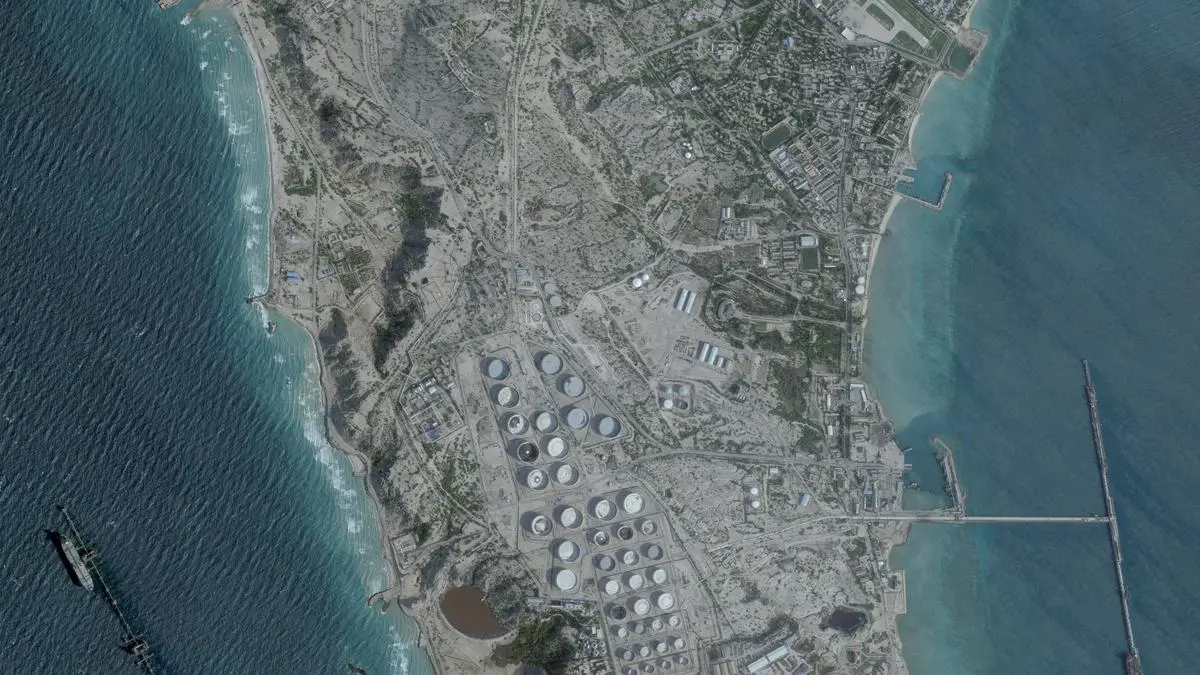
For decades, Europe played a dangerous game of energy dependency. First, it was Russia. We saw how that ended. Now, as the specter of a regional conflict involving Iran looms, the Strait of Hormuz becomes the most important chokepoint on the planet. About 20% of the world's total petroleum liquid consumption passes through that narrow stretch of water. If that door closes, the "energy transition" stops being a policy goal and starts being a survival strategy.
The Brutal Reality of the Hormuz Chokepoint
Most people don't realize how fragile the supply chain actually is. Iran sits right on the edge of the Strait of Hormuz. If a full-scale conflict breaks out, Tehran has the capability to harass or outright block tanker traffic. This isn't just an "Iran problem." It’s a Qatar problem and an UAE problem too.
Europe currently relies heavily on Liquefied Natural Gas (LNG) to replace what it lost from Russian pipelines. A huge chunk of that LNG comes from Qatar. If the Strait is blocked, those ships don't move. You can't just "reroute" a massive LNG carrier through the desert. When the supply vanishes, prices don't just go up—they teleport to levels that make 2022 look like the good old days.
This creates an immediate, agonizing friction for European leaders. On one hand, the panic move is to restart every coal plant from Germany to Poland to keep the lights on. On the other, it proves that sticking with fossil fuels, no matter the source, is a national security failure.
Why High Prices Might Actually Speed Things Up
History shows us that humans rarely change until the pain of staying the same exceeds the pain of changing. In the 1970s, the oil embargo forced the West to actually care about fuel efficiency. A war in Iran could do the same for the heat pump and the wind turbine.
When oil hits $120 or $150 a barrel, the "payback period" for a home solar installation or an industrial-scale battery drops significantly. Suddenly, that expensive green hydrogen project looks like a bargain compared to the volatility of Middle Eastern crude. I’ve talked to energy analysts who argue that high prices are the best subsidy the renewable sector ever had.
But there’s a catch. You can't build a power grid overnight. If the conflict happens now, Europe faces a "valley of death" where the old energy is gone and the new energy isn't ready. This is where the transition either accelerates out of necessity or hits a wall because the economy is too broke to fund it.
The Inflation Trap and the Death of Green Subsidies
Here’s the part nobody wants to talk about. Transitioning to green energy requires massive amounts of capital. We need minerals, specialized labor, and—most importantly—stable interest rates.
If a war in Iran sends energy prices skyrocketing, inflation follows. When inflation stays high, central banks like the ECB keep interest rates high. High interest rates are the silent killer of wind and solar projects. Unlike a gas plant, where most of the cost is the fuel you buy over 20 years, a wind farm’s cost is almost all "upfront." You pay for the turbines and the installation on day one. If the cost of borrowing that money is 7% instead of 2%, the project might never happen.
So, while high oil prices make renewables more attractive, high interest rates make them more expensive to build. It's a localized paradox that could stall the transition exactly when we need it most.
The Nuclear Wildcard
We’re seeing a massive shift in the vibe around nuclear power. France was always the outlier, but now even countries that were skeptical are looking at Small Modular Reactors (SMRs) with fresh eyes. A conflict in Iran serves as a grim reminder that "energy sovereignty" is the only thing that matters.
If you can't trust the Strait of Hormuz and you can't trust the Siberian pipelines, you have to trust what you can control within your own borders. Nuclear provides that baseload stability that wind and solar still struggle with. Expect the pro-nuclear lobby to use any Middle Eastern instability as their primary marketing tool. Honestly, they’d be foolish not to.
Breaking the Dependency Cycle
The real lesson here isn't about Iran. It’s about the fact that Europe is still a "taker" of energy prices rather than a "maker." Every time a drone flies over a refinery in the Gulf, someone in Brussels has a heart attack. That’s a weak position to be in.
The transition is currently at a crossroads. One path leads to a panicked return to "dirty" energy to prevent a total economic collapse during a war. The other path uses the crisis as a mandate to cut the cord once and for all.
What You Should Track Right Now
If you want to know which way the wind is blowing, watch these three things:
- The LNG Diversification Stats: Look at how much Europe is contracting from the US vs. the Middle East. If the US share keeps growing, Europe is just trading one dependency for another, albeit a more stable one.
- The Permitting Reforms: If the EU actually cuts the red tape for wind farms from years to months, you’ll know they’re serious about the "accelerator" side of this crisis.
- Storage Capacity: Watch the North Sea. The progress of massive battery arrays and pumped hydro will tell you if we’re actually ready to ditch the gas backups.
Stop waiting for a "convenient" time to move away from oil. There isn't one. A war in Iran would be a tragedy on many levels, but for the European energy grid, it would be the ultimate "put up or shut up" moment. You either build the future or you stay a hostage to the past.
Get your own house in order. If you're a business owner or a homeowner, stop treating energy efficiency like a "nice to have" green initiative. Start treating it like insurance against a world that's getting more volatile by the hour. Insulation, heat pumps, and local generation aren't just about saving the planet anymore. They're about making sure you don't go broke the next time a geopolitical fuse gets lit.