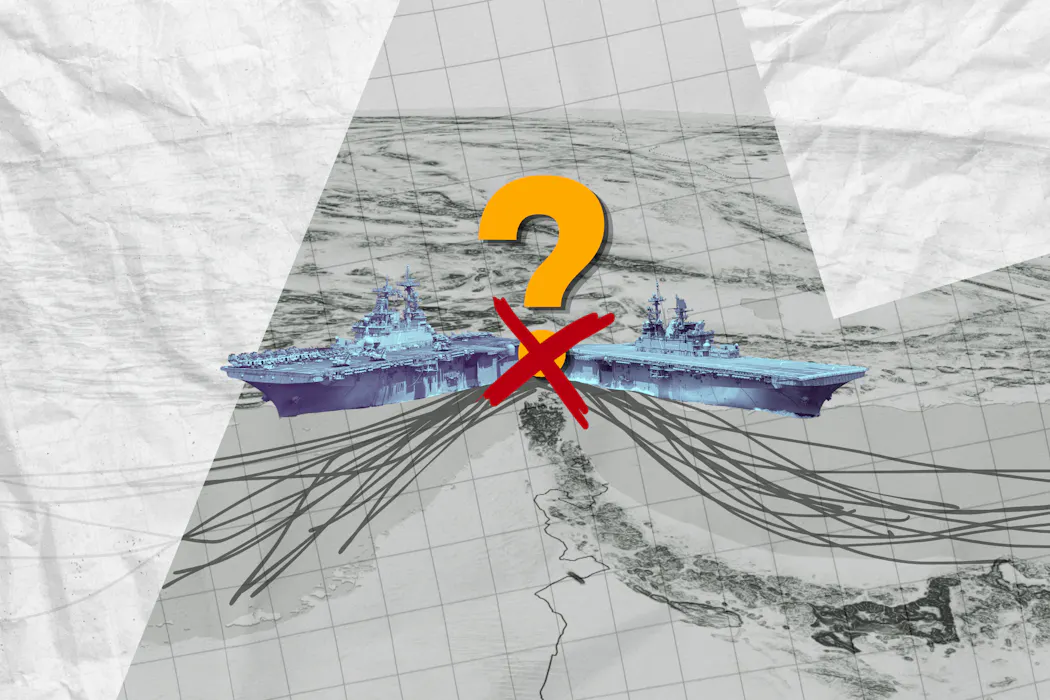
The map in the Situation Room doesn’t bleed, but it pulses. It flickers with the digital heartbeat of a thousand sensors, each one a nervous system extending across the Persian Gulf. When Donald Trump speaks about war in the Middle East, he isn't just reciting a briefing or reading a teleprompter. He is describing a reality where the very math of conflict has shifted. He claims the United States has already won.
It is a jarring statement. Victory is usually defined by signed treaties on the decks of battleships or flags raised over smoking ruins. But in this era, victory looks like a line graph bottoming out. According to the President’s latest assessment, the Iranian navy is effectively a memory, and their much-vaunted missile capability—the sword they have rattled at the West for decades—has been whittled down to a mere 9% of its former strength.
To understand what 9% means, you have to look past the hardware. You have to look at the people holding the triggers.
The Weight of an Empty Silo
Imagine a young officer in a concrete bunker somewhere beneath the Zagros Mountains. For years, his identity was built on the terrifying potential of the liquid-fueled engines sitting in the tubes above him. He was told these were the ultimate deterrent. But as the American narrative shifts, that deterrent starts to feel like a prop. If the President’s numbers are accurate, nine out of every ten missiles that officer once counted on are either gone, non-functional, or neutralized by a glass ceiling of American electronic warfare.
The psychological toll of such a statistic is heavier than the steel of the missiles themselves. War is a game of perceived consequences. When one side declares the game over before the first major shot is fired, they aren't just boasting. They are dismantling the enemy's will to resist.
The Iranian navy, once a swarm of fast-attack craft and midget submarines designed to choke the Strait of Hormuz, has been described by the White House as "destroyed." This doesn't necessarily mean every hull is at the bottom of the sea. In modern terms, destruction often means irrelevance. A ship that cannot leave port because it will be blinked out of existence by a drone the size of a bird is, for all intents and purposes, a ghost.
The Invisible Net
We often think of war as a series of loud explosions. We think of the "Mother of All Bombs" or the kinetic impact of a Tomahawk cruise missile. But the 91% of capability that has allegedly vanished wasn't all taken out by fire. Much of it was erased by the quiet, relentless application of technical superiority.
Consider the way a modern carrier strike group operates. It isn't just a collection of boats; it is a localized version of the future. It projects a bubble of electronic interference so dense that a drone launched from a coastal battery might lose its "brain" before it even clears the beach. This is the "invisible net." When the U.S. claims to have neutralized a capability, they are often referring to this digital suffocating.
It is a terrifying way to lose. There is no glory in a missile that fails to ignite because a signal from a thousand miles away told its computer that it didn't exist. There is no heroic last stand for a sailor whose radar screen is a solid wall of white noise.
The Calculus of 9%
The number is specific. It isn't "nearly gone" or "mostly handled." It is 9%.
In the world of high-stakes diplomacy and brinkmanship, such a specific number serves a dual purpose. First, it tells the American public that the cost of "winning" has already been paid—mostly in tax dollars and technological development rather than in the lives of soldiers. It lowers the temperature of domestic anxiety. Second, it serves as a taunt to the Iranian leadership. It dares them to prove the math wrong, knowing that to do so would require a suicidal demonstration of whatever meager force remains.
But there is a human cost to this kind of absolute certainty. When a superpower declares a war "already won," the space for nuance vanishes. The families of the sailors on those Iranian ships, the technicians in those missile silos—they become footnotes in a grander geopolitical tally. To them, the 9% isn't a statistic. It’s the slim, desperate margin of their survival.
The Silence After the Storm
History is full of leaders who claimed the mission was accomplished while the embers were still hot. However, the current administration’s tone suggests something different from the bravado of the past. It suggests a belief that the very nature of Iranian power has been hollowed out.
If the navy is gone and the missiles are a fragment of what they were, what is left?
There is the "gray zone." This is the space where the human element refuses to be quantified. It is the realm of the proxy, the cyber-attack, and the lone actor. Even if the heavy machinery of the Iranian state is at 9%, the ideology remains at 100%. You can sink a destroyer with a single laser-guided bomb, but you cannot sink a grudge with a spreadsheet.
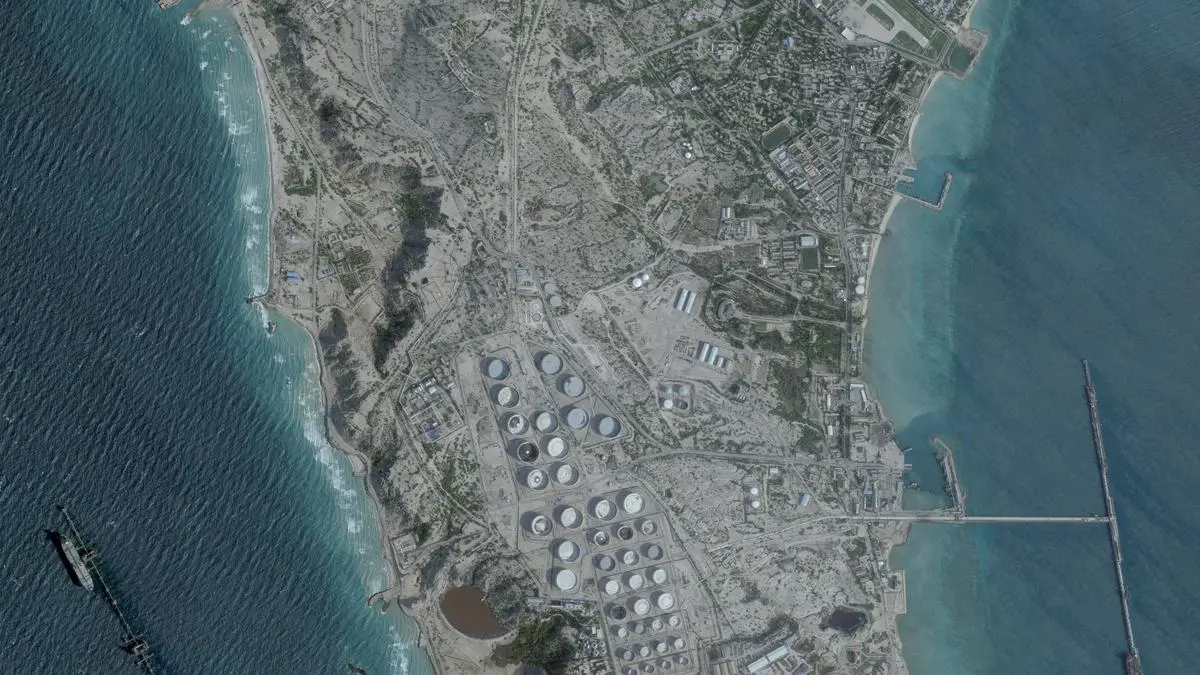
The danger of declaring a total victory is that it forgets the desperate. A cornered animal with 9% of its teeth is still a biting threat. The Persian Gulf, once the most volatile waterway on Earth, has become a graveyard of ambition. The hulls of the old fleet may still be bobbing in the harbor at Bandar Abbas, but the soul of the resistance is being tested by a silence it never expected.
The water in the Strait is dark, reflecting nothing but the stars and the lights of the oil tankers that continue to flow, indifferent to the invisible war being waged around them. The U.S. Navy patrols these waters not as a combatant, but as a groundskeeper. They are watching over a victory that was won in the server rooms of Arlington and the flight decks of the Arabian Sea long before the rhetoric reached the headlines.
The 9% of Iranian capability represents more than just a few remaining launchers. It represents the uncertainty of the human spirit. It is the variable that the computers cannot solve. While the President speaks of a war already finished, the men on the ground know that peace is never a finished product. It is a fragile equilibrium maintained by the knowledge that, at any moment, the silence could be broken by the final, desperate roar of the nine percent.
The pulse on the map continues. It flickers. It waits.