The sea is not a blue expanse on a map. For a merchant mariner on the bridge of a Panamax vessel, it is a series of calculations performed in the dark. You check the radar. You check the AIS signal. You look toward the coastline of Yemen, where the mountains rise like jagged teeth against a bruised sky. Somewhere in those shadows, a drone is being fueled.
We talk about "shipping lanes" as if they are paved highways. They aren't. They are fragile arteries of human survival. When a missile enters that airspace, it doesn't just threaten a hull; it threatens the price of the antibiotic in a London pharmacy and the availability of grain in a Cairo bakery. The news cycles call it a "Middle East crisis." That is too clinical. It is a slow-motion strangulation of the world’s circulatory system.
The Pause and the Pressure
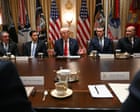
Donald Trump has signaled a pause on strikes targeting Iranian energy infrastructure. On paper, this is a strategic pivot—a momentary de-escalation intended to prevent a global oil shock. In reality, it is a high-stakes game of chicken where the steering wheels have been ripped off and tossed out the window. By stepping back from the brink of a direct hit on the heart of Tehran’s economy, the administration is attempting to lower the temperature.
But the temperature in the Red Sea remains at a boiling point.
While Washington recalibrates, the Houthis have made their position terrifyingly clear: there is "no reason" to stop. For them, the chaos is the point. They are not a traditional navy; they are a ghost insurgency with the power to dictate the terms of global trade. When they claim they will not halt their operations, they are telling the world that the pause in the north does not mean peace in the south.
Consider a hypothetical captain named Elias. He has spent thirty years at sea. He knows the smell of the air before a storm. But he doesn't know how to outmaneuver a ballistic missile launched from a mobile truck bed. Elias is currently deciding whether to take his crew through the Bab el-Mandeb—the "Gate of Tears"—or to turn south and add two weeks of fuel and labor to round the Cape of Good Hope. This isn't just a corporate logistical choice. It is a choice about whether his crew sees their families next month.
The Mechanics of Uncertainty
Why does a pause on Iranian oil sites matter to a Houthi rebel in a speedboat? Because the entire region is an interconnected web of leverage. If the United States strikes the refineries in Iran, the retaliation could shutter the Strait of Hormuz. That would send the global economy into a tailspin not seen since the 1970s. By holding back, the U.S. is trying to keep the lights on in Europe and the gas prices stable in the Midwest.
The irony is that this restraint provides a vacuum. The Houthis operate within that vacuum. They understand that as long as the "Big War" is avoided, they can continue their "Small War" with relative impunity. They have turned the Red Sea into a toll road where the currency is fear.
The logistics are staggering. About 12% of global trade passes through that narrow corridor. When shipping giants like Maersk or MSC decide the risk is too high, they reroute. That adds roughly 3,500 nautical miles to a journey from Asia to Northern Europe.
One.
Million.
Dollars.
That is the approximate extra cost in fuel alone for a single journey around Africa. Now, multiply that by thousands of ships. You are looking at an inflationary bomb that has already been detonated; we are just waiting for the sound wave to reach our shores.
The Human Cost of the Macro-Economic
We often view these events through the lens of geopolitics, but the real impact is felt in the mundane details of life. In a warehouse in Rotterdam, a manager stares at an empty bay where a shipment of semiconductors was supposed to arrive three days ago. In a village in Sudan, the price of imported cooking oil doubles because the insurance premiums for the tankers have reached astronomical heights.
The Houthis’ refusal to halt operations is a declaration that the "humanitarian" justifications they cite—linked to the conflict in Gaza—are now secondary to their newfound status as global disruptors. They have tasted the ability to bring the modern world to a screeching halt. That kind of power is an addictive narcotic. It doesn't matter if the U.S. pauses strikes on Iran if the proxies feel they have already won the narrative.
The strategy of "pausing" is a gamble on rationality. It assumes that the players involved want to return to a baseline of stability. But what if the baseline is gone? What if the new normal is a fractured sea where only the bravest or most desperate sail?
The Weight of the Silence
There is a specific kind of silence that happens on a ship when the engines are cut. It is heavy. It feels like the ocean is pressing in from all sides. Right now, the international community is in that silence. We are waiting to see if the diplomatic "pause" results in a breakthrough or if it simply gives the various factions time to reload.
The Houthis’ "no reason" statement is perhaps the most honest thing to come out of this conflict. From their perspective, the chaos has yielded more recognition and more leverage than years of civil war ever did. Why would they stop? To save the profit margins of a retail chain in Chicago? To lower the cost of a car part in Berlin?
They aren't playing the same game.
We are looking at a fundamental misalignment of values. On one side, a globalized economy that requires predictability to function. On the other, a group of actors who find their greatest strength in unpredictability. The "pause" offered by the U.S. is an olive branch wrapped in a warning, but it only works if the recipient believes the warning more than they value the chaos.
The sea is getting darker. Elias looks at his charts. He sees the red dots marking recent attacks. He knows that somewhere, thousands of miles away, politicians are debating the "energy site pause" and "strategic corridors." To them, it is a chess match. To him, it is the vibration in the deck plates and the knowledge that the horizon is no longer a promise of arrival, but a question of survival.
The invisible tripwire has been laid across the water. We are all just waiting to see who trips it next. The tragedy isn't that we don't know what will happen. The tragedy is that we are watching it happen in real-time, unable to look away from the screen, even as the cost of the show begins to bankrupt us all.
A drone wings its way over the whitecaps, silent and indifferent to the diplomacy of the world above.