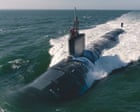
The defense establishment is currently engaged in a massive exercise of institutional gaslighting. Senior officials are lining up to tell the Australian public that it’s AUKUS or nothing. They claim that if we abandon the plan to acquire Virginia-class and eventually SSN-AUKUS nuclear-powered submarines, the Royal Australian Navy will be reduced to a fleet of rubber dinghies.
This is a lie born of sunk-cost bias and a desperate need to maintain relevance in a changing geopolitical theater. If you liked this post, you might want to look at: this related article.
The "no submarines" warning is a classic false dichotomy. It suggests that the only way to defend a maritime nation is through the most expensive, complex, and fragile acquisition program in our history. In reality, sticking to the current AUKUS timeline is the fastest way to ensure Australia has no functional undersea capability for a decade or more. We are trading immediate security for a theoretical, gold-plated future that relies on American shipyards—which are already backlogged—performing a miracle.
The Myth of the Capability Gap
The "gap" isn't coming; it’s already here. The Collins-class life-of-type extension (LOTE) is a desperate bridge to a future that keeps receding. By the time the first second-hand Virginia-class sub arrives in the 2030s—assuming Washington actually lets them go—the technology used to find them will have leaped ahead by generations. For another look on this development, check out the latest coverage from BBC News.
We are told that nuclear propulsion is the only answer because of "transit speeds" and "endurance." This is 20th-century thinking. It ignores the reality of the "transparent ocean." With the proliferation of persistent satellite surveillance, underwater sensor webs, and AI-driven acoustic processing, the idea that a 7,000-ton metal tube can remain invisible forever is a fantasy.
The defense lobby hates admitting this because it renders their $368 billion toy redundant. If the ocean becomes transparent, the value of a single, massive, expensive platform plummets. You don't want one giant shark; you want a thousand piranhas.
The Industrial Suicide Pact
Let’s talk about the math that the "senior officials" won't touch. The U.S. Navy is struggling to maintain its own fleet. Their industrial base is creaking under the pressure of producing two Virginia-class subs a year. To satisfy Australia’s needs, they would need to hit a cadence of 2.3 or 2.5. They haven't hit that mark in decades.
When push comes to shove, do you honestly believe the U.S. Congress will prioritize the Royal Australian Navy over their own Pacific fleet? I’ve seen enough procurement disasters to know how this ends. We will be the ones left holding the bill while the delivery dates slide into the 2040s.
By tying our entire naval strategy to a foreign supply chain we don't control, we aren't gaining "sovereignty"—we are outsourcing our national survival to a shipyard in Connecticut that doesn't know we exist.
The Alternative The Experts Fear
If we walked away from AUKUS tomorrow, we wouldn't be "left with no submarines." We would be left with roughly $360 billion in uncommitted capital.
Instead of waiting twenty years for three used American subs, we could immediately pivot to a "Mixed Fleet" strategy that actually fits the 2026 reality:
- Off-the-Shelf Diesel-Electric (SSKs): Modern German (Type 212CD) or South Korean (KSS-III) boats are incredibly quiet, lethal, and—most importantly—available now. We could have a fleet of 12 modern conventional subs for a fraction of the AUKUS cost.
- The Rise of the XLUUV: Extra-Large Unmanned Underwater Vehicles are the real "game-changer" (to use the jargon the lobbyists love). For the cost of one nuclear sub, we could deploy hundreds of autonomous drones. They don't need life support. They don't care about radiation. They are expendable.
- Smart Sea Mines and Missile Saturation: AUKUS focuses on "long-range strike," but you can achieve that more effectively with land-based anti-ship missiles and smart mines that turn our northern approaches into a no-go zone for any hostile navy.
The reason the defense establishment won't consider this isn't because it won't work. It’s because it’s not "prestigious." You can’t host a gala dinner for an autonomous drone. You can’t get a board seat at a global defense prime for advocating for cheap, effective sea mines.
The Sovereign Risk Nobody Mentions
The most dangerous part of the AUKUS obsession is the "brain drain" and resource monopoly. Every cent spent on the nuclear fantasy is a cent taken away from the Army and Air Force. It’s a cent taken away from domestic drone manufacturing. We are putting all our strategic eggs in a single, nuclear-powered basket.
If a breakthrough in quantum sensing makes nuclear subs easier to track in 2032, we have no Plan B. We will have spent our entire national defense budget on a fleet of very expensive, very loud targets.
Stop Asking the Wrong Question
The media keeps asking: "Can we afford AUKUS?"
The real question is: "Can we afford to wait for AUKUS?"
The answer is a resounding no. The "senior officials" warning of a vacuum if we exit are simply protecting their own legacies. They have tethered their careers to this deal, and they would rather see the country defenseless in ten years than admit they made a strategic error today.
True sovereignty isn't buying a used American ship. True sovereignty is having the guts to build a defense force that actually works for Australia's geography, not one that serves as a subsidized annex of the U.S. Navy.
Burn the contract. Diversify the fleet. Buy the drones. Do it now before the window closes forever.