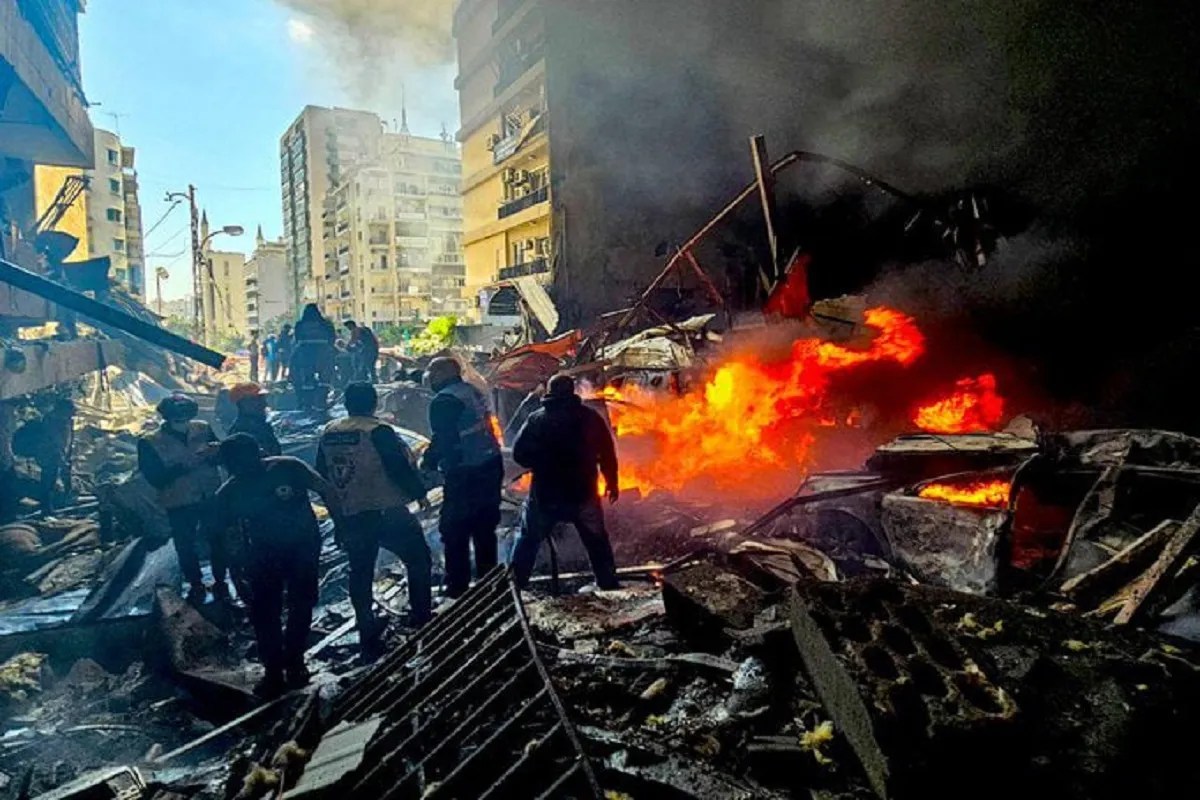
The global humanitarian system is breaking under the weight of a grim, accelerating statistic. Over 1,000 aid workers have been killed while attempting to deliver life-saving food, water, medicine, and shelter in conflict zones around the world. This is not merely a byproduct of collateral damage or the "fog of war." It represents a systemic collapse of the international protections that once shielded the Red Cross, the UN, and independent NGOs. When the very people tasked with preventing starvation become targets, the entire architecture of global stability begins to crumble.
This crisis has moved past the point of occasional tragedy. We are now witnessing a calculated erosion of the "humanitarian space"—the neutral ground where aid is supposed to operate regardless of politics. Today, that space is a firing range. The numbers are staggering, but the story behind them is even worse. It involves the normalization of high-tech warfare, the rise of non-state actors who do not recognize the Geneva Conventions, and a profound lack of accountability from the world’s most powerful nations.
The Death of Neutrality
For decades, the blue vest or the white truck with a red logo acted as a suit of armor. There was a mutual understanding between warring factions that letting the wounded be treated and the hungry be fed was in everyone’s long-term interest. That consensus has vanished. In modern conflicts, aid is no longer seen as a neutral necessity; it is viewed as a strategic asset or a threat.
If a shipment of flour reaches a besieged city, the side conducting the siege views that flour as a military setback. By extension, the person driving the truck is treated as a combatant. This shift in logic has turned food distribution points into kill zones. We aren't just seeing accidental strikes. We are seeing "double-tap" strikes where the second missile hits the first responders who arrived to help the victims of the first.
Precision Weaponry and Imprecise Ethics
There is a bitter irony in the fact that as weapons have become more precise, aid workers have become less safe. In theory, satellite imagery and GPS-guided munitions should make it impossible to "accidentally" hit a deconflicted aid warehouse or a clearly marked convoy. The coordinates of these sites are shared through official "deconfliction" channels directly with military command centers.
Yet, the strikes continue.
This suggests one of two terrifying possibilities. Either the technology is being used to target aid workers with deliberate precision, or the "humanitarian deconfliction" lists are being ignored at the operational level. When a drone operator can see the logo on the roof of a vehicle from five miles up and still pulls the trigger, the failure isn't technical. It is political. The lack of consequences for these "mistakes" has created a culture of impunity. If a military knows that hitting a clinic will result in nothing more than a "deeply concerned" press release from the UN, they have no incentive to check their targets twice.
The Privatization of Risk
The burden of this violence is not distributed equally. While international staff members often get the headlines, the vast majority of the 1,000+ killed are local nationals. These are the drivers, the warehouse guards, and the nurses who live in the communities they serve. They do not have the option of an armored evacuation when things turn south.
International NGOs have increasingly relied on these local partners to handle "last-mile" delivery in high-risk areas. It’s a process called localization, often dressed up in the language of empowerment. In reality, it is often a transfer of risk. Western organizations stay in the "Green Zones" or across the border, while local staff face the snipers and the IEDs. This creates a two-tier system of martyrdom where the deaths of local workers rarely trigger the same level of international outrage as the death of a foreign expat.
The Logistics of a Failed Mission
To understand why the death toll is rising, you have to look at the ground-level logistics of aid.
- Checkpoints: In many modern wars, a 20-mile trip involves crossing five different front lines. Each checkpoint is a gamble with a different militia, many of whom are undisciplined, high on stimulants, or looking for a bribe.
- Communication Blackouts: Governments frequently shut down internet and cellular networks in conflict zones. This leaves aid convoys blind, unable to verify if a route is still clear or to call for help when they are stopped.
- Misinformation: Social media has turned aid workers into boogeymen. Rumors that vaccines are bioweapons or that food shipments contain GPS trackers for the enemy spread faster than the trucks can drive.
The Cost of Staying
When an aid worker is killed, the mission doesn't just lose a person; the community loses a lifeline. Usually, after a fatal attack, organizations are forced to suspend operations. They have a duty of care to their remaining staff. This means that one bullet can effectively cut off food for 50,000 people.
This is the "starvation by proxy" effect. You don't have to bomb every bakery if you kill the people delivering the wheat. The chilling effect on the humanitarian industry is profound. Insurance premiums for operating in these zones have skyrocketed. Veteran logisticians are leaving the field, replaced by younger, less experienced staff who may not know how to navigate the nuances of a local warlord’s ego. We are losing the institutional memory required to stay alive in a war zone.
A Broken Legal Framework
The Geneva Conventions are only as strong as the people willing to enforce them. Currently, there is no international body with the teeth to prosecute those who kill aid workers if the state responsible refuses to cooperate. The International Criminal Court (ICC) moves at a glacial pace, and its jurisdiction is limited.
Most investigations into these killings are "internal." A military investigates its own strike, finds that it followed "standard operating procedures," and closes the case. There is rarely an independent forensic audit of why a convoy was hit. Without an independent, transparent mechanism to investigate every single aid worker death, the numbers will keep climbing.
We have entered an era where the rules of war are treated as optional suggestions. The 1,000 deaths are not a tragic anomaly; they are a warning. If the international community continues to prioritize military expediency over the safety of those feeding the world’s most vulnerable, the "humanitarian" label will become a death sentence.
Rebuilding the Shield
Stopping this slaughter requires more than just better body armor for truck drivers. It requires a fundamental shift in how the world handles war crimes.
First, deconfliction data must be made public. When an NGO gives its coordinates to a military, that transaction should be recorded on a transparent ledger. If those coordinates are struck, the burden of proof must shift to the military to explain why. Second, there must be a financial cost. Aid to militaries that repeatedly hit humanitarian targets should be automatically frozen. Diplomacy has failed; it is time to use the ledger.
The survival of millions depends on the safety of the few who are willing to walk into the fire. If we don't protect the people bringing the water, eventually, there will be no one left to hold the cup.