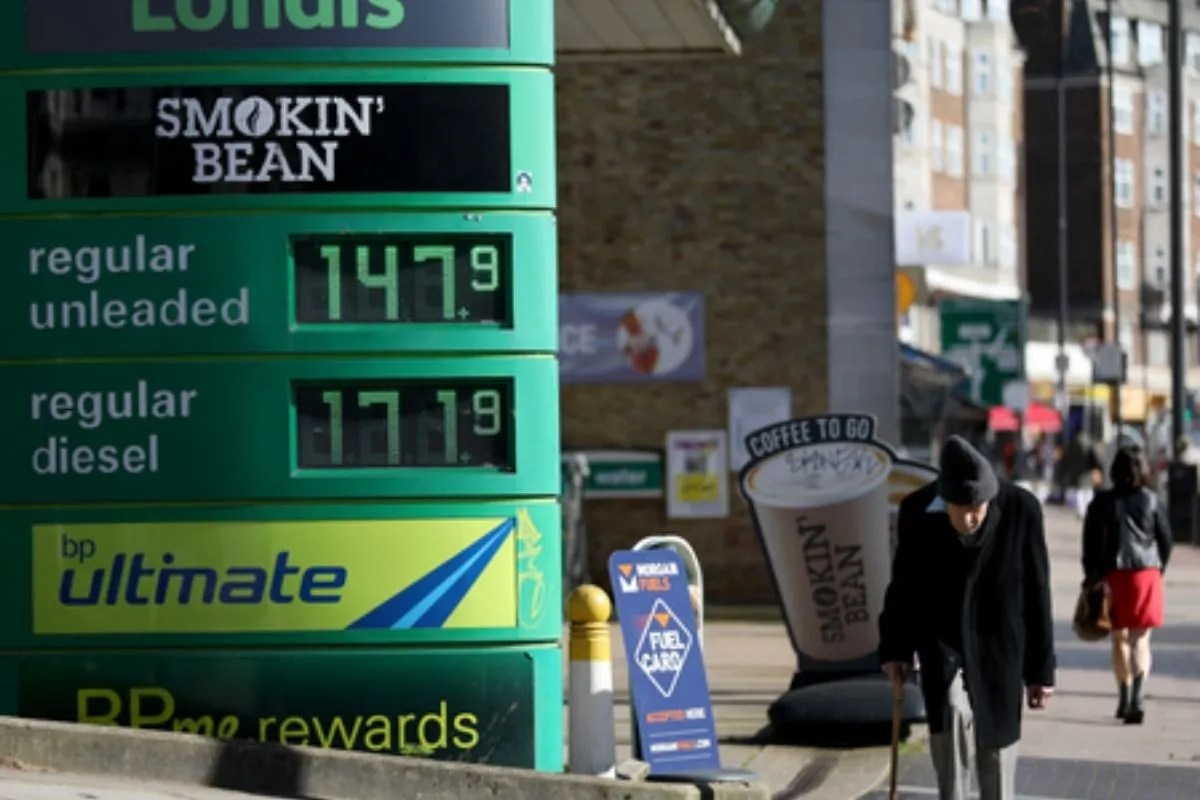
Ahmed wakes up at 4:30 AM in a cramped apartment on the outskirts of Dubai. He doesn’t check the news headlines first; he checks the fuel gauge on his white sedan. For a delivery driver in the glittering heart of the UAE, that digital needle is more than a measurement of liquid. It is a measurement of survival. Last year, filling the tank was a routine chore, a background noise in the symphony of his work week. Today, it feels like a heist in reverse.
The headlines speak of drones over Isfahan and missile batteries in the Negev. They use words like "geopolitical instability" and "supply chain disruption." But for Ahmed, and for millions of commuters from the sun-scorched highways of Sharjah to the sprawling freeways of Los Angeles, the war isn’t just happening in the sky. It is happening at the pump.
We are witnessing a 72% surge in fuel costs across regions once thought immune to such volatility. The United States and the United Arab Emirates—two nations built on the backbone of affordable energy—are reeling. This isn’t a gradual climb. It’s a vertical wall.
The Ghost in the Machine
To understand why a conflict miles away can drain a bank account in Florida, you have to look at the fragility of the global energy web. We like to think of oil as a massive, unending lake. In reality, it is a series of precarious pipes, narrow straits, and nervous traders.
When tensions between Iran and Israel escalated into direct confrontation, the psychological safety net of the global market shredded. Oil isn’t priced based on what is happening today. It is priced based on the fear of what might happen tomorrow. The Strait of Hormuz, a narrow neck of water through which a third of the world’s liquefied natural gas and a fifth of its oil passes, became a ghost story.
Traders looked at that narrow passage and saw a potential noose. If the "Silence of the Strait" becomes a reality, the 72% increase we see today will look like the "good old days." This fear is a tax. A tax on every gallon of diesel that powers the trucks bringing groceries to your store, and every liter of petrol that gets a teacher to school.
A Tale of Two Forecourts
Consider Sarah in Houston. She lives in the energy capital of the world. She can see the refineries from the highway, their silver towers gleaming like industrial cathedrals. She assumed that being close to the source meant being safe from the shockwaves.
She was wrong.
The American economy is a high-velocity machine. It requires constant, cheap motion. When the price of diesel spikes, it creates a "stealth inflation." Sarah notices that her favorite sourdough bread has gone up by nearly two dollars. She notices that the shipping fee for her online orders has doubled. She doesn't immediately blame the skirmishes in the Middle East. She blames the grocery store. She blames the delivery service.
But the math is cold and unforgiving. A 72% jump in fuel costs means a long-haul trucker who used to spend $600 on a cross-country trip is now looking at a bill north of $1,000. That $400 difference doesn't vanish into thin air. It gets divided up and tucked into the price of every head of lettuce, every pair of sneakers, and every gallon of milk.
Across the ocean in the UAE, the shock is perhaps even more profound because it is so alien. For decades, the Gulf was the sanctuary of the "fill-up." Fuel was a utility as basic and cheap as water—sometimes cheaper. The sudden alignment with global market pressures has forced a cultural pivot. The gold-plated SUVs that once defined the roads of Dubai are being traded for hybrids. The silence in the luxury car showrooms is deafening.
The Dominoes of the Daily Bread
The relationship between a missile and a mortgage is shorter than we care to admit. When fuel prices hit these heights, the first thing people do is cut the "discretionary."
- The weekend trip to see family is cancelled.
- The small business owner delays hiring a new assistant.
- The restaurant loses the Friday night rush because the drive is too expensive.
These are the micro-tragedies of a macro-conflict. We often analyze war through the lens of territory and sovereignty. We should also analyze it through the lens of the kitchen table. When 72% of your fuel budget evaporates, you aren't just losing money. You are losing time. You are losing the ability to move freely. You are losing the small luxuries that make a hard week bearable.
The "side effect" mentioned in dry economic reports is actually the main event for the person living paycheck to paycheck. The volatility is a thief. It steals the certainty of the future.
Why the Price Stays High Even When the Guns Go Silent
There is a cruel lag in the world of energy. When a crisis begins, prices leap instantly, driven by the panicked clicking of high-frequency trading algorithms. But when the tension eases, the prices don't fall with the same enthusiasm. They drift. They linger.
Refineries, wary of the next headline, keep their margins wide. Retailers, having paid a premium for the fuel currently sitting in their underground tanks, are slow to lower the numbers on the big plastic signs. This is "asymmetric pricing," but to the consumer, it just feels like a trap.
The UAE and the US find themselves in a strange brotherhood of burden. Both nations are energy giants. Both possess vast reserves. Yet, both are shackled to a global price set by the most volatile actors on the world stage. It reveals a terrifying truth: in a globalized world, there is no such thing as an energy island.
The Weight of the Needle
Ahmed finishes his shift as the sun begins to dip behind the Burj Khalifa. The city is glowing, a testament to what oil wealth can build. But as he pulls into the petrol station for his final fill-up of the day, the glow feels distant. He watches the numbers on the pump spin faster than they ever have before.
He calculates the hours he worked today against the cost of the fuel he just burned to do the job. The margin is thinning. If the needle moves any further to the right, the math of his life stops working.
The war in the Middle East isn't just a map with red and blue arrows. It is the sound of a credit card clicking into a card reader in a suburb of Atlanta. It is the sigh of a father in Abu Dhabi looking at his bank statement. It is the invisible weight that every driver now carries in their pocket.
We are all connected by a transparent liquid that we only notice when it becomes too expensive to ignore. As the geopolitical chess match continues, the rest of us are left staring at the dial, waiting to see if we can still afford the journey home.
The needle trembles, but it doesn't drop.