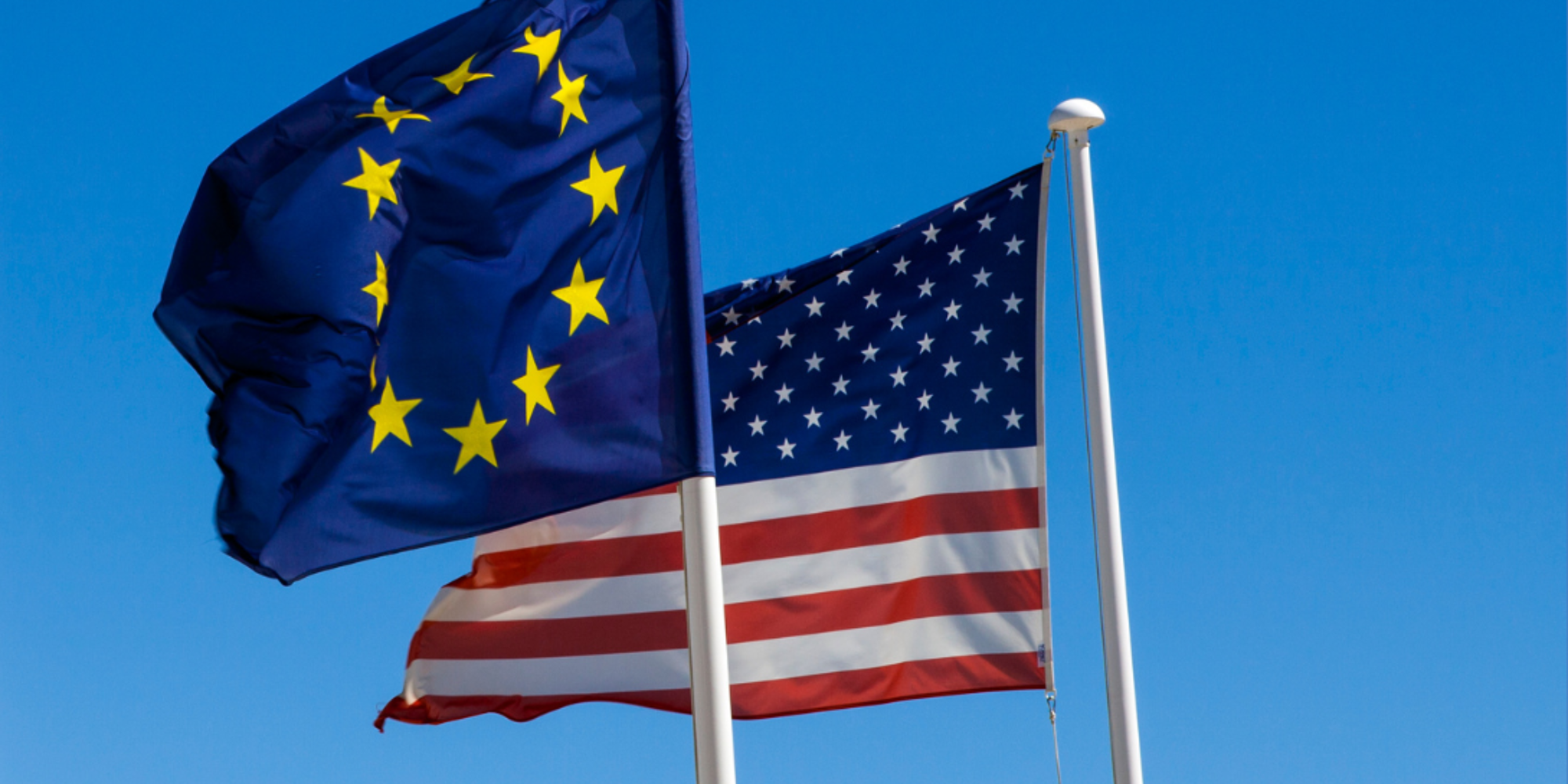
The ink on a trade agreement is rarely just ink. It is the sound of a container ship’s hull groaning against a Brooklyn pier. It is the flicker of a digital ledger in a Frankfurt data center. For years, the air between the United States and the European Union has been thick with a particular kind of silence—the kind that exists when two giants are staring each other down, waiting for the other to blink.
Then, the blink happened.
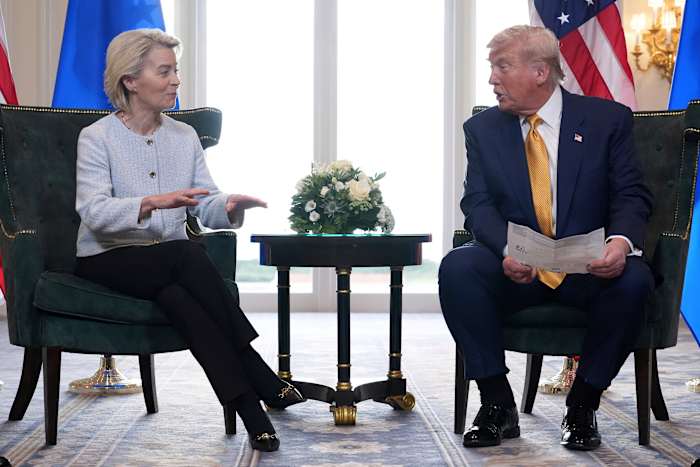
Lawmakers in Brussels recently moved the needle, signaling a green light for a trade deal that many thought would remain buried under a mountain of bureaucratic red tape. This isn't just a collection of tariff schedules and regulatory footnotes. It is a calculated gamble on a shared future. But beneath the surface of the official press releases, there is a tension that defines the modern era: the struggle to balance the raw power of global commerce with the fragile necessity of human protection.
The Butcher and the Byte
Consider a small-scale cheese producer in the Loire Valley. For her, "trade" isn't an abstract concept discussed in glass-walled rooms. It’s the difference between her goat cheese sitting in a refrigerated warehouse or finding its way onto a charcuterie board in a Chicago bistro. Conversely, think of a software developer in Austin. To him, an ocean is just a latency issue. He wants his code to flow into European markets without hitting a wall of "digital sovereignty" that treats his innovation like a foreign invader.
These are the two ends of the rope.
The European Union’s recent approval of this deal aims to bridge that gap, but it comes with a catch. This isn't a "take what you can get" arrangement. It is a "trust, but verify" blueprint. European lawmakers are acutely aware that while they need American tech and energy, they cannot afford to auction off their standards for privacy and safety. They have built a series of "safeguards"—a word that sounds clinical but acts as a digital and physical shield for the average citizen.
The Ghost of Trade Wars Past
We have been here before. History is littered with the wreckage of trade disputes that started over something as mundane as the hormone content in beef or the subsidies given to airplane manufacturers. Those disputes weren't just about money. They were about identity. Europe has long prided itself on the "precautionary principle"—the idea that if something might be harmful, you wait. The American approach is often built on "permissionless innovation"—the idea that you build first and fix the breaks later.
When these two philosophies collide, the gears of the global economy grind to a halt.
The significance of this new approval lies in its timing. The world is fracturing. Supply chains that once felt like a solid web now look like frayed threads. By approving this deal, the EU is making a geopolitical statement as much as a financial one. They are choosing a side. But they are doing so with their eyes wide open, planting flags in the ground to ensure that "cooperation" doesn't turn into "subservience."
The Shield in the Fine Print
What do these safeguards actually look like when they hit the street?
They look like the right to know exactly where your data is stored. They look like environmental standards that prevent a race to the bottom, ensuring that a cheaper product doesn't come at the cost of a poisoned river. Lawmakers have insisted on mechanisms that allow the EU to pull the emergency brake if the American side fails to meet specific benchmarks.
It’s a lopsided dance.
The U.S. brings the scale—a massive, hungry market and a tech sector that moves faster than the law can follow. The EU brings the rules—a complex, often frustrating, but ultimately protective framework designed to keep the human being at the center of the transaction. This deal is the moment these two forces decided to stop fighting and start negotiating the terms of their coexistence.
The Friction of Reality
Critics argue that safeguards are just another name for protectionism. They claim that by adding layers of oversight, the EU is merely slowing down the inevitable. But ask the parent whose child’s data was scraped by an unregulated app, or the farmer whose livelihood was decimated by a sudden flood of subsidized imports. For them, friction is a feature, not a bug.
Friction is what keeps the car on the road.
The reality of 21st-century trade is that nothing is truly "free." Everything has a cost. If the price of a product doesn't reflect the cost of protecting the worker who made it or the environment it was made in, then someone else is paying that debt. Usually, it’s the person who has the least power to complain. The EU’s insistence on these safeguards is an attempt to settle that debt upfront.
The Digital Frontier
The most invisible stakes are found in the cloud. As we move toward an economy driven by artificial intelligence and massive data sets, the Atlantic Ocean has become a digital border. The U.S. wants data to flow like water. The EU wants it to flow like a controlled substance.
This deal attempts to find a middle ground—a "third way" that allows for innovation without sacrificing the fundamental right to privacy. It is a delicate balance. If the safeguards are too heavy, the EU risks becoming a digital museum—a place where privacy is absolute but progress is stagnant. If they are too light, they risk becoming a data colony.
Lawmakers are betting that they can have both.
They are betting that Europe can be a place where high-tech trade flourishes under the watchful eye of a high-standard regulator. It is a bold vision, one that assumes the American market is willing to play by someone else’s rules in exchange for access to 450 million of the world’s wealthiest consumers.
The Human Cost of Agreement
Behind every vote in the European Parliament is a calculation of human survival. When they talk about "market access," they are talking about whether a factory in a small town in Poland stays open. When they talk about "regulatory alignment," they are talking about whether a chemist in Belgium can trust the safety data from a lab in New Jersey.
The stakes are not just numbers on a spreadsheet.
They are the quiet conversations around dinner tables where families wonder if their jobs will be offshored or if their local industries will be crushed by a sudden shift in policy. The safeguards are a promise to those people. They are a statement that says: "We want to grow, but we will not trade away your security to do it."
The Unwritten Chapter
We are entering a period of radical uncertainty. The geopolitical map is being redrawn in real-time. This trade deal is a cornerstone of a new architecture, one where democratic values are baked into the commercial code. It is an acknowledgment that in the modern world, you cannot separate the way you trade from the way you live.
The success of this agreement won't be measured by the initial surge in GDP. It will be measured in the years to come, in the disputes that don't happen because the safeguards worked. It will be measured in the stability of the relationship between two powers that have every reason to compete but have realized they have even more reasons to cooperate.
The handshake has happened. The giants have moved closer. But the eyes of the lawmakers remain fixed on the fine print, watching for the first sign of a slip, because in the world of global trade, the only thing more expensive than a bad deal is a broken promise.
The container ships are already moving. The servers are already humming. The invisible handshake has been felt across the ocean, and now, the world waits to see if the grip will hold or if the pressure of the safeguards will eventually cause the hand to pull away.