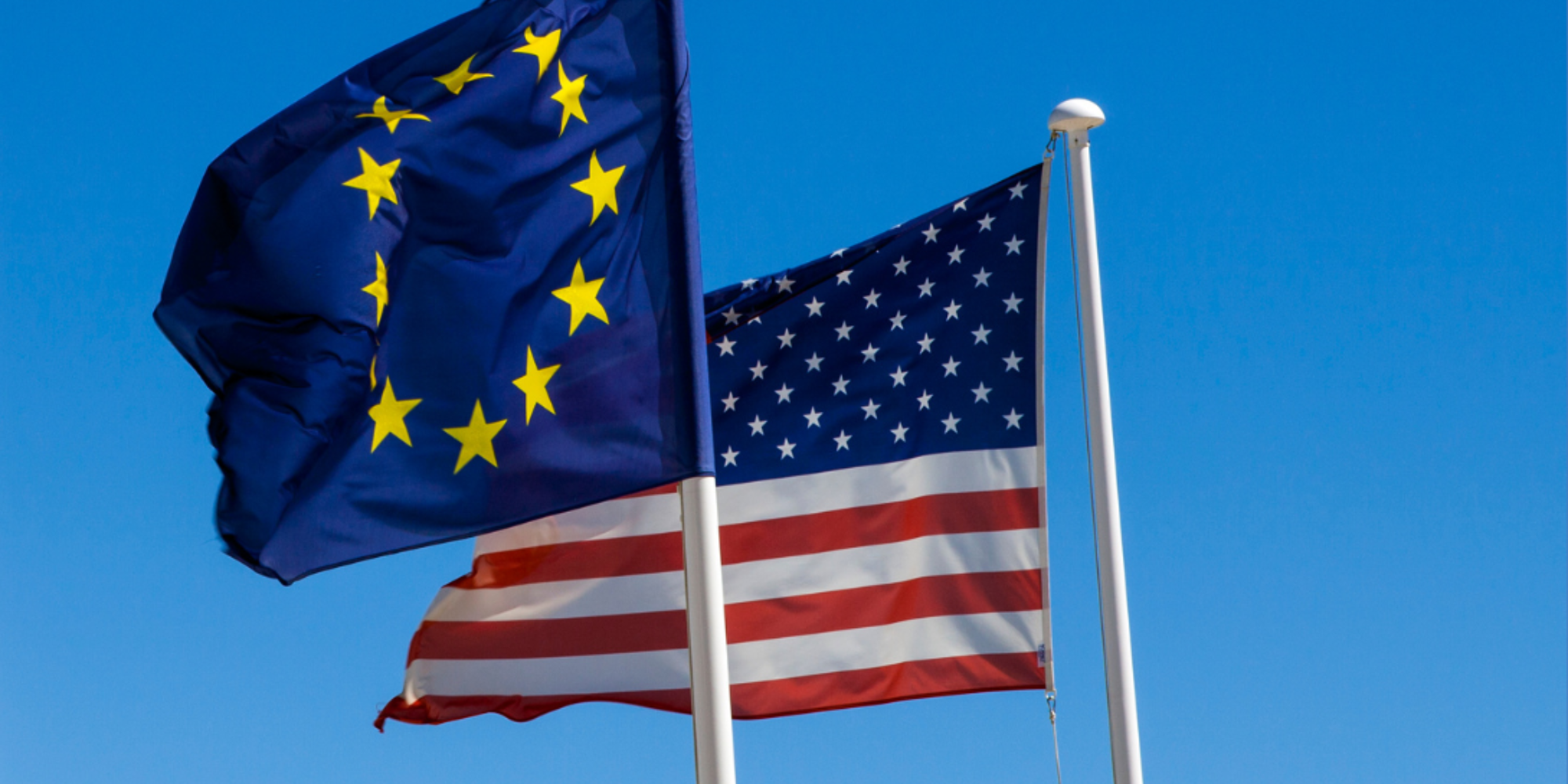
Brussels is popping champagne over a "historic" trade alignment with Washington, but they are drinking to their own funeral. While MEPs pat themselves on the back for securing "market access," they have effectively signed a surrender document that ensures Europe remains a digital vassal state for the next fifty years. The consensus view—that this deal stabilizes the transatlantic economy—is a comforting lie. This isn't stability. It is the formalization of a lopsided relationship where the US exports high-margin software and the EU exports low-margin luxury goods and high-cost regulation.
The Myth of Regulatory Equivalence
The loudest cheers for this deal focus on "regulatory harmonization." Lawmakers claim that aligning standards reduces friction. In reality, harmonization is a trap. When you align a stagnant regulatory framework with a hyper-growth tech economy, the more agile player wins every time.
The US doesn't care about aligning with EU standards because the US defines the standards through market dominance. By the time an EU committee debates the ethics of a new algorithm, three California startups have already reached a billion-dollar valuation using it. Harmonization in this context means Europe agrees to stop trying to protect its own nascent industries in exchange for cheaper access to American cloud services.
I have watched dozens of European founders move their headquarters to Delaware the moment they hit Series A. Why? Because the "friction" the EU claims to be removing with this deal is actually the very fabric of their restrictive labor laws and risk-averse capital requirements. This deal doesn't bring US opportunity to Europe; it creates a smoother pipeline for European talent to exit the continent.
Trading Tangibles for Intangibles
Look at the trade balance being touted. The EU celebrates selling more cars, wine, and cheese. The US sells data, intellectual property, and infrastructure. This is a 19th-century trade strategy applied to a 21st-century economy.
- Europe’s Exports: Heavy, physical, carbon-intensive, and subject to diminishing returns.
- The US Exports: Weightless, scalable, and compounding.
For every crate of Bordeaux shipped to New York, a thousand European companies pay a monthly subscription fee to an American SaaS provider. The math is brutal. Physical goods require factories, raw materials, and logistics. Software requires a server and a credit card. By "opening markets," the EU has invited a shark into a goldfish pond and called it a networking event.
The $1.3 trillion in annual bilateral trade is a vanity metric. If you strip away the movement of components within the same multinational corporations, the "growth" looks a lot more like a wealth transfer from European SMEs to American Big Tech.
The GDPR Paradox
The deal includes quiet concessions on data flows that make a mockery of European privacy rhetoric. For years, Brussels has used GDPR as a shield, claiming it protects citizens. In this trade agreement, that shield has been swapped for a sieve.
The "Data Privacy Framework" tucked into these negotiations is a fragile compromise that will likely be struck down by the European Court of Justice (ECJ) within three years—just like its predecessors, Safe Harbor and Privacy Shield. However, by then, the damage will be done. European companies will have built their entire infrastructure on US-hosted AI models, making them "digitally locked in."
If you are a CTO in Berlin or Paris, you are being told this deal makes your life easier. It doesn't. It makes you a tenant on someone else’s land. You are building on a foundation that the US government can audit and the US legal system can seize.
The Energy Price Reality Check
The "consensus" suggests this deal secures Europe's energy future through increased LNG exports from the US. This is a fundamental misunderstanding of geopolitics. Dependency is not security.
By pivoting from Russian pipeline gas to American shipped gas, Europe has traded one master for another, only this one charges a premium for the privilege. The cost of liquefaction and transport means European industry will always pay more for energy than their American counterparts. This deal solidifies a permanent competitive disadvantage for German manufacturing.
Imagine a race where one runner has to pay 30% more for oxygen than the person in the next lane. That is the future of European heavy industry under this "favorable" trade alignment.
The Innovation Subsidy Trap
Washington’s Inflation Reduction Act (IRA) is a giant magnet for capital. European lawmakers think they countered this with their own Green Deal Industrial Plan. They are wrong.
The US system is designed to reward success with tax credits. The EU system is designed to reward "alignment" with grants. One encourages speed; the other encourages bureaucracy. This trade deal does nothing to bridge that gap. Instead, it allows US firms to benefit from EU subsidies while keeping their intellectual property firmly rooted in Silicon Valley.
I've sat in boardrooms where the decision to build a plant in Ohio versus Saxony came down to a simple spreadsheet. The EU's "regulatory lead" is actually a tax on speed. By approving this deal without demanding a total overhaul of how European capital is deployed, the EU has essentially agreed to be the world's most expensive museum.
Stop Asking if the Deal is "Fair"
The common question is: "Is this deal fair for European workers?"
It’s the wrong question. Fairness is irrelevant in global trade. The real question is: "Does this deal create a path for a European company to become the next global platform?"
The answer is a resounding no. This deal is designed to protect the incumbents—the massive German conglomerates and French luxury houses—at the expense of the challengers. It favors the status quo because the status quo is easy to tax and easy to regulate.
If you want to actually compete, you don't need a trade deal with the US. You need to dismantle the internal barriers that make it harder to hire in Madrid than it is in Miami. You need a unified capital markets union that doesn't require 27 different filings. You need to stop punishing failure and start incentivizing extreme risk.
The Cost of Compliance
Every "standard" agreed upon in this deal is a moat. For a multi-billion dollar corporation, compliance is a rounding error. For a ten-person startup in Tallinn, compliance is a death sentence.
By "harmonizing" rules, the EU and US are effectively colluding to prevent new entrants from disrupting the market. They are creating a closed loop where only the currently powerful can afford to play. This is not "free trade." It is "managed trade" for the benefit of the elite.
The downside of my perspective? If Europe walked away, it would face immediate economic pain. Supply chains would buckle. Prices would spike. But that pain would be the catalyst for genuine sovereignty. Instead, the EU has chosen a slow, comfortable decline.
The MEPs are celebrating a deal that preserves the present while mortgaging the future. They have traded the possibility of European greatness for a guaranteed seat at the kids' table.
Stop reading the press releases. Look at the flow of capital. It isn't moving toward the "stabilized" EU market; it is fleeing toward the high-growth, low-friction environment of the US. This trade deal isn't a bridge; it's an exit ramp.
Buy the American software. Sell your French wine. Accept your role as a high-end service economy for the digital titans of the West. Just don't call it a win.
Build something that doesn't require a bureaucrat's permission to scale, or get out of the way of those who will.