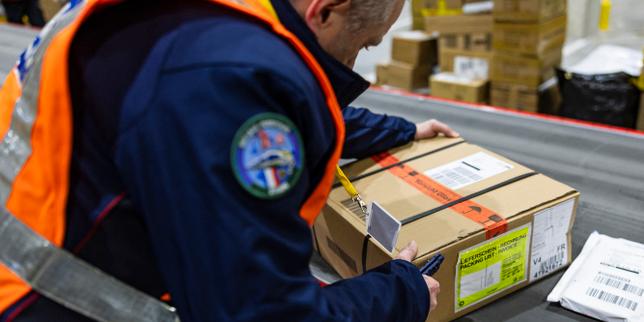
The doorbell rings at 2:14 PM on a Tuesday. It is a sound that has become the rhythmic heartbeat of the modern European suburb. On the doorstep lies a grey, plastic-wrapped brick, secured with enough adhesive tape to survive a reentry into the atmosphere. Inside is a polyester sundress that cost less than a cup of artisanal coffee, a set of LED strips, and a mechanical vegetable peeler. Total cost: €14.80. Shipping: Free.
For the person opening the door, it feels like a glitch in the Matrix. It feels like winning. How can an item be manufactured in Guangzhou, flown across several time zones, sorted in a high-tech hub, and driven to a rural driveway in Lyon or Dusseldorf for the price of a sandwich?
The answer lies in a loophole so wide you could drive a fleet of Boeing 747s through it. But the European Union has finally decided to close the gate.
The Ghost in the Customs Office
To understand why your €10 haul is currently causing a panic in Brussels, you have to look at a dry, bureaucratic ghost called the "de minimis" rule. For years, any package entering the EU with a declared value of less than €150 has been exempt from customs duties.
It was a rule designed for a different era. It was meant to save customs officers from the nightmare of filling out three hours of paperwork for a grandmother sending a hand-knitted sweater to her grandson. It was a common-sense buffer for "negligible" trade.
But then came the giants.
Companies like Shein and Temu didn't just use the loophole; they built an entire global empire on top of it. By shipping individual orders directly from Chinese factories to European doorsteps, they ensured that almost every single package stayed under that €150 threshold.
Consider the sheer scale. In 2023 alone, over two billion such parcels entered the EU. That is not a "negligible" flow of goods. It is a tidal wave. And because these packages are exempt from duties, they bypass the friction that keeps local businesses—the ones paying rent, VAT, and fair wages in your local town—competitive.
The Mathematics of an Unfair Fight
Imagine you own a small boutique in Antwerp. You buy your stock in bulk. When your shipment of 500 shirts arrives at the port, you pay customs duties. You pay for the container. You pay for the warehouse. You pay the staff who ensure those shirts meet European safety standards.
Now, consider your competitor. They don't have a warehouse in Europe. They don't have a shop. They have a sophisticated algorithm and a direct line to a factory. When a customer clicks "buy," that single shirt is bagged and tagged. It flies under the radar of the €150 limit. It pays zero duty.
The boutique owner is playing chess. The giant is playing a game where they get to move the pieces whenever they want, and the board doesn't actually exist.
Brussels has realized that this isn't just about lost tax revenue, though that "lost" money is estimated to be in the hundreds of millions. It is about the structural integrity of the European market. If you allow a back door to stay open long enough, the front door becomes irrelevant.
The True Cost of Cheap
There is a psychological comfort in the low price tag. We tell ourselves that we are being savvy. We are "hacking" the system. But the system is built on a foundation of invisible costs that someone, somewhere, is paying.
When a package is exempt from duty, it often receives less scrutiny. This isn't just about money; it's about what is inside the plastic. European regulators have raised alarms about the safety of these "lightning-fast" products. From heavy metals in jewelry to flammable fabrics in children's clothing, the lack of a formal "importer of record" within the EU means that when something goes wrong, there is no one to hold accountable. The factory is six thousand miles away. The platform is just a digital middleman.
The consumer is the one left holding the chemical-smelling bag.
The EU’s proposed crackdown—essentially removing the €150 exemption entirely—is a move to force these platforms to play by the same rules as the high street. Every parcel, no matter how small, would be subject to customs duty.
The Logistics of the Crackdown
Implementing this is a logistical Herculean task. If you think your local post office is slow now, imagine every single one of those two billion small parcels requiring a formal customs declaration and duty payment.
The European Commission isn't just looking to tax the consumer; they are looking to change the behavior of the platforms. By removing the incentive to ship millions of tiny, individual packages, they hope to push these companies toward more sustainable, bulk-shipping models.
But there is a catch.
The "de minimis" rule existed for a reason: efficiency. Removing it creates a massive administrative burden. The cost of collecting a €1.50 duty on a €10 item might actually be higher than the duty itself. To solve this, the EU is leaning on technology. They want the platforms to collect the duty at the point of sale, much like they already do with VAT for many transactions.
It sounds simple. It is anything but. It requires a level of transparency and data sharing that these platforms have, historically, been reluctant to provide.
The Emotional Weight of the Cart
We have become addicted to the hit of dopamine that comes with a "delivered" notification. We have grown accustomed to the idea that our purchasing power is infinite because the prices are so low.
When the EU moves to end this era, the immediate reaction from many will be frustration. Prices will go up. That €5 phone case will become an €8 phone case. The "free" shipping might suddenly come with a "customs processing fee."
But we have to ask ourselves what we are buying when we support the current system. We are buying the slow erosion of our local economies. We are buying a mountain of textile waste that the planet cannot digest. We are buying into a supply chain that thrives on the absence of oversight.
The grey plastic bricks will still arrive. The doorbells will still ring. But the era of the "free" ride is ending.
The EU is effectively saying that if you want to sell to 450 million of the world’s wealthiest consumers, you have to contribute to the society that makes those consumers wealthy in the first place. You have to pay the entry fee. You have to ensure your products don't hurt people. You have to exist in the real world, not just in the cracks between the rules.
In a small office in Brussels, a pen is moving across a page. It is a quiet movement. It doesn't have the flash of a "90% OFF" banner or the speed of a 24-hour delivery drone. But that pen is closing a door that was never meant to be a highway.
The sundress might cost a few euros more next summer. The LED strips might require a bit more thought before we hit "buy." The secret is out, and the price of the world is finally catching up to the price on the screen.
Would you like me to analyze how this policy change might specifically affect the shipping times and logistics costs for individual consumers?