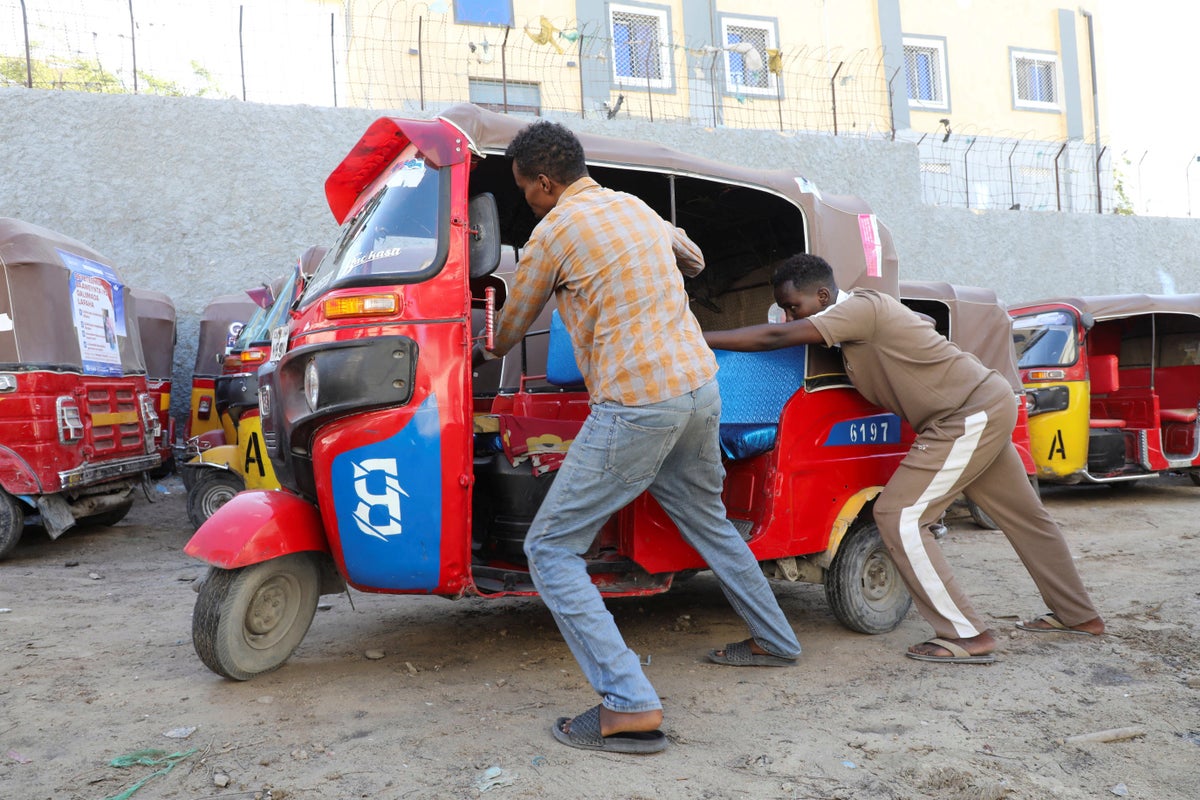
The three-wheeled heartbeat of the developing world is skipping beats. If you’ve ever navigated the chaotic, colorful streets of Bangkok, New Delhi, or Colombo, you know the sound. It’s a high-pitched, two-stroke buzz that signals progress, commerce, and a cheap way home. But that buzz is fading. A global oil crisis isn't just making gas more expensive at your local station; it's systematically pricing millions of drivers and passengers out of their own lives. This isn't a minor speed bump. It's an existential threat to the most basic form of mobility for the global poor.
When fuel prices spike in the West, we complain about the cost of a road trip. When they spike in South Asia or Africa, the entire economic plumbing of a nation starts to leak. Tuk-tuks, or auto-rickshaws, are the bridge between the subway station and the front door. They're the delivery trucks for small businesses. They're the school buses for kids in crowded urban centers. Right now, that bridge is collapsing because the math simply doesn't work anymore. You might also find this connected story interesting: Strategic Asymmetry and the Kinetic Deconstruction of Iranian Integrated Air Defense.
The Brutal Math of a Moving Target
Let's look at the reality on the ground. A typical driver in a city like Colombo, Sri Lanka, used to spend about a quarter of his daily earnings on fuel. Today, that number often exceeds half. Imagine going to work and realizing that before you've even bought a sandwich for lunch, 50% of your paycheck is already gone just to keep the lights on. It’s unsustainable.
Drivers face a "damned if you do, damned if you don't" scenario. If they raise their fares to cover the cost of petrol, passengers stop calling. In many of these regions, the middle class is shrinking. People who used to take a rickshaw to work are now walking miles in the heat or cramming into dangerously overfilled buses. If the driver keeps his prices low to attract customers, he goes home with almost nothing. He can't maintain the vehicle. He can't buy tires. Eventually, the machine breaks, and so does his livelihood. As highlighted in latest articles by NBC News, the effects are widespread.
This isn't just about "expensive gas." It’s about the volatility of the global energy market hitting the people with the thinnest financial cushions. According to data from the International Energy Agency, the ripple effects of supply chain disruptions and geopolitical tension have pushed energy poverty to record levels in 2024 and 2025. For a tuk-tuk driver, a $10 increase in the barrel price of oil isn't a statistic. It’s a missed meal.
Why the Electric Pivot is Harder Than It Looks
You’ll hear plenty of "experts" sitting in air-conditioned offices saying the answer is simple. Just go electric. Switch to an e-trike. Save the planet and the wallet at the same time.
It sounds great on paper. In practice, it’s a mess.
Most tuk-tuk drivers don't own their vehicles outright. They rent them daily or are paying off high-interest loans to predatory lenders. Telling a man who is struggling to buy rice that he needs to invest $3,000 to $5,000 in a new electric vehicle is an insult. The infrastructure isn't there either. In many of the cities where these vehicles are most common, the power grid is already flaky. Rolling blackouts are common. If you can’t trust the plug in your wall, you can't trust your taxi to be charged by morning.
There's also the weight problem. Batteries are heavy. A traditional petrol engine is light and easy to fix with a wrench and some grit. Electric drivetrains require specialized technicians and expensive components. When an electric rickshaw breaks down in a rural village, it stays broken. We're seeing a massive gap between the "green transition" rhetoric and the mechanical reality of the Global South.
The Social Cost of a Stalled Engine
We need to talk about what happens when these vehicles stop moving. It’s not just a transport issue. It’s a gender issue and an education issue.
In many conservative societies, tuk-tuks provide a safer, semi-private mode of transport for women compared to crowded public buses. When the cost of a rickshaw ride doubles, women's mobility is the first thing to be restricted. They stay home. They miss job opportunities. Similarly, for families who rely on these vehicles to get their kids to school, a fuel crisis becomes a barrier to education.
The informal economy relies on the "last mile." If a small-scale tailor can't afford to send his goods to the market because the transport cost has tripled, his business dies. This is how a fuel crisis turns into a full-scale economic depression. We're seeing this play out in real-time in places like Egypt and Pakistan, where the cost of living has outpaced wage growth by a staggering margin.
Real Solutions That Aren't Just Pipe Dreams
If we want to save this sector, we have to stop suggesting "solutions" that require the poor to spend money they don't have. Governments and international NGOs need to shift focus toward realistic interventions.
Retrofitting is one path. Instead of buying a whole new electric vehicle, we should be subsidizing kits that convert existing petrol engines to LPG (Liquefied Petroleum Gas) or electric. It's cheaper and keeps existing assets on the road. We also need "Battery as a Service" models. A driver shouldn't have to own the battery. He should be able to swap a depleted one for a full one at a kiosk for a flat fee, much like buying a bottle of water. This removes the massive upfront cost of EV adoption.
Furthermore, fuel subsidies need to be targeted. Instead of blanket subsidies that help the rich guy in his SUV just as much as the rickshaw driver, digital payment systems can allow for "smart subsidies." This ensures that the discount on fuel goes directly to the person using it for their primary income.
Don't Look Away
It’s easy to view the "tuk-tuk crisis" as a distant problem. It isn't. It’s a canary in the coal mine for how the global energy transition will either lift people up or leave them in the dust. If we can't figure out how to keep the most efficient, popular form of transport in the developing world affordable, we’ve failed the "just transition" test.
The next time you see a headline about oil futures, don't think about your commute. Think about the driver in Dhaka who is deciding between a tank of gas and a liter of milk.
If you want to actually help or learn more about how urban mobility is changing, look into organizations like the Institute for Transportation and Development Policy (ITDP). They do the actual work on the ground to integrate these informal transit systems into modern city planning. Support local initiatives that focus on vehicle retrofitting rather than just "new sales." The goal is to keep the wheels turning, not just to sell more batteries.
Start by looking at your own consumption. The pressure we put on global oil supplies affects the person at the very end of the supply chain the hardest. The tuk-tuk might be small, but its failure would be a massive disaster for global stability. It's time to treat the three-wheeler with the respect its economic impact deserves.