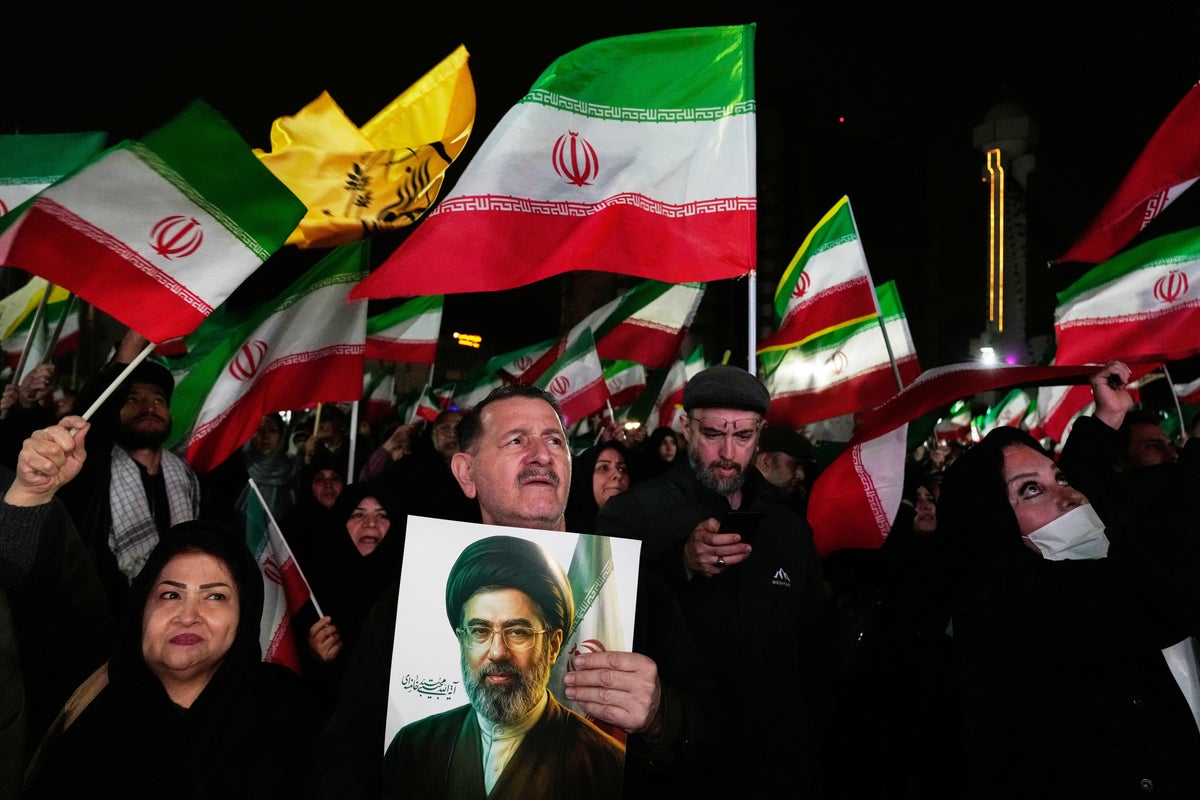
The assertion that the Islamic Republic of Iran sought to appoint a Western head of state—specifically Donald Trump—as its "Supreme Leader" represents a fundamental category error in geopolitical analysis. To understand why this claim defies the structural logic of the Iranian state, one must deconstruct the constitutional, theological, and strategic mechanisms that govern Tehran’s power hierarchy. This is not merely a matter of political rhetoric; it is a question of institutional impossibility within a system defined by Velayat-e Faqih (Guardianship of the Islamic Jurist).
The Institutional Constraints of the Office of Rahbar
The position of Supreme Leader (Rahbar) is not a secular presidency or a symbolic monarchy. It is a specific theological-legal office with rigid entry requirements defined by Article 5 and Article 109 of the Constitution of the Islamic Republic of Iran.
- Theological Qualification: The candidate must be a mujtahid, an Islamic scholar capable of independent legal reasoning. This requires decades of formal education in the Hawza (seminaries) of Qom or Najaf.
- Justice and Piety: The individual must possess "piety and vestige" according to Twelver Shia standards.
- Political Sagacity: The leader must demonstrate a commitment to the foundational principles of the 1979 Revolution.
The Assembly of Experts, an 88-member body of clerics, is the only entity with the legal authority to appoint or dismiss the Supreme Leader. The notion that an external actor, let alone a foreign non-Muslim head of state, could be invited into this role ignores the internal legal frictions that regulate the Iranian state. From a structural standpoint, the Supreme Leader sits at the apex of a complex power grid that includes the Islamic Revolutionary Guard Corps (IRGC), the regular military (Artesh), and the bonyads (charitable trusts). This system functions through a network of patronage and religious legitimacy that cannot be exported or transferred to an outsider without the immediate collapse of the state’s ideological framework.
Information Warfare and the Logic of Hyperbole
When analyzing high-stakes diplomatic claims, it is necessary to distinguish between tactical disinformation, psychological signaling, and literal policy proposals. The claim that Iran made such an offer serves several psychological functions in a domestic political context, even if it lacks empirical grounding in international relations.
- The Validation Loop: By framing a former adversary as a potential "leader," the speaker attempts to project a sense of total dominance and magnetism. It suggests that even the most hostile entities recognize the speaker’s inherent authority.
- Adversary Devaluation: Attributing such an absurd request to Tehran serves to paint the Iranian leadership as erratic, desperate, or nonsensical. This reduces the perceived threat of the regime by characterizing them as clowns rather than calculating geopolitical actors.
- The Narrative of Unique Negotiation: It reinforces the "Great Negotiator" archetype, implying that the speaker’s presence in the room fundamentally alters the reality of international diplomacy to the point of breaking historical precedents.
The cost of such rhetoric is a further degradation of the "Signal-to-Noise" ratio in intelligence circles. When public statements deviate significantly from the known operational constraints of an adversary, the ability of analysts to predict future escalations—such as enrichment levels at Natanz or proxy movements in the Levant—is hampered by the volume of noise.
The Strategic Divergence of Iranian Interests
Iran’s foreign policy is guided by a doctrine of "Strategic Depth" and the "Axis of Resistance." The primary objectives are the removal of U.S. forces from the Middle East and the preservation of the clerical regime.
The IRGC’s Quds Force operates on a logic of decentralized asymmetric warfare. Their goal is not to integrate with the West, but to create a buffer zone through regional proxies. Proposing a Western leader as their head would be a total inversion of their foundational "Neither East nor West" foreign policy pillar. This creates a logical bottleneck: if Iran truly wanted to "make" Trump their leader, they would be surrendering their entire regional architecture and ideological raison d'être.
The specific friction points between Trump and Iran are well-documented:
- The JCPOA Withdrawal: The 2018 exit from the nuclear deal caused a 37% contraction in Iran’s oil exports within a year, leading to "Maximum Pressure."
- The Soleimani Assassination: The January 2020 drone strike on Qasem Soleimani remains a non-negotiable point of vengeance for the IRGC.
Given these historical data points, the probability of a genuine offer for leadership approaches zero. The "Maximum Pressure" campaign was an existential threat to the Iranian economy, making any collaborative gesture of this magnitude a structural impossibility for the regime's hardliners.
Decoding the Mechanism of the "Outlandish Claim"
In modern political communication, the "Outlandish Claim" functions as an attention-hijacking mechanism. By making a statement that is 100% false but 100% memorable, a communicator can dominate the news cycle for 48 to 72 hours. This prevents the opposition from focusing on substantive policy issues or negative metrics.
- Triggering Cognitive Dissonance: Supporters find the claim amusing or a sign of strength; critics find it delusional. This deepens polarization, which is a key metric for base mobilization.
- Flooding the Zone: By the time fact-checkers and regional experts explain the impossibility of the Iranian Constitution allowing a non-cleric leader, the news cycle has already shifted.
- Establishing "Alpha" Dominance: In the logic of strongman politics, truth is secondary to the ability to define reality. Making a claim that no one else would dare make is a display of power.
Quantifying the Impact on International Credibility
The accumulation of such claims has a measurable impact on the "Credibility Discount" applied by foreign intelligence services. When a leader provides accounts of interactions that are physically or legally impossible, foreign counterparts adjust their hedging strategies.
- The Hedging Effect: Allies become more likely to share intelligence through backchannels or third parties rather than direct executive communication to avoid the risk of their data being integrated into a distorted narrative.
- The Deterrence Gap: If an adversary believes a leader's rhetoric is entirely untethered from reality, they may miscalculate the leader's actual "red lines." This increases the risk of accidental escalation or kinetic conflict.
The "Supreme Leader" claim is a case study in the divergence between political theatre and geopolitical reality. While it serves a specific utility in a domestic campaign environment, it fails every test of institutional, theological, and strategic logic. The primary takeaway for any analyst is that the claim should be categorized under "Rhetorical Performance" rather than "Geopolitical Intelligence."
Strategic actors must prioritize the analysis of hard assets—centrifuge counts, ballistic missile range, and proxy funding—over the fluctuating noise of high-profile political claims. The actual threat remains the Iranian regime’s pursuit of regional hegemony and nuclear capabilities, regardless of the anecdotal framing used to describe their interactions with the West. The next logical step is to monitor the Assembly of Experts' upcoming succession planning for the current Rahbar, Ali Khamenei, which will provide the true indicator of Iran's future trajectory.