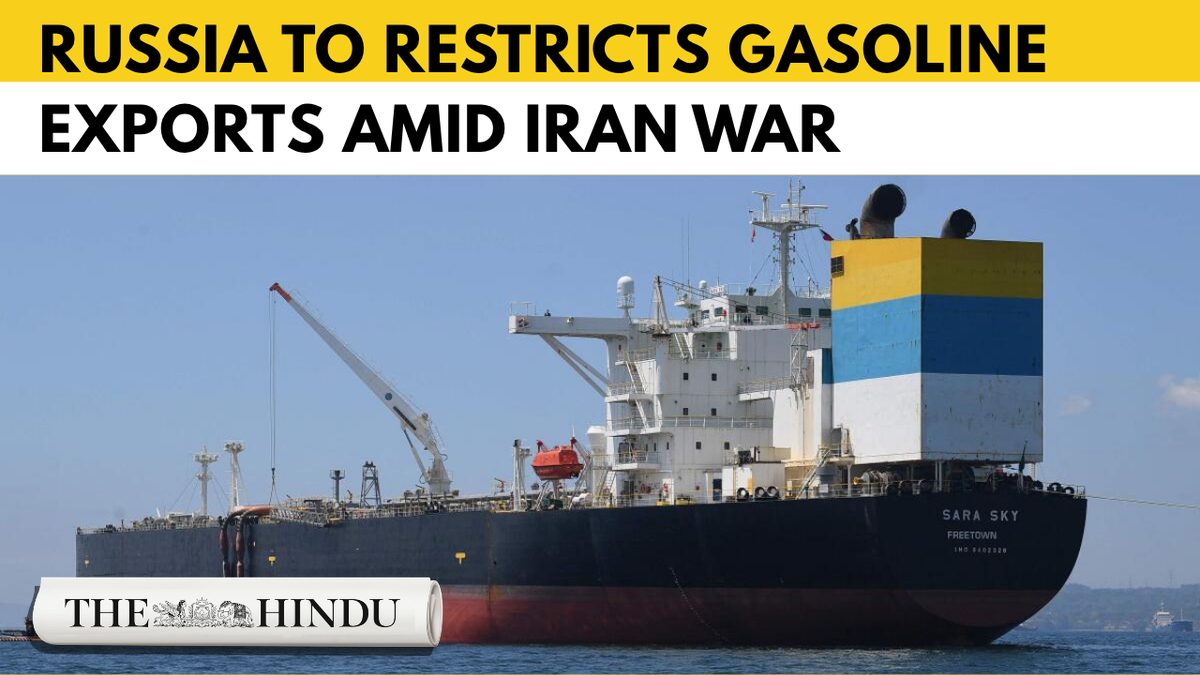
Russia is slamming the brakes on gasoline exports again. Starting April 1, 2026, the Kremlin is shutting off the taps for foreign buyers to keep its own gas stations full and prices steady. It's a move we've seen before, but the timing this year is particularly aggressive. Deputy Prime Minister Alexander Novak gave the order to the Energy Ministry on Friday, and the ban is set to last until July 31.
If you're wondering why this matters to you, it's about the math of the global pump. Russia isn't just a crude oil giant; it's a massive refiner. When they pull 117,000 barrels of finished gasoline off the market every day, someone else has to feel the pinch. Usually, that's buyers in China, Turkey, and parts of Africa.
The Middle East factor and the price of stability
The official line from Moscow points toward the chaos in West Asia. With the US-Iran conflict heating up and the Strait of Hormuz seeing regular disruptions, global oil prices are jumping around like a heart rate monitor. Brent crude has already flirted with the $126 mark.
Novak argues that this "turbulence" makes it too risky to let domestic fuel flow freely across borders. President Vladimir Putin has a standing order: don't let prices at Russian pumps climb faster than inflation. In a country where driving distances are massive and the economy is already strained, high fuel prices are political poison.
Why the April to July window is critical
This isn't a random four-month period. It’s a calculated strike aimed at two specific internal pressures.
- Refinery Maintenance: Spring is when Russian refineries typically go offline for scheduled repairs. You can't fix the pipes while they're full of high-pressure fluid. When these plants shut down, production drops. By banning exports, the government ensures that whatever is produced stays inside the country.
- The Summer Surge: From April through July, Russia hits its peak driving season. Farmers need fuel for spring sowing, and families start hitting the road. If the government allowed companies to chase high international prices, there wouldn't be enough left for the local tractor or the family Lada.
Honestly, it’s a classic protectionist play. They're choosing "energy sovereignty" over the billions of dollars in export revenue they'll lose—roughly $5 billion, according to some industry estimates.
The ripple effect on global buyers
While Russia protects its own, the rest of the world has to scramble. Historically, Russia exports about 5 million metric tons of gasoline a year. Taking a chunk of that out of the equation during a global energy crisis is a gut punch to emerging markets.
India seems prepared, with officials like Sujata Sharma from the Ministry of Petroleum and Natural Gas claiming they have enough stock for the next two months. But for smaller nations in Africa or Southeast Asia that rely on Russian refined products, the "April 1 surprise" isn't a joke. It’s a supply chain nightmare.
Refinery utilization and the "Shadow" fleet
Interestingly, the Russian Ministry of Energy says refining rates are actually holding steady at 2025 levels. They aren't in a deficit yet. They're building a "buffer." By keeping refineries running at high capacity but locking the doors to exports, they’re stockpiling reserves.
We’re also seeing a massive increase in "shadow" tankers—vessels flying false flags or turning off transponders. While the official ban starts in April, the cat-and-mouse game of getting Russian fuel to market under the radar will likely intensify. About 63 of these shadow vessels were spotted in February alone.
What this means for your wallet
Even if you don't live in Moscow or Ankara, this ban affects you. Energy markets are interconnected. When Russian gasoline stays home, European and Asian buyers look elsewhere—mostly to the Middle East or US Gulf Coast. This increased competition for non-Russian fuel drives up the benchmark prices everywhere.
Don't expect your local gas station to drop its prices anytime soon. Between the war-risk premiums in the Middle East and Russia’s export retreat, the supply side of the equation is looking incredibly tight.
If you're tracking energy stocks or planning a summer road trip, keep an eye on the July 31 deadline. If Russia extends the ban past July—which they've done in previous years when the market didn't settle—we could be looking at a very expensive autumn.
The immediate move for businesses? Lock in fuel contracts now if you haven't. For everyone else, it’s time to get used to the idea that the "energy transition" is being slowed down by old-school geopolitical muscle. Russia is looking out for Russia, and the global market is just going to have to deal with it.