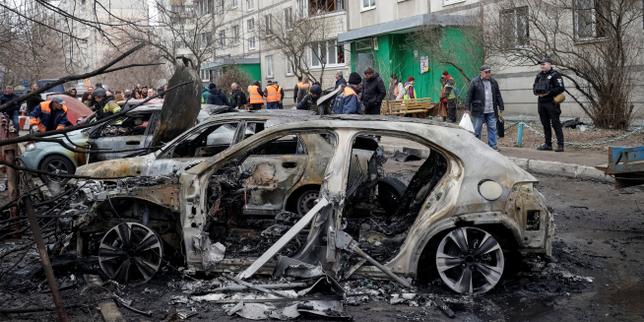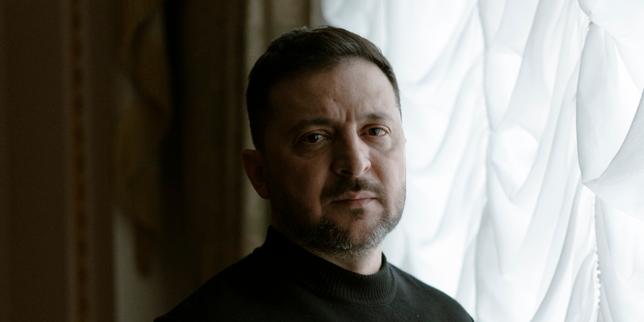
Volodymyr Zelensky doesn't have the luxury of diplomatic niceties anymore. When he says the pressure on Russia is insufficient, he isn't just making a stump speech for more shells. He's pointing out a structural failure in how the West—specifically Europe—understands this conflict. The gap between what's promised in Brussels and what's delivered in Donbas is widening. It’s a gap filled by Russian glide bombs and North Korean ammunition.
We often hear about the massive aid packages from Washington. But the reality on the ground is that Europe's proximity to the fire hasn't translated into the heat required to put it out. Zelensky’s frustration stems from a simple, brutal math. Russia has shifted to a total war economy, spending roughly 8% of its GDP on the military. Meanwhile, much of Europe is still debating procurement rules and timeline extensions.
The Illusion of Sufficient Sanctions
Sanctions were supposed to be the "financial nuclear option." They haven't worked that way. Russia’s economy grew faster than most of the G7 last year. That’s a stinging indictment of the current enforcement regime. The "shadow fleet" of tankers continues to move Russian oil through European waters, often using Western insurance loopholes or simply ignoring them.
Zelensky is right to call this out as a lack of pressure. If you're still buying Russian gas through redirected pipelines in India or Turkey, you’re still funding the Kh-101 missiles hitting Okhmatdyt children's hospital. It’s that direct. The pressure isn't just about passing the 14th or 15th package of sanctions. It’s about the political will to actually stop the flow of money.
Europe Must Outproduce Not Just Outspend
Money is a number on a screen. Shells are physical objects that take time to melt and mold. Europe’s defense industry was hollowed out over thirty years of peace. Now, it's struggling to scale. When Zelensky talks about insufficient pressure from Europe, he’s talking about the lethargy of the European defense complex.
The European Union promised a million shells by early 2024. They missed that mark by a landslide. They’re catching up now, but the Russian military-industrial base is already operating on three shifts a day, seven days a week. You can't win a war of attrition when your opponent is in "total war" mode and you're still in "business as usual" mode.
The disconnect is jarring. In Kyiv, people check Telegram channels for incoming ballistic missiles before they check their email. In Paris or Berlin, the biggest debate is often about debt ceilings or environmental regulations. That’s the "insufficient pressure" Zelensky is talking about. It’s a psychological disconnect.
The Problem with Red Lines and Escalation Management
Western leaders have been obsessed with "escalation management" since February 2022. They’ve drawn more red lines for themselves than for Vladimir Putin. Every major system—HIMARS, Leopard tanks, F-16s, ATACMS—followed the same script. First, it’s a "no" because it might provoke Moscow. Then it’s a "maybe" after months of lobbying. Finally, it’s a "yes" once the tactical window of opportunity has narrowed.
This incrementalism is a gift to the Kremlin. It allows Russia to adapt. By the time Western tanks arrived, Russia had built the "Surovikin Line," one of the most extensive fortification systems in modern history. If those tanks had arrived six months earlier, the 2023 counter-offensive might have looked very different.
Zelensky’s point is that this hesitation is a form of weakness. Putin views "escalation management" as a lack of resolve. When Europe sends just enough to keep Ukraine from losing but not enough to win, it drags out the suffering. It’s a slow-motion catastrophe.
Turning the Tide with Secondary Sanctions
The next step isn't just more of the same. It's about hitting the enablers. Much of the technology found in Russian drones—chips, sensors, engines—still comes from Western brands. They get there through a network of middlemen in Kyrgyzstan, Kazakhstan, and the UAE.
True pressure means secondary sanctions. It means telling a bank in a third country that they can either do business with Russia or they can have access to the Euro and the Dollar. They can't have both. To date, Europe has been far more hesitant than the US to pull this lever. They worry about their own trade relationships.
But you can't have it both ways. You can't claim to support Ukrainian sovereignty while protecting the trade routes that feed the Russian war machine. Honestly, it’s a bit hypocritical.
Moving Beyond the Fear of a Russian Collapse
There’s a quiet fear in many European capitals about what happens if Russia actually loses. What if the federation breaks apart? Who controls the nukes? This fear leads to a policy of "controlled conflict."
Zelensky is essentially telling the West to get over it. A Russian victory is a much bigger threat to European stability than a Russian collapse. If Russia wins, the international order is done. The idea that borders can't be changed by force becomes a relic of the 20th century. Every autocrat with a grievance and a decent army will take note.
To apply real pressure, Europe needs to move from a "support for as long as it takes" mindset to a "whatever it takes for victory" mindset. That’s a massive shift. It means long-term contracts for defense firms so they have the confidence to build new factories. It means seizing the 300 billion dollars in frozen Russian central bank assets, not just the interest.
Why the US Election Can't Be an Excuse
A lot of people are waiting to see what happens in Washington. It’s a convenient excuse for Europe to stay in a holding pattern. But Europe has a larger combined economy than the US. It has the resources. What it lacks is a unified command structure and the guts to lead.
Zelensky knows that if US support wavers, Europe is the only thing standing between Kyiv and a permanent Russian occupation. If the pressure from Europe remains "insufficient," then the continent is basically outsourcing its security to the American voter. That’s a dangerous gamble.
We need to stop treating this like a charity project. It’s a security investment. Every Russian tank destroyed in the fields of Kharkiv is one less tank that could potentially threaten a NATO border in five years.
Steps for a Real Pressure Strategy
If Europe wants to prove Zelensky wrong, the path is clear. It starts with closing the loopholes.
Stop the transshipment of dual-use goods through Central Asia immediately. If a country’s import of German microchips suddenly spikes by 2,000% while they have no domestic industry to use them, we know where those chips are going. Cut them off.
Next, fast-track the integration of the Ukrainian defense industry with European firms. Ukraine is currently the world’s biggest laboratory for drone warfare and electronic countermeasures. Europe shouldn't just be sending old tech; they should be co-developing the future of warfare with the people actually fighting it.
Finally, eliminate the restrictions on using Western weapons to strike military targets inside Russia. Forcing Ukraine to fight with one hand tied behind its back while Russia strikes from "sanctuaries" across the border isn't a strategy. It's a suicide pact. True pressure means making the Russian military feel the cost of the war on their own turf.
The time for half-measures ended a long time ago. Either the pressure becomes overwhelming, or the cost of the eventual failure will be something Europe can't afford to pay.