Olena stands in a field that should be screaming with the sound of machinery. Instead, there is only the wind. In the Chernihiv region of Ukraine, the soil is a deep, rich black—the kind of earth that farmers across the globe dream of tilling. It is called chernozem. For decades, this soil has been the silent engine of the world’s breakfast tables, the invisible ingredient in the loaves of bread stacked in Cairo and the noodles boiling in Jakarta.
Now, that engine is seizing.
When we talk about the global food crisis, we often hide behind the sanitized language of "supply chain disruptions" and "commodity price volatility." We treat it like a spreadsheet error. It isn't. It is the story of a grain of wheat that cannot leave a port in Odesa, and the terrifying ripple effect that ends with a mother in Lebanon deciding which of her children eats a full meal today.
The Breadbasket on Fire
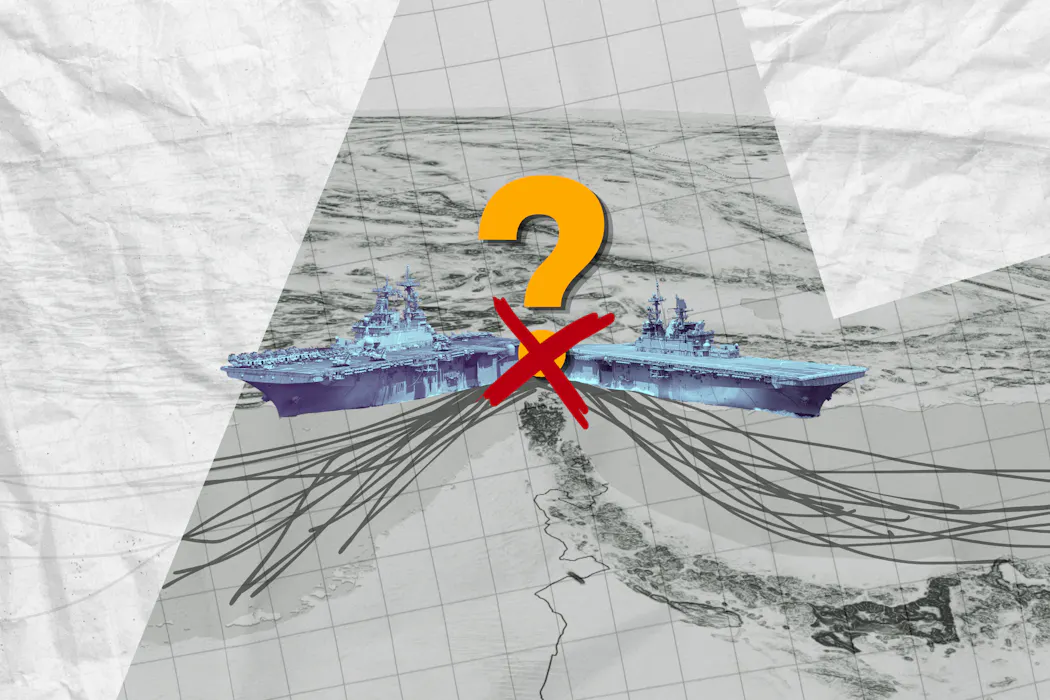
To understand why a war on the shores of the Black Sea matters to a shopper in a suburban supermarket in Kansas or a street vendor in Dhaka, you have to look at the sheer, staggering scale of the math. Ukraine and Russia together once accounted for nearly a third of the world’s wheat exports. They provided 19% of the world’s barley and 4% of its maize. More importantly, they supplied the fuel that made other farms work: Russia was the world’s top exporter of nitrogen fertilizers.
When the ports were blocked and the fields became minefields, the world didn’t just lose a season of crops. It lost its safety net.
Consider the "just-in-time" delivery system we have spent thirty years perfecting. It was designed for efficiency, not for resilience. We built a world where food moves across oceans in a constant, delicate dance. When the music stopped in February 2022, the dancers didn't just stumble. They crashed. Global wheat prices jumped 20% almost overnight. This wasn't because there was no food left in the world; it was because the certainty of food had vanished.
The Hunger of Distance
Imagine a hypothetical baker in Tripoli named Hamad. For years, Hamad bought flour subsidized by his government, sourced almost exclusively from Ukrainian harvests. He didn't know the names of the towns where the wheat grew, but he knew the weight of the grain.
When the war began, the subsidies couldn't keep up with the soaring international prices. Hamad’s flour costs doubled. Then tripled. To keep his shop open, he had to shrink the size of his loaves. His customers, many of whom live on less than two dollars a day, noticed immediately. This is how a geopolitical conflict thousands of miles away becomes a physical ache in the stomach of a stranger.
The crisis isn't just about the absence of grain. It is about the cost of everything that touches the grain. Natural gas is the primary ingredient for producing ammonia-based fertilizers. As gas prices spiked, fertilizer became a luxury.
In Brazil, farmers looked at the price of potash and nitrogen and made a hard choice: plant less, or use less nutrients. If you use less fertilizer, your yield drops. If your yield drops, there is less food on the market next year. The crisis isn't a snapshot; it's a sequence. We are currently living through the echoes of decisions made under duress two years ago.
The Invisible Speculator
While Olena watches her fallow fields and Hamad shrinks his bread, another force is at play in the glass towers of Chicago and London.
Commodity trading is often described as a necessary tool for "price discovery." In reality, when uncertainty hits, it becomes a feeding frenzy. Speculative investment in food derivatives surged as the war began. Investors who had never seen a stalk of wheat in their lives began betting on its future price.
This speculation creates a "fear premium." It pushes prices higher than the actual physical shortage would dictate. For a wealthy consumer in London, an extra fifty cents for a baguette is an annoyance. For the 345 million people facing acute food insecurity, that same fifty cents is the difference between life and a slow, agonizing decline.
History tells us that when bread becomes unaffordable, empires tremble. We saw it in 1789 in France. We saw it in the Arab Spring of 2011. Food is the ultimate social contract. When a government can no longer guarantee that its people can afford to eat, the foundations of that society begin to crack.
The Fragility of the Monoculture
We have spent the last century streamlining our diet. Out of the thousands of edible plants on Earth, just three—rice, maize, and wheat—provide 60% of the world’s food energy. We have placed all our bets on a few specific regions to grow these crops.
This specialization made food cheap for a long time. It also made the system incredibly brittle.
The war in Ukraine acted as a stress test for a global system that was already reeling from climate-driven droughts in the Horn of Africa and the lingering scars of the pandemic. It revealed that our global food security is a house of cards. When one card—the Black Sea—is pulled out, the whole structure wobbles.
Logistics are the veins of this system. Even when grain deals are signed and corridors are opened, the cost of shipping insurance has skyrocketed. Ships are wary of entering war zones. The physical infrastructure—the silos, the rail lines, the electricity grids—has been targeted. It takes a day to burn a grain elevator; it takes years to rebuild the trust required to fill it again.
The Weight of the Soil
The solution isn't as simple as "planting more elsewhere." Agriculture is a slow business. You cannot pivot a farm the way you pivot a software company. Soil health, climate patterns, and local expertise take generations to develop.
We are currently seeing a desperate scramble for "food sovereignty." Countries that once relied on the global market are now trying to subsidize local production at any cost. But you cannot grow wheat in a desert without massive amounts of energy and water—both of which are also becoming more expensive.
The real tragedy is that there is actually enough food produced globally to feed everyone. The crisis is one of distribution, of poverty, and of the weaponization of the very things we need to survive. Food has become a tool of leverage, a pawn in a larger game of territorial ambition and energy dominance.
The Echo in the Kitchen
Back in Chernihiv, the silence persists. Olena knows that even if the shells stop falling tomorrow, the earth is full of "iron fruit"—unexploded ordnance that will kill a farmer as quickly as a soldier.
The global food crisis is often presented as a series of graphs showing "Metric Tons" and "Consumer Price Indices." But if you look closer, you see the faces. You see the middle-class families in Cairo moving back into their parents' homes because they can no longer afford both rent and meat. You see the subsistence farmers in Sub-Saharan Africa staring at withered crops because they couldn't afford the fertilizer that Russia used to sell.
We are all connected by a thin, golden thread of grain.
That thread is frayed. It is stretched to the breaking point. Every time we walk through a grocery store and see an empty shelf or a price tag that makes us double-take, we are feeling a microscopic version of the trauma being felt at the source. The world is learning, painfully and slowly, that peace is the most essential ingredient in every loaf of bread.
Without it, the soil remains silent, the silos remain empty, and the hunger only grows.
Would you like me to analyze the specific economic impact of fertilizer shortages on South American crop yields for the upcoming season?