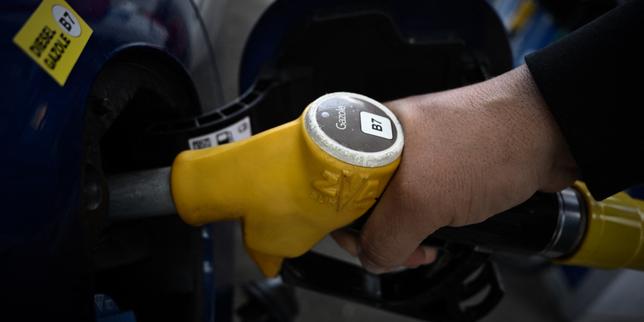
The French government has quietly signaled a retreat from fuel quality standards, a move that effectively gambles with the engines of millions of motorists to patch over a crumbling supply chain. By granting a "temporary and exceptional" authorization for gas stations to sell diesel with a lower resistance to cold, officials are attempting to prevent dry pumps at the cost of mechanical reliability. It is a desperate calculation. If the temperature drops, the fuel in your tank may no longer be a liquid, but a waxy sludge that brings the nation’s logistics to a grinding halt.
This isn't a minor administrative tweak. It is a calculated gamble on the weather. For decades, the transition from summer to winter diesel has been a non-negotiable rhythm of the European energy market. Winter diesel is chemically treated to remain fluid at temperatures as low as -15°C or even -20°C. The "intermediate" or "summer" grades being allowed now can begin to crystallize, or "cloud," at temperatures barely below freezing.
The Anatomy of a Clogged Filter
To understand why this matters, you have to look at the chemistry of paraffin. Diesel fuel contains wax molecules. In warm weather, these molecules stay dissolved and pass through the fuel filter without incident. When the temperature hits the Cloud Point, these waxes begin to precipitate out, forming tiny crystals.
The real danger is the Cold Filter Plugging Point (CFPP). This is the exact temperature where those wax crystals become so numerous and large that they physically bridge the gaps in your fuel filter. Once that happens, the fuel flow stops. The engine starves. The car dies.
By lowering the requirement for cold resistance, the state is essentially telling drivers that as long as the winter stays mild, they are safe. If a sudden cold snap hits, particularly in rural or high-altitude regions, thousands of vehicles will be stranded. This isn't just about the inconvenience of a car that won't start; it is about the structural integrity of high-pressure common rail injection systems that do not take kindly to being starved of lubricity and flow.
Why the Supply Chain Snapped
The official narrative points toward "supply difficulties," a sterile phrase that masks a much more volatile reality. France has been caught in a pincer movement between aging domestic refining capacity and a geopolitical shift that has upended how Europe gets its oil.
For years, the European refinery complex has been tilted toward gasoline production, even as the continent’s car fleet shifted heavily toward diesel. This created a structural deficit. To bridge the gap, France relied heavily on imports. When the traditional flows were disrupted by sanctions and the subsequent scramble for non-Russian barrels, the margin for error evaporated.
The Storage Crisis
Storage facilities are the lungs of the energy industry. They breathe in during times of plenty and breathe out during shortages. Currently, those lungs are tight. Moving the right grade of fuel to the right region requires a level of logistical precision that the current system can no longer guarantee.
Instead of fixing the underlying infrastructure or securing long-term, high-quality flow, the government has chosen the path of least resistance: lowering the bar for what constitutes "acceptable" fuel. It is a classic bureaucratic maneuver. If you cannot meet the standard, change the standard.
The Economic Shadow of Substandard Fuel
There is an overlooked cost to this decision that won't show up on a government ledger but will certainly appear on a mechanic’s invoice. Modern diesel engines are marvels of engineering, but they are also incredibly fragile when it comes to fuel quality.
Fuel injectors in a modern TDCI or HDI engine operate at pressures that would be difficult to comprehend a generation ago. They rely on the fuel itself for cooling and lubrication. When wax starts to form, even if it doesn't fully plug the filter, it changes the viscosity of the fluid. This creates extra wear on the fuel pump and can lead to "scoring" on the delicate internal surfaces of the injectors.
- Increased Maintenance: Drivers may find themselves replacing fuel filters months ahead of schedule.
- Reduced Efficiency: Combustion is less efficient when the fuel isn't atomizing correctly, leading to higher consumption and more soot.
- Long-term Damage: The cumulative effect of running "on the edge" of the cloud point can shorten the lifespan of the entire fuel system.
The government hasn't mentioned a rebate for the increased risk of engine failure. You are paying the same price at the pump for a product that is objectively less robust.
A Geographical Lottery
The risk of this policy is not distributed equally. A driver in the coastal regions of the south might never notice the difference. However, someone commuting through the Massif Central or the Alps is playing a dangerous game.
The logistics of fuel distribution mean that once a lower-grade batch enters the system, it is difficult to isolate. A tanker might drop a load of "exceptional" diesel at a station in a valley, and a driver might fill up there before heading into the mountains. In that scenario, the "exceptional" status of the fuel becomes a liability. The government’s move assumes a level of climate predictability that hasn't existed for a decade.
The Precedent of Lowering Standards
Whenever a government lowers a quality standard "at a title of exception," it sets a dangerous precedent for the future. We saw this in the food industry during various commodity spikes, and we see it now in energy.
It signals to the market that the "minimum" is actually flexible. This de-incentivizes investment in the refining and storage capabilities needed to maintain high-quality outputs during crises. If the industry knows the government will just move the goalposts when things get difficult, there is no reason to spend the billions required to modernize the grid.
We are watching the slow erosion of consumer protection under the guise of "continuity of service." It is a trade-off that favors the distributor and the state over the individual vehicle owner.
The Practical Response for Motorists
If you are forced to use this fuel, the only real defense is proactive maintenance. You cannot trust the sticker on the pump to reflect the reality of the fluid in the tank during this "exceptional" period.
Check your fuel filter. If it hasn't been changed in the last 20,000 kilometers, do it now. A fresh filter has more surface area and can handle a slight increase in wax crystals better than one already partially restricted by contaminants. Consider the use of anti-waxing additives, though these must be added before the fuel begins to cloud to be effective.
The state has decided that keeping the wheels turning—even if they turn poorly—is better than the political fallout of empty stations. They have shifted the risk from the national level down to your individual engine block.
Check your local weather forecast before you fill your tank and keep a close eye on your engine's cold-start behavior over the coming weeks.