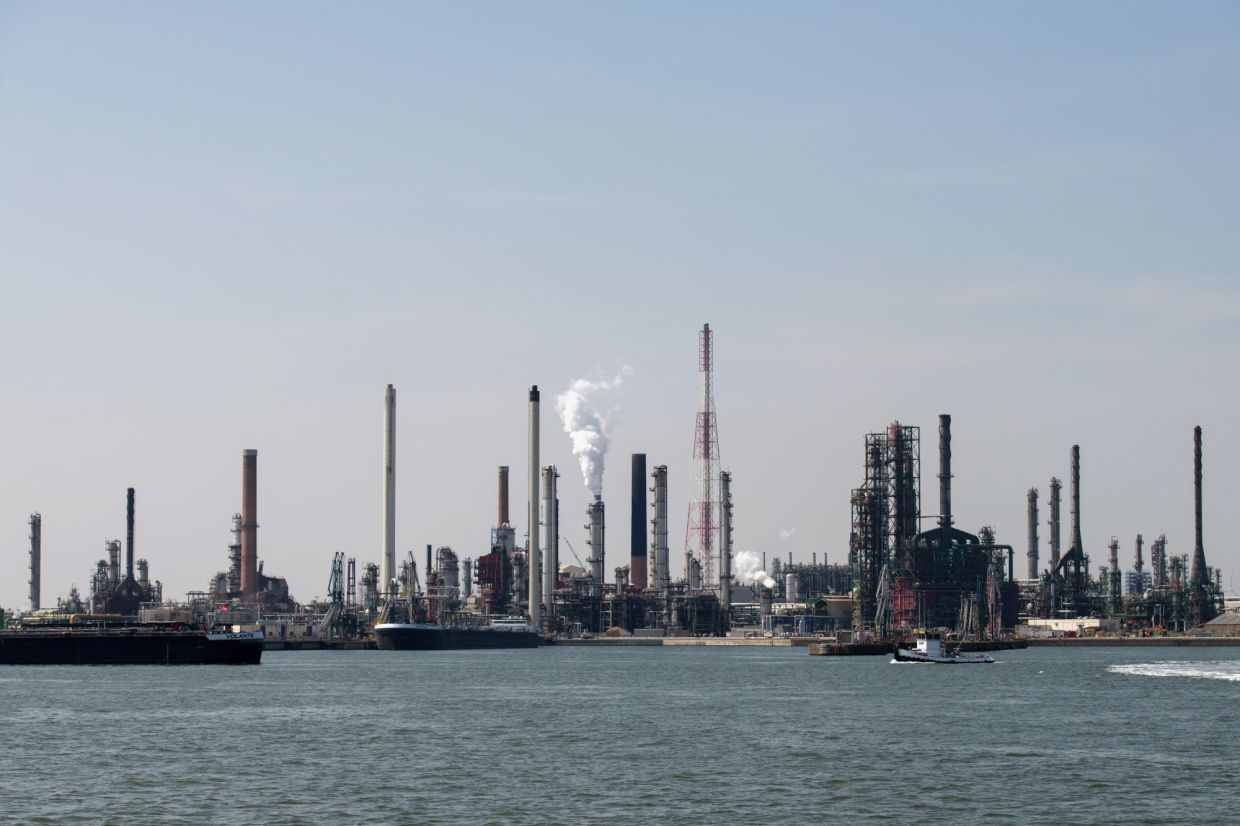
The financial press is currently obsessed with a ghost. If you pick up any major business rag today, you’ll see the same tired narrative: oil prices are "edging higher" because confidence in a Middle East ceasefire is "wavering." It’s a clean story. It’s easy to digest. It’s also fundamentally wrong.
I have sat on trading desks through three separate "once-in-a-generation" energy crises. If there is one thing I’ve learned, it’s that the retail market and the mainstream media consistently mistake noise for signal. They see a headline about a failed diplomatic meeting and assume the price of Brent crude must react. In reality, the market has already priced in the chaos. The volatility you see isn't a reaction to geopolitics; it’s a reaction to the realization that the physical supply of oil is becoming decoupled from the headlines.
The Myth of the Geopolitical Premium
Every time a diplomat sneezes in Cairo or Doha, analysts start talking about the "geopolitical risk premium." They treat it like a fixed tax on every barrel of oil.
Here is the truth: there is no premium left.
The market has spent the last eighteen months becoming numb to regional instability. We’ve seen drone strikes on tankers, red-carpet diplomatic failures, and escalating rhetoric, yet the price remains trapped in a stubborn range. Why? Because the flow of actual, physical molecules of oil has not stopped.
The "wavering confidence" the competitor article mentions is a distraction. Traders aren't bidding up prices because they think a war is coming; they are bidding them up because the global inventory levels are razor-thin, and the media just happens to provide a convenient excuse for the price action. If you’re trading based on whether a ceasefire deal gets signed this weekend, you aren't an investor. You’re a gambler playing a game where the house already moved the goalposts.
Demand is the Real Monster Under the Bed
While the world stares at the Levant, they are ignoring the massive structural shift in Asian demand and the quiet erosion of the U.S. Strategic Petroleum Reserve.
The consensus view suggests that global demand is cooling due to the "green transition." This is a fantasy. I’ve seen the internal shipping data. I’ve watched the tankers. Emerging markets are devouring crude at a rate that ignores the ESG brochures being handed out in Davos.
When a competitor tells you that prices are moving because of a "wavering ceasefire," they are ignoring the fact that refineries in India and China are running at near-record utilization. The story isn't about peace; it’s about the fact that we haven't invested enough in upstream production to handle a world that refuses to stop growing.
Why the "Glut" is a Lie
You will often hear "experts" talk about a looming supply glut from non-OPEC+ sources. They point to the Permian Basin or Guyana as the saviors of the West.
- The Permian Peak: The easy oil is gone. Producers are now dealing with higher water cuts and lower pressure. The "infinite growth" story of American shale is hitting a wall of physics.
- The Guyana Lag: Yes, it’s a massive find. No, it won't hit the market fast enough to offset the natural decline of aging fields in the North Sea or Mexico.
When you factor in these realities, the "slight edge higher" in price looks less like a reaction to a news cycle and more like a desperate market trying to find an equilibrium point in a world of shrinking options.
The Logistics Paradox
The competitor article likely touched on the Red Sea. They probably mentioned the Suez Canal. They almost certainly framed it as a "disruption."
Disruption is the wrong word. This is the New Normal.
Logistics firms have already rerouted. The "uncertainty" of the route around the Cape of Good Hope has been baked into the freight rates for months. The cost of shipping a barrel of oil is higher, yes, but it is predictably higher. Markets hate uncertainty, but they love a known cost. The idea that a single headline about a ceasefire would suddenly drop shipping costs and tank the price of oil is a fundamental misunderstanding of how global trade actually functions. Once a supply chain reroutes, it doesn’t just "snap back" because a piece of paper was signed in a hotel ballroom.
Stop Asking if the War Will End
People also ask: "How will a ceasefire affect my gas prices?"
This is the wrong question. A ceasefire—while a humanitarian necessity—is a bearish signal for only about forty-eight hours. After the initial "peace dividend" sell-off, the market will realize that the underlying supply-demand imbalance hasn't changed.
The real question you should be asking is: "Where is the next million barrels of daily production coming from?"
If you can't answer that—and nobody in the current administration or the OPEC secretariat has a convincing answer—then the price of oil is going up regardless of whether there is peace or or more conflict.
The Irony of the "Edge Higher"
The most hilarious part of the mainstream analysis is the phrase "edges higher." It implies a cautious, measured move. It suggests that traders are sitting around with calculators, weighing the probability of a peace treaty.
They aren't.
What you’re seeing is liquidity thinning. The big money—the smart money—has moved to the sidelines because the "headline risk" makes the market too noisy to trade with conviction. This leaves the price to be pushed around by algorithmic bots and retail traders who overreact to every "BREAKING" notification on their phones.
The price isn't "edging" because of confidence; it’s "drifting" because the market has lost its North Star.
The Actionable Truth
If you want to understand where oil is going, stop reading the "News" section. Start reading the "CAPEX" section.
Look at what the majors are spending on exploration. Hint: it’s not enough. Look at the depletion rates of existing wells. Look at the inventory draws in Cushing, Oklahoma.
When the mainstream media tells you to look at a ceasefire, you should be looking at the lack of rigs. When they tell you to fear a regional escalation, you should be looking at the fact that we are consuming 102 million barrels a day and struggle to produce 103.
The margin for error is gone. The ceasefire talk is a smoke screen. The fire is the fact that we’ve stopped building the infrastructure required to keep the modern world running, and no amount of diplomacy can fix a dry well.
The market isn't waiting for peace. It's waiting for the moment everyone realizes that the peace doesn't actually produce more oil.
Pick a side. You can either trade the headlines and get chopped up by the noise, or you can trade the physics and wait for the inevitable. The geopolitical drama is just the entertainment provided while the real crisis matures in the background.
Don't buy the narrative. Buy the scarcity.