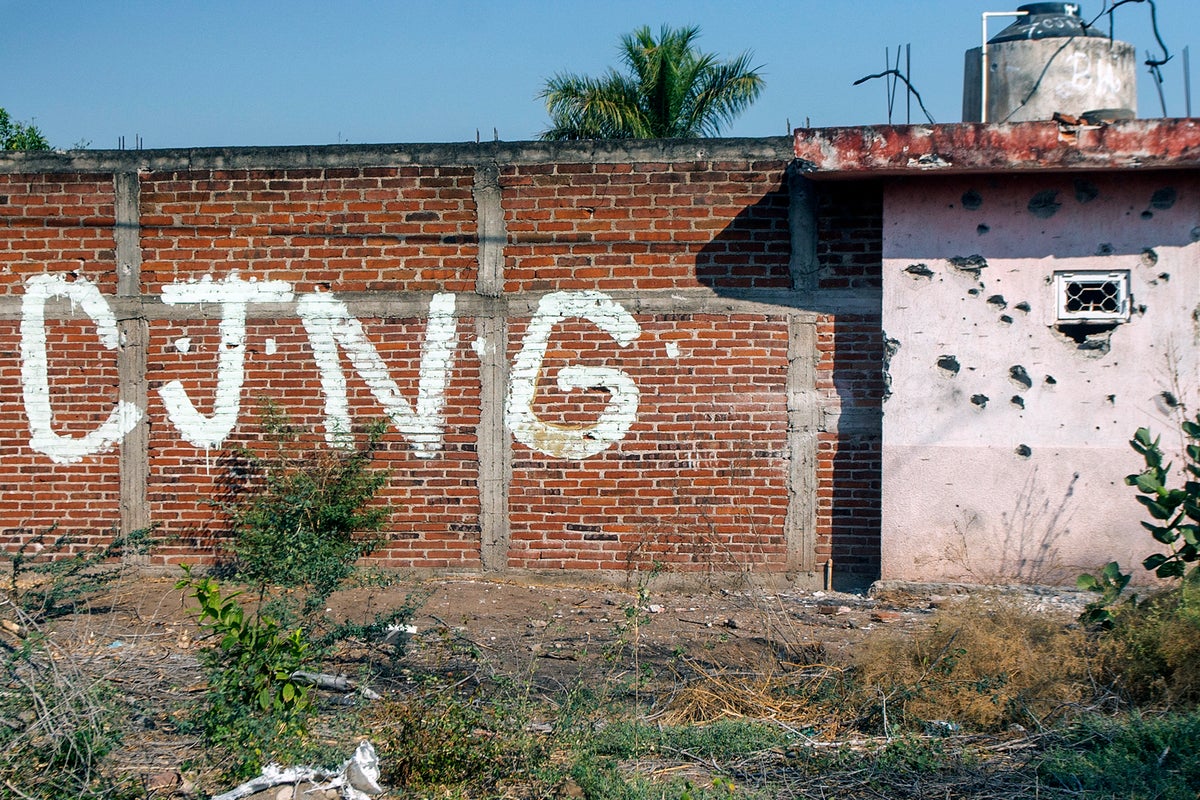
Argentina just slapped a "terrorist" label on a major cartel. The media is calling it a "bold move" inspired by Mar-a-Lago. They are wrong. This isn't a masterclass in national security. It is a desperate, calculated branding exercise designed to secure US dollar swaps and military hardware while doing absolutely nothing to stop the flow of cocaine through the Port of Rosario.
When a government designates a criminal organization as a terrorist group, they aren't changing the reality on the ground. They are changing the legal plumbing of international finance. It’s a move made for the IMF and the US Treasury, not for the citizens living under the thumb of the Los Monos or their successors.
The Sovereignty Myth
The "lazy consensus" suggests that labeling a cartel "terrorist" gives the state more power to crush them. This is a fundamental misunderstanding of how the Argentine legal system and the military interact. Argentina is haunted by the legacy of its 1970s military dictatorship. Because of the Internal Security Law and the National Defense Law, the military is legally barred from intervening in domestic crimes.
Simply calling a narco a "terrorist" doesn't magically dissolve these constitutional guardrails.
If President Javier Milei wants the army in the streets, he doesn't need a new label; he needs a constitutional overhaul that the Argentine Congress will never grant him. So, why do it? Because it signals "ideological alignment" to Washington. It is the geopolitical equivalent of a LinkedIn endorsement. By adopting the rhetoric of the Trump administration, the Argentine executive branch is betting that the US will overlook its crumbling infrastructure and skyrocketing poverty rates in exchange for a loyal foot soldier in the "War on Terror."
Why "Terrorism" Is the Wrong Word
Terrorists have political goals. They want to topple regimes, impose ideologies, or redraw borders. Cartels have quarterly earnings goals. They are hyper-capitalist entities that thrive on the existence of the state, not its destruction. They need functional roads, corruptible judges, and stable ports to move their product.
When you treat a business problem like a holy war, you lose.
I have watched governments from Mexico to Colombia try this exact maneuver. It fails every time because it ignores the Iron Law of Prohibition: The intensity of enforcement is proportional to the profitability of the contraband.
- Step 1: Label the cartel as "Terrorists."
- Step 2: Increase military presence.
- Step 3: Supply is slightly constricted.
- Step 4: Street prices in London and New York skyrocket.
- Step 5: The profit margin becomes so high that the risk of death is outweighed by the reward of wealth.
- Step 6: A new, more violent splinter group emerges to fill the vacuum.
By using the "T-word," Argentina is inviting the "Kingpin Strategy." This is the disastrous CIA-vetted approach of cutting off the head of the snake. History shows that when you kill a kingpin, you don't get peace. You get a dozen smaller, hungrier snakes fighting for the crown. The violence doesn't disappear; it democratizes. It spreads from localized port battles to every street corner in the suburbs.
Follow the Money (But Not How You Think)
The competitor's narrative focuses on "security." The real story is the Financial Intelligence Unit (UIF).
Labeling a group as terrorists triggers a different set of international banking protocols. Specifically, it allows for the immediate freezing of assets without a prior conviction. On paper, this sounds great. In a country like Argentina, where the judiciary is often a tool for political retribution, this is a terrifying expansion of executive power.
Imagine a scenario where a legitimate business owner is accused of "associating" with a labeled group. Their assets are frozen instantly. No trial. No due process. Just a "terrorist" designation by a hand-picked committee. This isn't about stopping drugs; it's about creating a financial kill-switch.
Furthermore, Argentina is currently desperate for a new program with the International Monetary Fund. By adopting the US State Department’s vernacular, Milei is positioning Argentina as the "Israel of the South"—a strategic outpost that is too important to let fail financially. This isn't counter-narcotics. It's a debt-restructuring tactic.
The Rosario Reality Check
If you want to know if this policy is working, don't look at the press releases from the Casa Rosada. Look at the grain elevators in Rosario.
Argentina is one of the world's largest exporters of soy and corn. The same infrastructure that feeds the world also feeds the global drug trade. The "terrorist" label doesn't address the fact that the Hidrovía—the massive river highway connecting Paraguay, Brazil, and Argentina—is virtually unpoliced.
The cartels aren't hiding in caves like Al-Qaeda. They are sitting in boardrooms. They own transport companies. They own currency exchange houses (cuevas). They are integrated into the fabric of the legal economy.
The Industry Insider’s Truths:
- Violence is a tax, not a goal. Cartels prefer peace. It’s better for business. They only turn to "terrorism" when the state changes the rules of the bribe.
- Military intervention is a subsidy for the survivors. When the army destroys one cartel, they are effectively clearing the competition for the rival group that was smart enough to stay quiet.
- The US doesn't care about Argentine safety. Washington cares about regional hegemony. If Argentina wants to call local thugs "terrorists" to justify buying a fleet of F-16s, the US will happily provide the invoice.
Stop Asking "Is It Terror?" and Start Asking "Who Profits?"
People keep asking: "Does this cartel meet the definition of terrorism?"
That is the wrong question. It doesn't matter if they meet the definition. Definitions are for academics. In the real world, the "Terrorist" label is a tool of extraordinary rendition and asset seizure.
When Argentina follows the "Trump lead," they aren't adopting a proven security model. They are adopting a PR strategy that failed in the 1980s, failed in the 1990s, and turned the Mexican countryside into a graveyard in the 2000s.
If you want to stop the cartels, you don't need "terror" designations. You need:
- Decentralized Banking Transparency: Making it impossible to move $500 million through a soy export firm without triggering an automated audit.
- Port Modernization: Scanners and AI-driven logistics that actually track containers instead of taking "visual inspections" (which is code for "I looked away for a $10,000 bribe").
- Judicial Independence: Ensuring that the judge who signs the warrant isn't the same person who goes to the club with the cartel’s lawyer.
The Dangerous Side Effect
There is a downside to my contrarian view that I must admit: ignoring the "terrorist" label can make a government look weak to a frightened public. Populism demands a monster to fight. By denying the cartels the "terrorist" title, you are forced to admit they are just a symptom of a failed economic system and a corrupt police force.
That’s a hard sell at the ballot box. It’s much easier to put on a combat vest, point at a map, and scream about "global terrorism."
But don't be fooled by the theater. The cartels are laughing. They know that as long as the world wants cocaine, and as long as Argentina’s ports remain a sieve, a change in vocabulary won't cost them a single cent.
Argentina hasn't declared war on the cartels. It has declared its candidacy for a US-funded subsidy, paid for in the blood of its own citizens who will bear the brunt of the inevitable escalation.
Stop looking at the label and start looking at the ledger.
The "War on Terror" in South America is just the latest franchise of a business model that has been bankrupt for forty years.
.png?width=1200&auto=webp&trim=0%2C0%2C0%2C0)