The shift by Chinese hyperscalers—specifically Alibaba, Baidu, and Tencent—away from open-source dependencies toward proprietary, closed-loop model architectures is not a philosophical preference but a structural necessity driven by the unit economics of inference at scale. While the global narrative focuses on "open vs. closed," the Chinese market is currently solving for a specific constraint: the exhaustion of the "efficiency subsidy" provided by Meta’s Llama architecture. To achieve positive gross margins on AI-driven enterprise services, these firms must decouple from generalized architectures and engineer proprietary stacks that minimize the compute-to-revenue ratio.
The Economic Rationalization of Proprietary Architecture
The primary driver for developing proprietary models in the current Chinese regulatory and hardware environment is the Inference Efficiency Frontier. When an organization utilizes an open-source base, they inherit a fixed computational overhead—the number of parameters that must be activated for every token generated.
The Cost Function of Open-Source Inertia
Maintaining a service based on open-source weights creates three distinct economic bottlenecks:
- Fixed Parameter Tax: Open-source models are designed for general-purpose versatility. For a specialized enterprise task, such as legal document review or medical coding, a 70B parameter model might be 40% redundant. Proprietary architectures allow for Sparse Mixture of Experts (MoE) configurations where only a fraction of the total parameters (the "active" parameters) trigger during a specific query, reducing the energy cost per token.
- Hardware-Software Co-optimization: Given the restrictions on high-end NVIDIA H100/B200 exports to China, domestic firms must extract every possible TFLOPS from local hardware (e.g., Huawei Ascend or internal custom silicon). Proprietary models are designed from the ground up to match the memory bandwidth and interconnect topologies of these specific chips. Open-source models, tuned for NVIDIA’s CUDA ecosystem, suffer a performance penalty when ported to non-native hardware.
- Data Sovereignty and Fine-tuning Latency: Closed models allow for "deep-stack" integration where the data ingestion layer communicates directly with the model's latent space representation. This reduces the need for heavy RAG (Retrieval-Augmented Generation) overhead, which often adds significant latency and cost to enterprise deployments.
The Strategic Shift from Model Breadth to Vertical Depth
Chinese AI giants are moving through three distinct phases of model evolution. The current transition marks the move from Phase 2 to Phase 3.
- Phase 1: Architectural Parity (2022-2023). The objective was to match the benchmarks of GPT-3.5 using standard Transformer blocks and dense architectures.
- Phase 2: The Open-Source Fork (2023-2024). Firms leveraged Llama-based skeletons to quickly deploy consumer-facing chatbots, prioritizing speed-to-market over operational efficiency.
- Phase 3: Proprietary Verticalization (2024-Present). The realization that general-purpose intelligence is a commodity. Value is captured by optimizing the "Specific Intelligence" required for industrial applications.
The Three Pillars of the Proprietary Pivot
I. Token Economics and Pricing Power
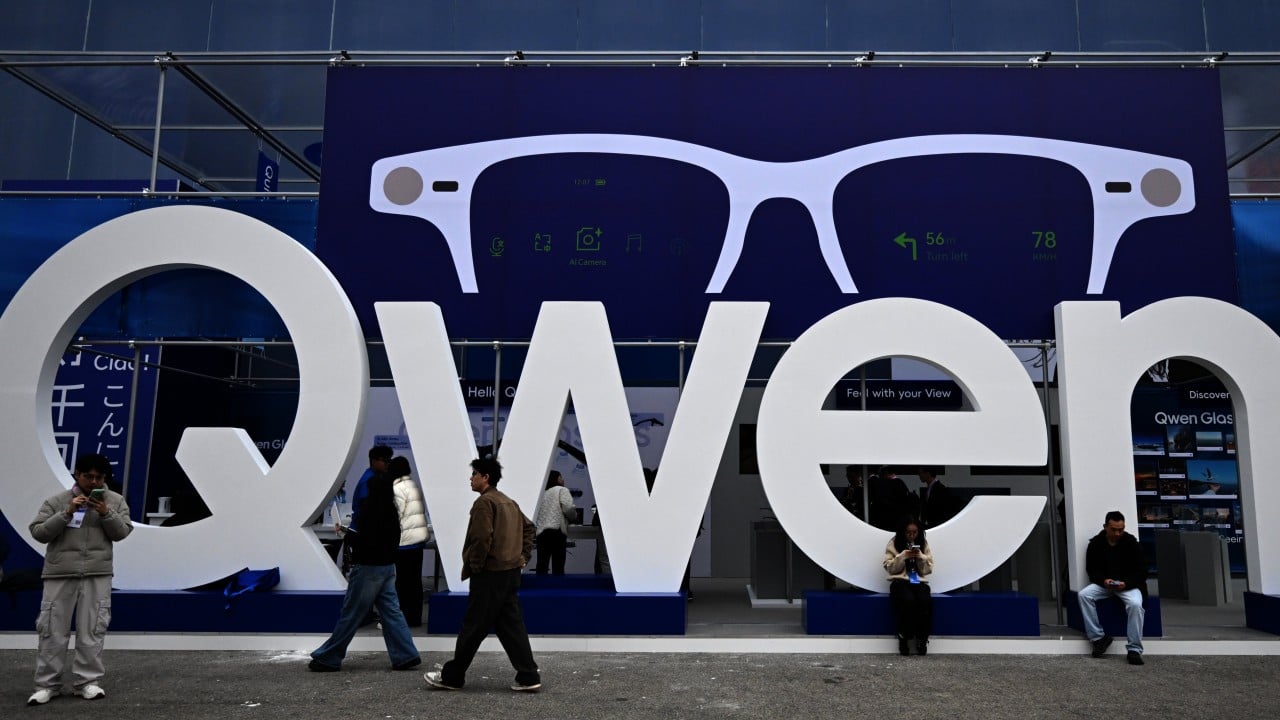
The price war in the Chinese LLM market—where costs for API calls have dropped by over 90% in some segments—makes open-source reliance a liability. If a competitor uses a proprietary MoE model that is 5x cheaper to run than your Llama-derived model, they can sustain lower prices indefinitely while you bleed capital. Alibaba’s Qwen and Baidu’s Ernie are moving toward proprietary structures specifically to defend these margins.
II. Regulatory Alignment as a Feature
In the Chinese regulatory environment, "Safety and Alignment" are not post-hoc filters but core architectural requirements. Proprietary models allow for the embedding of "Constitution-based AI" at the pre-training level rather than the RLHF (Reinforcement Learning from Human Feedback) level. This reduces the "Refusal Rate" for benign queries while ensuring strict adherence to local content guidelines, a balance that is notoriously difficult to maintain with models trained on Western-centric open-source datasets.
III. The Ecosystem Lock-in
By controlling the weights and the architecture, Baidu and Tencent create a "closed garden" for their enterprise clients. If a client builds a complex workflow on a proprietary Tencent model, the cost of switching to a different provider involves more than just swapping an API key; it involves re-tuning the entire data-to-model pipeline.
Deconstructing the Technical Moat
The move to proprietary models is often criticized as a "reinvention of the wheel." However, this ignores the Architectural Delta—the technical improvements possible when you are not constrained by the need to be "Llama-compatible."
Structural Improvements in Proprietary Stacks
Proprietary models frequently utilize custom Tokenizers optimized for the Chinese language. Standard Western tokenizers often treat a single Chinese character as multiple tokens, effectively doubling or tripling the cost and latency for Chinese users. A proprietary model uses a native Chinese-centric vocabulary, which:
- Reduces the total token count for the same semantic meaning.
- Increases the effective context window.
- Decreases the compute time required for inference.
Furthermore, these firms are implementing Speculative Decoding. This involves a smaller, proprietary "draft" model predicting the output of a larger "target" model. By keeping both models proprietary and integrated, the system can achieve 2x to 3x speedups in text generation without sacrificing the quality of the larger model’s outputs.
The Risk of Architectural Isolation
The pivot to proprietary models is not without systemic risks. The primary danger is Technical Debt and Divergence.
- The Talent Bottleneck: Open-source models benefit from a global army of developers optimizing libraries (like vLLM or DeepSpeed). A firm with a purely proprietary architecture must build and maintain its own entire software stack. If the proprietary architecture diverges too far from global standards, the firm may find it difficult to recruit researchers who are used to the global ecosystem.
- The Innovation Gap: If a breakthrough occurs in the global open-source community (e.g., a new attention mechanism or a superior way to handle long-context memory), proprietary models may require significant re-engineering to incorporate these advances, whereas open-source-aligned models can adopt them almost instantly.
- Capital Intensity: Building a proprietary model from scratch requires a "Cold Start" in training. This involves massive upfront GPU-hour investments that may not yield superior results to a well-tuned open-source model for several years.
The Bifurcation of the Enterprise AI Market
As these giants pivot, we are seeing the emergence of a two-tier market in China.
Tier 1: High-Volume Commodity Services
These are general chatbots and basic summary tools. In this tier, the proprietary pivot is about Cost Leadership. The winner is the firm that can deliver 1,000 tokens at the lowest fractional cent. This is a game of scale and hardware integration.
Tier 2: Specialized Industrial Intelligence
This involves sectors like autonomous manufacturing, grid management, and high-frequency finance. Here, the proprietary pivot is about Performance Reliability. The standard Transformer architecture often struggles with the "Out of Distribution" data found in industrial sensors. Proprietary models allow these firms to experiment with non-standard architectures (like State Space Models or Liquid Neural Networks) that might handle time-series and sensor data more effectively than a Llama-clone could.
Quantifying the Transition Success
To measure whether this pivot is working, one must look past the public benchmarks (which are easily gamed) and focus on two internal metrics:
- Model-to-Infrastructure Ratio: The percentage of a firm's total Capex spent on AI hardware that results in billable API revenue versus internal research and development.
- Token-per-Watt Efficiency: As energy costs become the primary operational constraint for data centers in Tier-1 Chinese cities, the ability of a proprietary model to deliver high-quality outputs with lower power consumption will determine long-term viability.
Strategic Recommendation for Infrastructure and Model Alignment
For Chinese technology leaders, the proprietary pivot must be treated as a vertical integration play rather than a brand-building exercise. The objective is to own the "Inference Stack."
The next logical move is the De-commoditization of the API. Instead of selling raw tokens, firms should use their proprietary models to offer "Outcome-as-a-Service." This involves:
- Hardware-locked Instances: Offering specific performance guarantees that are only possible because the model is tuned for the specific NPU (Neural Processing Unit) in the provider's cloud.
- Latency-Critical Edge Deployment: Using proprietary model distillation techniques to run high-performance models on localized hardware (smartphones, IoT gateways) that competitors cannot replicate without access to the proprietary base weights.
- Synthetic Data Feedback Loops: Using the proprietary model to generate its own training data for specialized domains, creating a "flywheel" where the model improves at a rate decoupled from the availability of public internet data.
The proprietary model is not the product; the proprietary model is the engine that enables a cost structure competitors cannot follow.